Almost every publisher choosing a fan engagement format chooses on the wrong criterion. The question asked is usually which is fastest to launch. By that measure a predictor beats a quiz, a quiz beats a bracket, and season-long fantasy comes last. It is a reasonable question and it produces the wrong answer often enough to […]
There is plenty written about how to play fantasy football. Almost nothing written about what you are buying when you commission one. The two are not the same document. A player wants to know how transfers work. A publisher needs to know that the transfer rule is a retention mechanism, that changing it changes engagement, […]
Publishers who have run a football fantasy game tend to assume basketball is the same product with different players in it. It is not, and the difference is not in the game design. It is in the operating cadence. A Premier League season gives you 38 gameweeks. One deadline a week, one scoring run, one […]
The question every publisher asks first is whether the game can live inside their site rather than beside it. The answer is yes, by three different routes, and the choice between them is usually made on the wrong criterion. Most buyers choose on integration effort. The right criterion is what each route does to your […]
Most fantasy platform quotes end at launch. The build is scoped, the milestones are set, the game goes live, and the running of it becomes your problem in a paragraph near the end that says maintenance. That paragraph is where publisher fantasy games die. Not at launch. Around month three, on a Saturday, when a […]
By Shiva Kumaran, Founder and CEO, Sciflare Technologies A publisher decides in November to launch a fantasy football game for the second half of the season. The commercial team has a sponsor waiting. They compare quotes, choose the custom build because it looks like the serious option, and go live in April. The season has […]

Quick Summary Introduction What are sports if not a globally unifying force for like-minded people interested in the same thing? The game which brings the community of sports fans together. With sports clubs striving for fan loyalty today, more than ever, community engagement can help businesses attract masses of global fans and convert them into loyal and hardcore advocates who choose their platform over others’. It is not just […]
Quick Summary Introduction The Dream 11 global expansion to eleven countries, including the UK, US, UAE, and Australia, comes at a time when fantasy sports platforms need to rethink user incentives beyond real-money gaming. While cash contests cease to exist post the RMG ban, what cannot be overlooked is users’ love for fantasy gaming in a sports-obsessed nation. The proven potential of […]

Introduction The fantasy sports industry has witnessed exponential growth after transforming passive, but passionate spectators into active team managers responsible for the gaming outcome, evolving from niche gaming to a billion-dollar ecosystem. According to a report by DemandSage, the fantasy sports industry is valued at $31.13 billion in 2025 and is projected to reach $102.85 billion by 2034, growing at a CAGR of 14.2%. With platforms […]
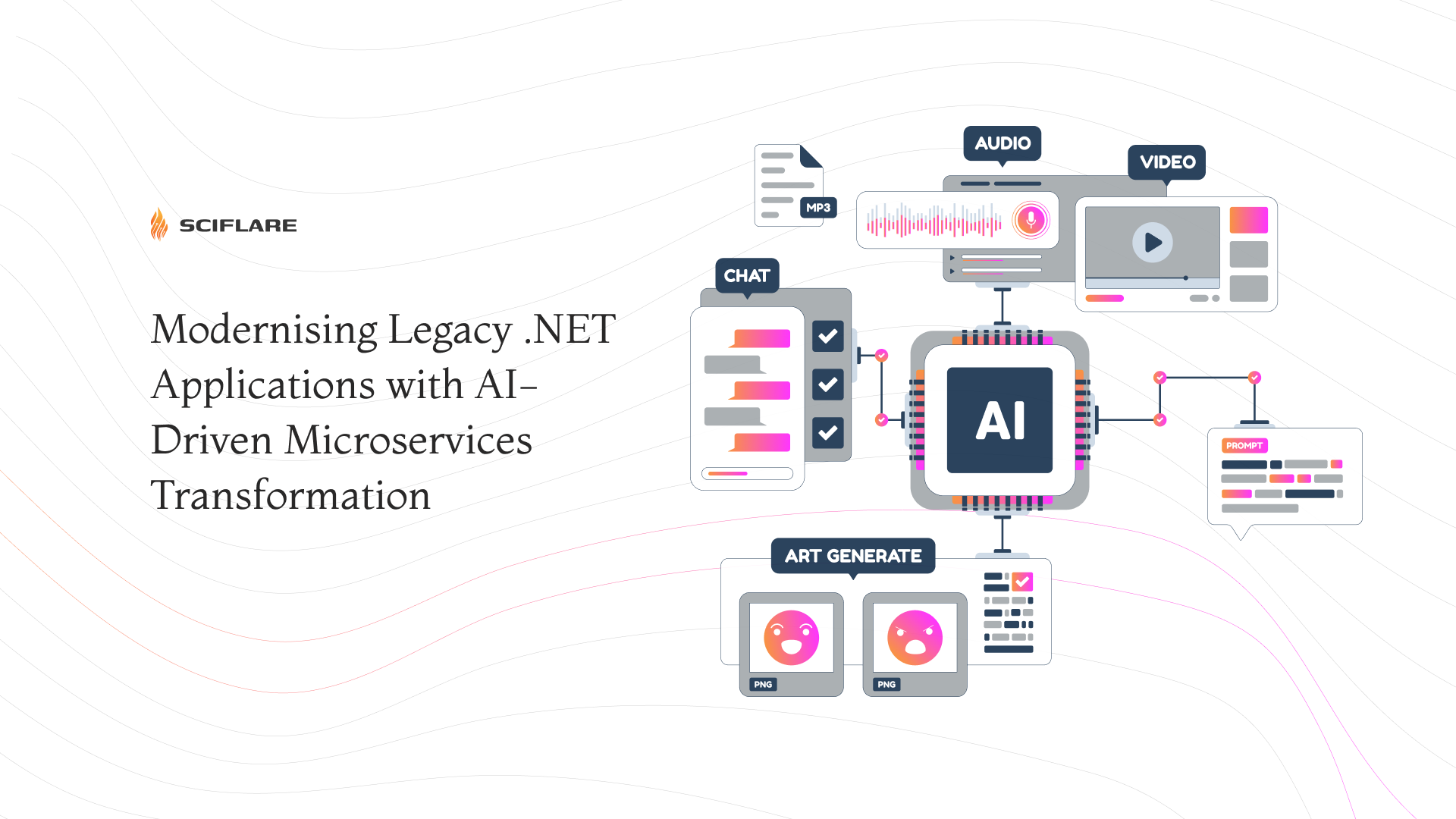
Introduction Many enterprises still operate on legacy .NET frameworks and tightly coupled monolithic architectures. While these systems may continue to function, they often slow down innovation, increase maintenance overhead, and block scalability. Modern user expectations, growing data volumes, and AI-powered automation demand more flexible, modular, and intelligent systems. This is where Sciflare steps in as a modernization […]