Author: sciflareadmin

  • Everything you need to know to Hire Node.JS Developers   

    Everything you need to know to Hire Node.JS Developers   

    Introduction

    Uber, Netflix, Walmart and 6.3 million websites in the USA as of 2024- that’s the widespread popularity of the Node js framework. But what makes it so popular? What are its benefits for businesses? What is the hiring cost of a Node JS developer? 

    Find out all answers in this blog as you hire Node js developers for your business to take it to newer heights.  

    What is Node js and What are its benefits? 

    Node js is a cross-platform and open-source JavaScript runtime environment that runs the Google Chrome core and the V8 JavaScript engine outside the browser. There is no need to create a new thread for each request in Node js as the app runs in a single process. The set of asynchronous I/O primitives in the Node js standard library prevents the JavaScript code from being blocked. As such, Node js does not waste the CPU cycles waiting and resumes operations with the response. 

    Among its major benefits for businesses are its speed and its ability to manage several concurrent requests easily, simplifying the process of scaling an application. It is ideal for real-time applications given its single-threaded, event-driven environment. This optimizes it for tasks that need high processing power, such as handling slow network connections. It is a cloud-based platform and helps developers easily build large applications with its ability to promptly respond to changes in the data layer. Compared to other languages like Java, Node js can build faster web apps in a fraction of the time it takes them. This is the reason it is highly popular for developers building microservices, enabling businesses to ensure quality in their products as all components can be seamlessly tested before they are added to the full stack. 

    However, the benefits of Nodejs can be fully realized by hiring an experienced Node js development team, well versed in optimizing for scale and security concerns, asynchronous programming, database management, and more. Having said that, let us look at how outsourcing can help you bring the right Node js expert on board. 

    Image requirement- Write Node JS in a circle in at the centre, and point different arrows from it, each naming one of its benefits- Cloud-based, Single-threaded, Faster Web Apps, Microservices, Anti-blocking. 

    Node JS Development Outsourcing  

    Hiring Node JS developer in your own region can often be limiting in terms of finding the right fit for your project. Outsourcing gives you the opportunity to tap into the pool of expert Node JS developers available worldwide, increasing your likelihood of finding the right professional or team for your project.  

    Besides, when you hire dedicated developers from an outsourcing IT services company, you get to benefit from their extensive experience across industries. Their Node JS developer skills, such as asynchronous programming, error handling, optimizing for scale, ensuring security of applications, database management, and so on, are perfected over years of experience building Node JS apps for businesses across various industries. Their development professionals are trained on an ongoing basis for sharp technical expertise to ensure immediate deployment and project kick off, irrespective of its complexity.  

    Another major benefit of outsourcing is that businesses can save significantly on hiring costs because they have to pay for the contract they enter with the outsourcing company, as opposed to individual, ongoing monthly salaries and training costs. These contracts give you the flexibility to upsize or downsize your development team on a project-by-project basis. 

    CTA: Hire Node JS developers to match your project requirements and grow your business. 

    How much does it cost to hire a Node JS Developer? 

    The cost of Node JS developers for hire depends on several factors as discussed below- 

    Project Complexity  

    Every business is unique and has specific requirements for each product. Some applications can be built with the most basic functionality, while others require more sophistication and customization. Another crucial factor influencing the project scope is the tech stack best suited for it. All these factors combined make up your project requirement, determine its complexity, and influence the Node JS developer hiring cost. Identifying the project scope also helps identify the right skillset required to augment your development resources as well as project duration. 

    Developer Experience 

    Developer experience and skillset determine their hourly rates too. Entry- level professionals typically charge less than mid-senior or senior-level professionals with specialized skills. Further, it depends on what specific skills your project demands, such as full-stack development, back-end development expertise, microservices proficiency, specialization in real-time applications, API development, integration specialization and so on.  

    Developer Location 

    The hourly rate of Node JS developers in developed countries is significantly higher than their offshore counterparts. The Node js developer hourly rate in the USA is approximately $ 58.57 as of 2024. Offshore rates are significantly lower and outsourcing from offshore partner comes with a host of other benefits like round-the-clock development and global perspective.  

    Conclusion: How to Hire Node JS Developers?  

    There is no one-size-fits-all answer to this question, but the best way to approach it is to analyze your project requirements, ensure to find the right expertise tailored to your business needs, identify the duration of the engagement required, and the tech stack that will best suit your purpose. Once you have identified what skills your project needs, it is time to decide if you want to enter a contractual, full-time or part-time engagement or opt for outsourcing Node JS development talent as per your needs. The ideal way forward is to have the flexibility to augment your resources to unlock the full potential of Node JS for your business.  

    Frequently Asked Questions 

    1. What is the main benefit of outsourcing a Node js engineer? 

    Outsourcing Node js engineers gives you access to a global talent pool, increases the likelihood of finding the specific expertise best suited for your project, and flexibility to adjust your development resources as per your needs. 

    1. Will I lose project control if I hire remote developers? 

    No, on the contrary, you have complete control over your project using advanced project management tools, with developers reporting to you for the entire duration of the contract. You get ample opportunity to review the project and share your feedback, ensuring it aligns with user and business needs.  

    1. Will I get post deployment support ? 

    Yes, at Sciflare, we provide post deployment support, so you never have to worry about a technical roadblock and can ensure your solution functions seamlessly throughout. 

    1. Can Sciflare help me with my existing project? 

    Yes, we help you with your existing project by identifying inefficiencies and optimizing them to get it up to speed. Our developers are technical experts and help you pick the most feasible technical approach for your project, aligning it with your business needs

  • Future Proofing Your App: Things To Remember During Mobile App Development 

    Future Proofing Your App: Things To Remember During Mobile App Development 

    Quick Summary of points 

    Hello, app creators! Are you ready to make your app resilient, innovative, and user-loved? In this guide, we’ll explore the strategies you need to future-proof your creation. Together, we’ll delve into scalable architecture, ensuring your app can grow without limits, and cross-platform compatibility, making it accessible to everyone. We’ll guide you through regular updates and maintenance, user-centric design, and the importance of data security and privacy. You’ll discover the power of analytics, the flexibility of cloud integration, and how to craft a future-proof business model. We’ll also inspire you with continuous innovation and the potential of partnerships and collaborations. By the end of this journey, you’ll have the tools and insights to make your app thrive in the ever-changing digital landscape. Let’s dive in and set your app on the path to long-term success! 

    Stratagies For Future Proofing Your Mobile Application 

    Now that we’ve outlined what’s ahead, let’s dive into the specific strategies you can employ to future-proof your mobile application. These strategies are essential building blocks for long-term success: 

    Scalable Architecture 

    Building a scalable architecture is like laying a strong foundation for your app. It ensures that your app can handle growth and increased usage without losing its charm. Think of it as equipping your app with the ability to adapt and perform well, no matter what changes come its way. 

    This adaptability is not just about handling more users; it’s about ensuring smooth performance even when there’s a lot happening within the app. By focusing on a strong and flexible architecture from the start, you’re setting your app up for long-term success, allowing it to stay relevant and efficient despite the ever-changing technological landscape. 

    Cross Platform Compatability 

    Cross-platform compatibility is a cornerstone in Future-proofing your mobile application. Let’s delve into why this strategy is vital for your app’s longevity: 

    Reaching More People: 

    Think of your app as a universal language, speaking to both iPhone and Android users. By ensuring it works seamlessly across various devices, you’re inviting a broader audience to engage with your app, enhancing its popularity and growth potential. 

    Adapting to New Technology: 

    Preparing your app for different devices is like future-proofing it against technological advancements. It means your app can adapt to new phones or systems without undergoing significant changes, saving both time and resources. 

    Saving Money and Time: 

    Cross-platform development is akin to a one-size-fits-all approach. By avoiding the need to create different versions for various devices, you save on costs and speed up the development process. 

    Same Great Experience: 

    Your app should provide a consistent experience, regardless of the device. Cross-platform compatibility ensures that your app’s quality remains uniform, much like a favorite song that resonates beautifully wherever it’s played. 

    Keeping Your App Strong: 

    Building an app is an investment. Cross-platform compatibility is like fortifying that investment with armor, ensuring that as new devices emerge, your app remains robust and continues to generate revenue. 

    Regular Updates And Maintenance 

    Now that we’ve explored how cross-platform compatibility can fortify your app, let’s delve into another essential ingredient for long-term success: regular updates and maintenance. Think of this as the ongoing care that keeps your app vibrant and resilient. Here’s why it’s a game-changer: 

    Beating the Troublemakers: 

    In the digital realm, app safety and bugs are the villains. Regular updates act as your superhero, allowing you to quickly eliminate these issues, enhance security, and ensure a smooth user experience. It’s about building trust and providing an enjoyable experience for your users. 

    Hanging Out with Users and Trends: 

    Your users are your collaborators in shaping an extraordinary app. Regular updates enable you to incorporate their valuable insights, address their concerns, and stay abreast of the latest trends. It’s a dynamic way to keep your app fresh and aligned with what’s hot in the tech world. 

    Keeping Up with the Cool Kids: 

    Technology is ever-evolving, and new gadgets are continually emerging. Regular updates ensure that your app remains compatible and in sync with the latest devices, providing a seamless experience for a broader audienc 

    The Power of Updates: 

    Consider updates as equipping your app with a superhero cape. They empower your app to withstand challenges, stay loved, and be prepared for the ever-changing digital landscape. Keep those updates flowing, and your app will continue to shine brightly 

    User Centric Design 

    Building on the importance of regular updates, let’s shift our focus to the heart of your app: the users. A user-centric design is like hosting a memorable party where every guest feels special. Ready to create an app that resonates with users for years to come? Let’s explore: 

    Know Your Users: 

    Understanding your users is akin to being the perfect host. Learn their preferences, needs, and pain points. Engage with their feedback and observe their interactions with your app. This insight is the foundation for crafting an app that not only delights but endures. 

    Easy User Journey: 

    Designing your app’s journey should be as thrilling as a treasure hunt, yet as straightforward as a friendly conversation. Ensure that navigation is intuitive, actions are swift, and the experience is consistent across all devices. Your users’ feedback is your compass, guiding you to refine and enhance the journey. 

    Personal Touch: 

    Personalization is the magic that anticipates users’ desires before they even articulate them. Leverage your insights and technological prowess to deliver tailored experiences. Continuously innovate and add features that resonate with your users. 

    Bottom Line: Focusing on users is a win-win. Your app shines, users stick around, and everyone’s happy. So, put on your user-centered thinking cap and get ready to make your app a star! But what’s a star without security? Understanding users is vital, but protecting their information is paramount. Let’s explore how data security and privacy can fortify trust and make your app a safe haven for users. 

    Data Security And Privacy 

    Data security and privacy are the cornerstones of a strong and trustworthy mobile app. They’re not just about rules and regulations; they’re about building a relationship of trust with your users. Here’s how you can make your app a safe space: 

    Locking Up Data: 

    Your users’ information is precious. Use strong security methods to keep it safe from unauthorized access. Encrypt vital details so only the right people can read them, and store data in a way that’s as secure as turning passwords into secret codes. 

    Privacy Power to Users: 

    Give control back to your users. Offer them easy options to decide what they share, and when you need information, explain why and ask respectfully. This approach builds trust and fosters a great connection with your users 

    Stay on Guard with Updates: 

    Security threats are ever-changing, like new villains emerging in a superhero story. Regularly update your app’s security to fix any weak spots and keep it strong against cyber-attacks. This vigilance ensures that users feel safe and protected. 

    Plan for the Unexpected: 

    Even with the best protection, things can go wrong. Be prepared with a plan for potential data breaches. Know what to do, such as informing users and taking corrective actions, to save your app’s reputation and maintain users’ trust. 

    By putting emphasis on data safety, giving control to users, staying alert with updates, and having a plan for unexpected situations, you’re doing more than just securing your app; you’re creating a space where users feel safe and valued. This method of handling security and privacy sets the stage for understanding your users on a deeper level and making smart choices. Next, we’ll look at how using analytics and making decisions based on data can further strengthen your app and keep it in tune with user needs. 

    Looking to build a secure and privacy-rich mobile application? 

    Analytics And Data-Driven Decisions 

    Data-driven decisions are a cornerstone in Future-proofing a mobile application. Here’s how you can leverage them: 

    Smart Insights: 

    Understanding your users is key. Utilize insightful tools to observe how they engage with your app, pinpointing their likes and areas for improvement. This wisdom guides you in enhancing your app’s appeal. 

    Adapt to What Users Want: 

    People’s preferences can shift rapidly. By actively monitoring their desires through data, you can swiftly adjust your app to meet their needs. This responsiveness ensures your app remains a favorite. 

    Watch Your App’s Performance: 

    Monitoring key metrics such as user retention, engagement, and session duration is akin to grading your app’s performance. These ‘grades’ provide valuable feedback, allowing you to fine-tune your app and ensure it continues to resonate with users. 

    By embracing analytics and data-driven strategies, you’re not just keeping your app cool; you’re nurturing a dynamic relationship with your users that evolves with their needs. This approach sets the stage for our next topic, where we’ll explore how cloud integration can further enhance your app’s adaptability and resilience. 

    Cloud Integration 

    Imagine your app effortlessly adjusting as your user base grows or shrinks. Cloud integration is the secret sauce behind this adaptability. By using cloud-based services, your app can smoothly handle changes in user traffic. No more crashes during busy times, no compromises – just a future-ready app that stands tall. 

    Your Data’s Best Pal: 

    Let’s talk about data, the heart of any app. Cloud integration opens up new possibilities for data access and storage. Some tasks move to the cloud, making your app feel quicker. And guess what? Cloud storage becomes a secure vault for user data. Say goodbye to data worries! Plus, with information stored in the cloud, users can switch between devices and access their info without a hitch. Loyalty? You’ve got it! 

    Update Bliss: 

    Want to know a secret for long-term app success? Stay fresh, always. Cloud integration makes updates and maintenance a breeze. No need for manual downloads. Cloud-powered apps receive updates effortlessly, bringing new features, fixing bugs, and boosting performance. Users are happy, developers celebrate – less hassle, more value. 

    So, there you have it, a glimpse into why embracing the cloud is like handing your app a golden ticket to future success! But the journey doesn’t end here. Building a robust app also requires a solid and adaptable business blueprint. Let’s explore how a future-proof business model can be the cornerstone of your app’s longevity. 

    Future-Proof Business Model 

    Building a strong, adaptable business blueprint is like laying the foundation for your mobile app’s future. In the ever-changing world of technology and user preferences, you need a business model that’s ready to adapt and evolve. 

    Crafting a Flexible Monetization Plan: 

    Think of your monetization strategy as a flexible gymnast, able to bend and twist to align with your app’s unique qualities and what your users value. Explore various revenue channels like in-app purchases, subscriptions, or enticing freemium options. This way, your growth remains robust and sustainable. 

    Using Data to Your Advantage: 

    Here’s your secret weapon: data-driven insights. Dive deep into understanding user behavior, preferences, and challenges. This information fuels your business model, allowing you to make adjustments, refine strategies, and continue to impress your customers over time. 

    In essence, a future-proof business model is about more than stability; it’s about agility, responsiveness, and understanding your users. It’s about crafting a strategy that not only resonates with your audience but also stands resilient in the face of change. As we’ve seen, adaptability is key, and it doesn’t stop at the business model. Next, we’ll explore how continuous innovation and research can keep your app not just surviving but thriving in the ever-evolving digital landscape. 

    Continuous Innovation And Research 

    Staying ahead in the app world requires an unwavering commitment to innovation and research. It’s the secret to remaining relevant and enduring the test of time. Let’s break down the steps to achieve this: 

    Step 1: Power Up for the Long Run 

    Want your app to shine for years to come? Keep the innovation engine running. Stay ahead by constantly exploring new technologies, designs, and user preferences. That’s the path to long-term success. 

    Step 2: Keep the Buzz Alive 

    Your app must never become stagnant. Regular updates with fresh features and smoother experiences keep users engaged. It’s a blend of innovation and delight that keeps your app in the spotlight. 

    Step 3: Hunt for Gold 

    Put on your explorer’s hat and find those hidden opportunities where your app can truly shine. Market research is your guide, helping you discover unexplored niches and understand user needs. That’s how you create an app that feels like a best friend to its users 

    Step 4: Tech Tango: 

    Get on board with the latest tech like AR, VR, and AI. These aren’t just trendy terms; they’re the tools that make your app exciting and keep users hooked. 

    By always learning and trying new things, your app can face any challenge and stay strong. Your users will keep coming back, and that’s the real success! But innovation doesn’t always have to be a solo journey. Collaborations and partnerships can amplify your app’s reach and capabilities. Let’s explore how joining forces with others can paint your app across a broader canvas and open doors to fresh markets. 

    Partnerships And Collaborations 

    Prepare your mobile application for the future by building strategic partnerships and engaging collaborations. Think about teaming up with like-minded businesses, tech experts, or influential trendsetters. This collaboration can open new opportunities and spread your app’s reach. 

    Together, you and your partners can innovate, enhance features, and offer users an even more appealing experience. Look for partnerships that align with your app’s goals, creating a synergy that can overcome challenges and thrive. 

    Conclusion 

    Ensuring your app’s success is essential, and it begins with data privacy. Robust encryption and clear policies help build user trust and ensure compliance with regulations. Cloud integration adds flexibility and scalability to adapt to a changing world. Being future-ready means adopting flexible strategies, focusing on users, and making data-driven decisions. 

    In essence, Future-Proofing your Application requires forward-thinking: Innovate, protect data, utilize the cloud, adopt a future-focused business approach, and forge intelligent partnerships. By prioritizing quality and user satisfaction, your app is poised to thrive and endure the challenges of the future. 

    We at Sciflare are experts in making future proofed applications which will stand the test of time. Contact us today to build your application. 

  • 8 Key Factors That Determine Your Fantasy Sports App Development Cost

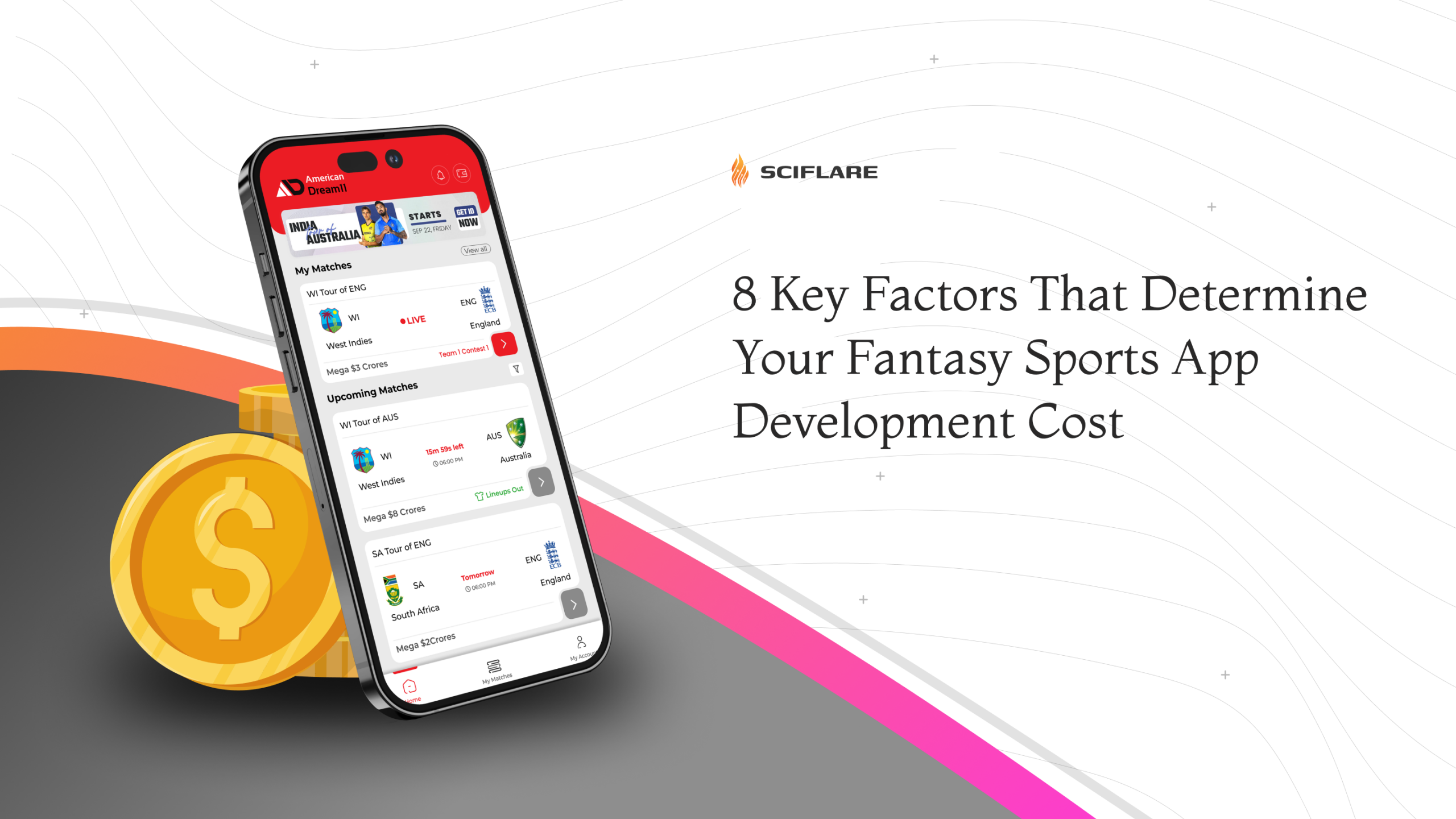
    8 Key Factors That Determine Your Fantasy Sports App Development Cost

     Table of Contents 

    • Quick Summary 
    • Introduction 
    • Understanding Fantasy Sports App Development 
    • Fantasy App Development: An Investment for Your Business 
    • Factors Determining The Fantasy Sports App Development Cost 
    • App Customization 
    • Development Platform 
    • Fantasy Sports API 
    • Country-specific Regulations 
    • User Experience Design 
    • Features 
    • White-label vs Custom solution 
    • Development Time 
    • Conclusion 
       

    Quick Summary of points 

    • An understanding of fantasy sports apps  
    • What goes into the making of successful fantasy sports apps 
    • Simplified view of technology used in fantasy sports apps 
    • Factors influencing the cost of developing fantasy sports apps 
    • In-depth analysis of what constitutes the development cost for fantasy sports apps 
    • Identifiers of the best fantasy sports app development services 
       

    Introduction 

    Fantasy sports apps have been gaining increasing popularity among businesses and sports enthusiasts in last 12-18 months, with the fantasy sports industry is poised to reach a global market potential of USD 89.92 billion by 2032. Fantasy sports apps have become the most preferred medium to extend a fulfilling gaming experience to billions of sports fans off the field, owing predominantly to accessible sports engagement and fantasy sports apps fuelling the demand to play one’s favourite sport at a click. 

    As such, fantasy sports app development is widely sought after. While considering building your own fantasy sports app to enter this lucrative industry, one of the top concerns is the cost it takes to build one. This blog will guide you through the same and give you a clear idea of how the cost of building a fantasy sports app is determined, so you can make an informed decision with awareness of the behind-the-scenes of fantasy app development. We bring you this information from our experience of developing these apps for over ten years for clients like American Dream 11, Boomer 11, FANZE, and other celebrated market players. 

    Understanding Fantasy Sports App Development 

    How to ensure your fantasy sports app is a growth machine for your business? 

    Building a fantasy sports app that joins the league of famous market players 

    Fantasy sports app development needs you to carefully balance user engagement, gaming experience and tie them to profitable business outcomes, making it a growth engine. This is key to unlocking the lucrative potential of the fantasy sports industry for your business, irrespective of whether the fantasy sports app is your additional revenue stream, or your core business. Either way, you need to ensure the app creates value. 

    Rightly then, you’ve decided to package your fantasy sport offering in a similar app like Dream 11, DraftKings, Fanduel or Fantasy Premier League (or even better based on what works best for your business) and want to estimate the fantasy sports app development cost. Let us now look at the two most essential perspectives for the same. 

    Fantasy App Development: An Investment for Your Business 

    The right approach to fantasy app development 

    Choosing the right solutions partner to build your dream fantasy sports app that also aligns with your business goals. 

    As a business owner considering fantasy sports app development services, you are likely aspiring to tap into the growing market share of fantasy sports apps, expanding your customer base with an additional offering, or leveraging the global passion for sports to launch and grow a profitable business. With these aspirations, come concerns like handling technicalities, monetization, user acquisition, GTM strategy (Go-To Market Strategy), stable revenue prediction, effective user engagement and more, along with things already on your plate. 

    As a fantasy sports app development company, our aim is to ensure your business meets these aspirations while we take care of the concerns. Having enabled this fulfilment for the world’s leading fantasy app businesses (Dream11, Boomer11, Playerzpot, American Dream11), we know that an all-round approach to fantasy sports game development is non-negotiable. This entails a thorough understanding of your business, target users, obstacles to their experience, informed use of technology and more. Quintessentially, these factors determine the fantasy sports app development cost. An in-depth understanding of these will help you understand what you are paying for when you build a fantasy sport app for your business. 

    Do you want to create your own Fantasy Sports App? 

    Factors Determining The Fantasy Sports App Development Cost 

    There is no one-size-fits all approach when it comes to fantasy sports development. This is because every business is different and expects different functionalities they want to offer to their users. With that said, discussed below are factors determining fantasy sports game development costs- 

    App Customization 

    Fantasy sports app development cost varies depending on how basic or enhanced it is, Features to expect in basic and enhanced apps. The competitive edge of superior user experience and Admin Panels. 

    Very simply put, what kind of sophistication do you expect your gaming app to have? Do you want to give your users basic features like creating their fantasy teams, choosing players and keeping simple scoreboards to eventually see who wins? Or do you want a competitive edge by offering an immersive and personalized gaming experience with real-time match updates, player analytics, predictor modules that simplify forecasting who is likely to win based on their performances? 

    Next comes in the degree of the control admins have. This weighs on the sophistication of the admin panel, which is usually designed to have a basic dashboard, reporting system and user accounts manager at best. This limits the admin considerably and increases their reliance on repetitive maintenance from the fantasy game development company. With our Custom Fantasy Solutions, you get complete control over your app, which you can manage on your own through the expertly crafted Admin Panel, or opt for White Label Solutions, for which you pay throughout the duration of its use. 

    Our new-age admin panels loved by clients rule out this problem permanently as they are designed to give full control to the admin, giving them all information necessary for determining business app health at a glance. Our admin panels show them a break-up of their total commission earned, total users, and verified users along with features like Master Module (for setting, customizing rules and automatic points calculation), push notifications for conveying relevant updates to each user and State Restriction (for admins to secure Play Store approval for their apps in locations betting apps are not allowed). These features enable you to manage your fantasy sports app business effectively, covering each of your core functions and granular responsibilities as a fantasy sports business owner. 

    To define and determine your app complexity, it is always better to choose a fantasy app development company that aligns its development approach to your business needs, and not the other way around. This approach entails custom fantasy sports app development to ensure building the right app tailored to your business needs, rather than going with a white-label solution that allows limited customization. 

    Development Platform 

    When to opt for Native app development or Hybrid app development? 

    The specific development platform you choose for your fantasy gaming app will significantly impact the cost of building one. If you opt for Native apps (specific development for Android and iOS), then it will require separate codebases, which is bound to be expensive. 

    But this expense can be optimized to a great extent with a seasoned fantasy sports development company, well-versed in utilizing the essential technologies available for Android developers. For example, Kotlin is a comparatively easier and flexible language than Java because it accelerates development with its concise, expressive and easy to understand syntax. This significantly reduces the coding effort a given task and streamlines development. Likewise, SwiftUI reduces the coding effort for iOS developers to unleash both, productivity and an exceptional user experience. 

    A far more resource-effective choice is cross-platform development, which with the use of frameworks like Flutter and React Native, eliminates the need for two separate codebases and their extensive maintenance. Here too, an understanding of and experience in using technology best suited for such applications is imperative for its success, scalability and sustenance in the long run. The best fantasy sports app development services will ensure your app maintains thorough consistency across both operating systems (Android and iOS) with their prior knowledge of pitfalls pertaining to their complexities, that might otherwise impede user experience. 

    Hybrid app development , that is, the combined potential of native and web applications, facilitates work across several platforms using a single codebase. Flutter, React Native and even Xamarin, for example, a Microsoft-owned cross-development platform enables developers to use a single, shared codebase to build Native Android, iOS and Windows. It streamlines development because there is no need to run maintenance updates separately. This significantly reduces your time to market, and ensures your users always have access to the latest app version, irrespective of the platform they are on. 

    Knowledge of each development platform, complexity and use cases will help you decide which is optimal for your app, cost-wise and beyond. If you are looking to provide seamless user experience and need serious app performance, native app development is the better option for you. However, if you want to test the waters with comparatively lesser investment, hybrid app development is your go-to, for a quicker GTM too. 

    We believe that no technology should limit you in building your dream app, and that is why, we are tech and device versatile to help your business grow in any scenario. 

    Fantasy Sports API 

    What is a fantasy sports API? 

    How a fantasy sports API ↗ simplifies a fantasy sports app development? 

    Consider this point to be more of a money-saving technique rather than a cost impact measure while building fantasy gaming apps. These solutions offer you ready-to-use data, eliminating the need to aggregate it from scratch. This reduces your development costs significantly. You can create fantasy sport apps tailored to your unique vision because sports APIs enable developers to customize data to suit the unique needs of the sports platform they are building. This frees up a lot of resources for innovation and constant improvement to give your users a distinctive gaming experience. 

    Besides, with our sports APIs, you can get data necessary for your fantasy sports app ready at your disposal, such as live statistics, scores, complete commentary, historical player performance and other data for multiple sports like cricket, basketball, baseball, football, kabaddi, NML, NBA and so on. 

    Country-specific Regulations 

    Each country has specific rules for fantasy sports apps. 

    How to ensure your business thrives while adhering to established laws? 

    Sports is the only thing that can unite people across the globe at one time, for a single cricket or football match. Consider your fantasy sport app to be just the digital version of the joy that unites across geographies. Going global is the natural by-product of building an effective and scalable fantasy sport application, but it comes with the consideration of adhering to regulations each country has laid down for its fantasy app builder. This is particularly true for payments, which play a crucial role in making or breaking the gaming experience as well as the credibility of the fantasy sport app business. 

    Fantasy sport users want the thrill of a game to extend beyond it as well, and expect nothing less than seamless, instant transactions. We’ve seen this for every fantasy sport app we built, be it cricket, soccer, football, baseball, kabaddi, NBA and so on. But how do you enable this seamlessness for your users in different countries? 

    We’ll tell you how we did it for one of our flagship fantasy sport apps. If you want a similar app like American Dream 11, you will also want to understand what makes it so loved. Our client, American Dream 11, was having trouble implementing two payment gateways for users in USA and Canada. We simplified the implementation of two payment gateways for them (Zelle for USA and Gigadat for Canada), so they could effectively cater to users from both countries. However complex the implementation, it could not have been an obstacle for our client to expand their user base. 

    This is just one aspect of financial regulations applying to fantasy sports apps. Businesses have to obtain licenses according to the gambling laws in each country, such as the UK, USA or Europe. Our consultation can guide you towards necessary resources to obtain these, drawn from our extensive work in fantasy sports app development across the globe. 

    User Experience Design 

    User experience can make or break your fantasy sports app 

    Good user experience design simplifies all touchpoints of user interaction with your app. 

    Optimizing development costs is desirable and even necessary, but never at the cost of compromising user experience. From our experience, businesses doing the latter chase a futile endeavour of benefitting from the lucrative and highly competitive fantasy sports industry. This is because users have a lot of options at their disposal and their preferences take the basic expectation of smooth experience as a given for fantasy sports apps they choose. 

    Failing to provide this seamless transaction can quickly result in plummeting engagement for core game activities and ultimately user churn. Thus, user experience design is a pivotal investment for making your fantasy sport app desirable for people whom you expect to willingly spend money on it. 

    Instances of compromised experience can be seen in complex onboarding, poor reading and visibility, difficult navigation and so on. If granular attention is not paid to “smooth out every crease of user experience”, as Reid Hoffman of LinkedIn puts it, users will soon find reasons to reconsider their money and time investment in your app. 

    Features 

    Understanding features beyond mere functionality 

    Building carefully targeted features for your unique business requirement. 

    Features serve a purpose beyond a list of attraction points in your fantasy sports app. They are mediums to make your app create value for those it is intended, and ultimately for your business. Below is an example from one of our work diaries. 

    Our client, Boomer 11, headquartered in UAE needed to adhere to the regulations of their country (which prohibit the use of real money in fantasy sports apps) and still have a stable revenue generating model for the same. 

    Our team came up with an e-commerce feature that addressed these issues. Users can use real money to buy real products on Boomer 11, like any other e-commerce app, and each product has a set number of virtual coins attributed to it, using which they can play fantasy sports. Not just that, Boomer 11 also wanted an unprecedented Predictor Module, which we built for them, that can accurately forecast match outcomes and individual player performances to predict which player is more likely to win the match. 

    Our new features were targeted to address our client’s problem, and not just to attract users with an upgraded feature list. We transformed the app to an e-commerce platform and implemented virtual coins for every product purchased, to adhere to norms as well as generate stable revenue. 

    White-label vs Custom solution 

    Difference between a white-label and custom solution 

    The scope of each solution 

    How much time each solution takes to get and market? 

    Another crucial factor determining the cost of developing a fantasy sports app is the development approach- whether you opt for a White Label Solution or go deep into one that is Custom built for your business. 

    A White Label Solution costs comparatively lesser and reduces your time-to-market (approximately 7-14 days to market). Our White Label Solutions come with a customizable design and standard fantasy features, covering multiple sports and formats. 

    A Custom-built Solution is one that is built from scratch according to the unique needs of your business, within 1-3 months, or sometimes even in 6 months depending on your needs. It is your own fantasy sports app, as we deliver the complete source code to you, along with custom design, tailor-made fantasy features that make sense for your business (such as e-commerce feature for Boomer11), supporting all games and formats. 

    For both these solution types, costs vary naturally. However, we ensure that whichever solution you opt for, it is secure and free of bugs, and provide guaranteed Appstore, Play Store Release. 

    Development Time  

    Higher development time translates to higher costs and lost market opportunities 

    How does the fantasy app development time prolong itself? 

    Your fantasy sport app development time extends itself (only to cause unnecessary burning of resources) if the project scope is not defined clearly and prior knowledge of pitfalls of each stage of development is missing. With a seasoned fantasy sports app company like Sciflare Technolgies, this is never a concern. We are committed with our skin in the game, and a proven track record of delivering on time. This not only reduces your time to market, but also enables you to capitalize on launch opportunities, and keep the fantasy app development cost in check. 

    Development time also varies based on the type of solution you choose (7-14 days for a White Label Fantasy Solution, and 1-3 months for a Custom Fantasy Solution). 

    Conclusion
     

    The cost of developing a fantasy sports application will vary from business to business. This is because each business’s app will vary in terms of functionality, features, degree of customization, development platform, technology and solution type opted for, given their resource availability and time to launch. Besides, costs of building a fantasy sports application also vary according to the kind of use you want with your investment. Is it only for testing initial market waters or is it directed at expansion of a wider user base? For the former, White Label Fantasy Solutions are apt and cost approximately $5k-$15k per sport. For the latter, more performance intensive and unique solutions tailored to business requirements, Custom Fantasy Solutions are apt and cost approximately $15k- $100k depending on your needs. 

    Either way, our extensive work on developing fantasy sports applications has enabled us to create value in whichever solutions you opt for. This is our way of life, and we are your solutions partner to ensure this is a win for your business. Let’s build something amazing! 

    Key Takeaways 

    • Developing a fantasy sports app needs a strategic balance aligning app features and functionality with business goals. 
    • While costs vary depending on unique business needs, there is always scope for optimizing the development process with the right service partner who can help you prioritize. 
    • The cost of building a fantasy sports app depends on the development platform, technology, solution and particular sport you opt for. 
    • These very factors, if carefully considered and provided for, give your fantasy sports app a competitive edge and ensure it makes sense for your business. 

    Frequently Asked Questions 

    1.How to create fantasy sports app? 

    Creating a fantasy sports app entails a careful evaluation of business needs, selection of platform and technology suitable for those needs and ensuring complete adherence to regulations established across the world. 

    2. Does Sciflare do custom fantasy sports app development? 

    Yes, we specialize in custom fantasy sports app development services. We tailor make the solution to ensure it meets your business needs, for all games such as football, cricket, kabaddi and game formats, and deliver the entire source code to you. 

    3. What to look for in the best fantasy sports app development services? 

    The best fantasy sports app development services will be tech and device versatile, have extensive knowledge of the technologies available, tailor the fantasy sports solution to suit your business needs, and ensure it adheres to all established regulations in the world. 

    4. Can a fantasy app builder provide sports API? 

    Yes, as a fantasy app builder, we provide sports APIs that give you readily available data you need for your fantasy sports app, such as real-time tracking, historical data, player performances and more rather than starting from scratch. 

    5. Who should consider fantasy app development? 

    Anyone deeply interested in sports can consider Fantasy app development to make a viable business out of their favourite game.

  • How to Hire Android Developers For Your Next Project? 

    How to Hire Android Developers For Your Next Project? 

    Quick Summary 

    • The wide market reach of Android apps is far higher than iOS, particularly in developing nations. 
    • Android app development expertise helps unlocks the growth potential of businesses.  
    • Qualities of top Android development companies include timely delivery, culture fit with existing team, enhanced project management and ability to reduce time-to-market among others.  
    • Common mistakes while hiring Android developers include limiting the search to one physical location and not understanding project requirements, including their implications. 

    As per Business of Apps, there are about 3.3 million Android apps on Google PlayStore. These statistics indicate the universality and widespread popularity of the Android operating system as businesses try to expand their reach. Android has a considerably wider market reach than iOS, particularly in developing nations and this makes it easier for businesses to reach a wider audience. Besides, Android tools help businesses accelerate development and reduce their time to market. As such, there is an increasing demand for hiring Android developers in 2024.  

    But how to select the best Android developers for your project, assess Android developer skills, understand hiring trends, and estimate their costs? In this blog, we will give you these answers and help you simplify your resource augmentation, be it for a short-term or long-term project.  

    Understanding Android App Development 

    Android started as an open-source project out of the Linux kernel in 2003 and is now the world’s most popular operating system. Android developers have published millions of apps worldwide owing to its extensive accessibility over devices and simple distribution to users. It is specifically designed for, but not limited to touchscreen devices. Multiple variants have been designed by Google to expand the accessibility of Android to a wide range of devices. Besides, distributing Android apps is easier with minimal restrictions from Google Play compared to the App Store.  

    From the developers’ side of things, Java is the native programming language for Android. Java is the most widely used language by developers and is preferred for its simplicity and efficiency. Developers can compile Java code once and run it on all platforms without having to recompile it. Besides, businesses can leverage a cloud backend to develop their mobile apps owing to the Android platform’s API range to utilize cloud services. 

    However, Android app development can go off track, cause performance issues, and result in resource depletion if there are loopholes in execution. From not optimizing your app for all devices, poor UX, security leaks, errors in handling API integrations, data inconsistencies, and more, the lack of Android development expertise and knowledge of development nuances can prove to be very costly for your business. It is here that you can hire dedicated developers or remote teams and leverage their expertise to build flawless Android apps.  

    Qualities of Top Android Development Companies 

    The best Android development companies are characterized by their end-to-end development approach and ability to guide businesses as solution partners, enabling them to focus on other core growth aspects. Discussed below are the qualities of top Android development companies– 

    Technical Expertise  

    Developers or development teams from top Android development companies are well-versed in all advanced technologies essential for Android development, such as Java, Kotlin, SDK, and XML, to deliver user-friendly Android apps efficiently. They are constantly trained to understand the latest advancements in these technologies and aware of pitfalls to avoid, preventing your software or mobile app development from going off track. Their technical expertise is honed over years of experience in understanding nuances and analysing the feasibility of each framework for your tech stack.  

    Overall Project Management  

    Combined with technical expertise, top developers have efficient project management skills to eliminate all possible loopholes from efficient execution. They will first analyse the project scope and understand its requirements to come up with the most feasible technical approach aligned with your business needs. Besides, they are skilled and experienced enough to guide you with multiple projects simultaneously and can get them up to speed for timely delivery. 

    Reduced Time to Market  

    Experienced Android development teams have tried and tested strategies to accelerate your mobile app development. By avoiding potential pitfalls and adhering to a carefully structured development process, they accelerate development and help you get your Android app to market faster. This enables you to make the most of available market opportunities and gain a competitive edge over fellow market players in your niche. 

    Culture Fit  

    The best Android development teams function as an extension of your internal team. They blend into your culture, aligning with your internal team and understand your requirements to come up with the most feasible development approach. They seamlessly integrate into your existing operations and help get your project running towards timely completion efficiently. 

    Portfolio of successful projects  

    If you hire remote developers from top companies, you can benefit from their prior experience in delivering flawless solutions. Their portfolio of successful projects will give you an idea of their problem-solving ability and app development expertise across industries. Their proven track-record of developing innovative solutions will help you analyse their ability to understand and develop a solution as per your requirements. 

    Round-the-clock Availability 

    Android developer remote work is highly prevalent today because of the flexibility and cost-efficiency of its engagement model. The best Android developers work round-the-clock on your project and communicate non-working days in advance. This upfront and transparent communication ensures that progress on your project is never hindered, and all roadblocks can be planned for in advance.  

    Clear Communication 

    When hiring remote developers, businesses often fear losing project control or missing out on crucial project updates. But when you hire the best Android developers remotely, you never have to worry about lapses in communication for project details. They are efficient in setting up project management channels for clear and transparent communication, ensure you get ample scope to share your feedback and review their work. 

    How to Avoid Common Mistakes When Hiring Android Developers?  

    Android developer recruitment can unlock the growth potential of your business in many ways, if done right. Considering that the Android app is your primary touchpoint with all your customers, any glitches in its functioning or loose ends in its UX can prove to be very costly for your business. For this, you will need expert Android developers on board to guide you through an efficient development process.  

    However, the biggest mistake while looking for mobile app developers for hire is searching within your location only. The limitations of physical limitation prevent you from tapping into the pool of talented resources worldwide. Hiring remote developers not only improves your access to talent but also increases the likelihood of finding the right expertise for your project.  

    Another mistake while hiring Android developers is not identifying the gap in your existing skill set. When you misunderstand your project requirement or fail to identify skill gaps in your current team, you move further away from starting a targeted search for resource augmentation, without a clear idea of the precise skills you need on board. This unnecessarily extends the hiring process, burns time and money and impacts the swift completion of the project at hand.  

    Conclusion: How to Hire Android Developers? 

    Hiring Android developers for your next project can be a fruitful endeavour if you understand your project requirements, current capabilities, and identify the precise expertise to get on board. Besides, it is always better to look for developers with extensive experience or those from top service companies to ensure they can help complete your project avoiding all development loopholes. Last, but not the least, leverage the power of community to tap into the vast pool of talent developers and find the expertise required for your project. 

    Key Takeaways 

    • Android app development is widely preferred because of the vast market reach of Android devices. 
    • Expertise in building flawless Android apps is a must-have for businesses with a digital product. 
    • The Android app for your business is the primary touchpoint of interaction with your customers, and as such, should perform well consistently. 
    • Top Android app development companies function as solution partners for businesses to help them bring their vision to life. 

    Frequently Asked Questions 

    1. What is the Android development cost? 

    The cost of developing an Android app depends on your project complexity, duration, tech stack used and specialization of developers working on your project. For precise costs, get in touch with us to discuss any of your project requirements. 

    1. How much does it cost to hire a Android developer? 

    The cost of outsourcing an Android developer from an IT services company is much less than building your in-house team as you pay only for the contract of their engagement. The cost typically depends on the experience of the developer, their skill set, and duration of engagement.  

    1. How to hire an Android developer for a specific project? 

    We provide our dedicated developers for your specific projects, be it long-term or short-term, and help you adapt your development resources on a project-by-project basis.  

  • Esports, Skill & Casual Games India 2025: Growth After RMG Ban

    Esports, Skill & Casual Games India 2025: Growth After RMG Ban

     Quick Summary  

    • The real money gaming ban was imposed on all Indian games by the Online Gaming Regulation 2025.  
    • Impacted gaming businesses need to pivot to casual games, skill games, and esports to survive and explore other monetization opportunities. 
    • Esports, casual and skill-based games are positioned to fill the gap created by the ban on real money gaming.  

    Introduction 

    The Online Gaming Regulation 2025 took the country’s gaming ecosystem by shock, imposing a blanket ban on all real money games (including all games of skill, like fantasy sports, and chance). The fantasy sports industry, once hailed as India’s sunrise sector, now faces an existential crisis. With resilience and adaptability built into the DNA of the country’s gaming industry, the next chapter of innovation and survival following the real money gaming ban (RMG) lies in Esports, casual, and skill game development, with the legislation encouraging these games. This blog will tell you how these games have a proven potential to reshape India’s gaming future.  

    What are Skill Games? Why Skill Games India will Thrive Post the RMG Ban  

    For gaming businesses, the next big opportunity after the real money gaming ban lies in striking the perfect balance between regulation-approved gaming formats, users’ entertainment, and healthy competition. Comparing games of skill vs chance India, skill games offer the perfect combination of these ingredients by encouraging continuous practice, rewarding strategy, and shifting focus from chance to players’ decision-making strategies. Prioritizing logic over luck, skill games India can help investors, game developers, and gaming businesses build credible gaming ecosystems that are accessible to all, unlock greater revenue opportunities, and comply with established regulations.  

    The reasons why skill-based games will thrive in India after the real money gaming ban include:  

    1. Green Signal from Regulations 

    The Online Gaming Regulation 2025 promotes esports and other online social games whose “outcome is determined solely by factors such as physical dexterity, mental agility, strategic thinking, or similar skills”. With regulatory approval, skill-based games offer a safe and sustainable growth pathway by replacing luck with logic and skill.  

    1. Cross-Industry Penetration 

    Skill-based games blend entertainment with purpose. This enables businesses across industries to leverage gamified elements to drive better adoption and engagement. Consider healthcare using game challenges as a medium for adherence, corporates integrating games for making training more efficient, and ed-tech using gamification to make learning more life-like and fun.  

    1. Consistent User Engagement: 5G and Gaming India 

    The widespread accessibility of 5G will fuel the development of multimedia gaming apps with fast response times to maximize engagement. Additionally, without monetary risks or limits, skill-based games encourage users to return to your app daily with challenges, leaderboards, streaks, and competitive formats. These gaming mechanisms ensure consistent engagement, maximize retention, and give the user a sense of progress in getting better at a skill.  

    1. Diverse Monetization Strategies  

    With the ban on real money gaming, gaming innovators are pushed to explore other revenue mediums while offering users the enjoyment of games in formats compliant with the Bill. Skill-based games offer multiple monetization strategies, such as subscriptions, in-app purchases, and targeted sponsorships to create a more valuable and wholesome ecosystem for users.  

    1. Global Appeal and Community  

    Skill games India can connect India to world competitions and create greater user stickiness with gaming communities and fans across the world. This mass appeal comes from catering to a wider audience without any limitations of niche or money.  

    Winning Strategies for Skill-based Gaming Platforms India 2025 

    With the pivot from real money gaming necessary for survival, understanding proven strategies for skill-based game success will be helpful while building a gaming ecosystem compliant with regulations and appealing to users all the same. Some of them are discussed below: 

    1. Mobile-First Design  

    With smartphone accessibility across every part of the world, mobile-first design is a no-brainer for success. It helps businesses cater to a wider user base by optimizing their apps for an extensive range of low-end devices and minimal system requirements. 

    Consider Free Fire for example. Mobile-first design and optimization for low-end smartphones helped them unlock massive scale in budget-conscious markets like India, where most users prefer these devices. The battle royale game, combining strategy, quick decisions, and tactical character analysis, won the award for the “Best Popular Vote Game” in 2020 by the Google Play Store. It had one million daily active users globally as of May 2021.  

    1. Glocalization  

    The survival strategy beyond real money games requires businesses to blend local fervour with skill formation to maximize user engagement. Consider games like Dream 11. Their popularity and growth as India’s first gaming unicorn can be largely attributed to capturing the local pulse for cricket and offering a platform that resonates well with a cricket-obsessed nation. Additionally, this gives opportunities to make your apps culturally relevant to your target users and incorporate elements tailored to their needs, including language preferences to maximize engagement and improve accessibility.  

    1. Fair Gaming and Threat Detection 

    As the gaming regulation impacts startups, transparency and fair play are more crucial than ever in gaming environments. In 2025, skill-based games can deploy AI detection to identify unfair moves, ensure fair competition, and accurate match combinations to build trust with users. According to an article by Chess.com, the company uses a threat detection system to identify fraud and suspicious gameplay based over a 100 gameplay factors, automatically banning players whose performance seems improbable based on the algorithm findings.  

    1. Esports Integration 

    For increased visibility and year-round participation, integration with larger esports tournaments is crucial. This is a proven strategy to invite consistent participation, user retention, community building, and retention. With esports revenue growth statistics poised to reach a revenue of USD 4.8 bn in 2025 and estimated to reach 896 mn users worldwide by 2029 according to a Statista report, integrating skill games with larger esports tournaments can offer your businesses more opportunities to show up and target users.  

    Why The Casual Gaming Market India Will Thrive Post RMG Ban 

    Remember how Candy Crush Saga took the entire world by storm? From metro riders to students to householders and even some senior citizens, there was a time when all of us saw people from all walks of life, owning a smartphone, crushing candies for the match-three puzzle. According to a Business of Apps report, it was one of the first freemium apps to generate $1 billion in revenue, and even after a decade of its launch,   The reasons why casual games India will see upward growth after the RMG ban include:  

    1. Economic Accessibility  

    Real money games were limited to those who had spending potential. Casual games are accessible to a wider user base with a smartphone and internet connectivity. According to a Statista report, India has over 820 million smartphone users as of 2025. This points to limitless possibilities for casual game developers by catering to individual needs and preferences of this user base and eliminating the barrier of monetary investment.  

    1. Proven Popularity of Genres 

    Casual gaming enjoys the proven popularity of multiple genres like match-three puzzles, arcade shooters, simulation and farming titles, as well as endless runners. The best casual gaming platforms India 2025 include Ludo King, Candy Crush Saga, and Stardew Valley, among others, catering to diverse genre preferences by users worldwide and extending accessibility to all age groups without any complicated rules.  

    1. Diverse Monetization Options 

    Casual games are crucial constituents of untapped gaming markets in India. With their mass appeal, simple rules, minimal time investment for gameplay, and diverse monetization options, casual games offer gaming businesses and developers revenue potential from freemium upgrades, subscriptions, and ads. These options enable the pivot from real money gaming and serve users with resources they need to enjoy a pleasurable gaming experience without the risks of betting or gambling.  

    1. Cultural Resonance 

    In 2025, the casual games that resonate culturally, emotionally, and realistically with users’ surroundings stand the chance of highest success. If you remember Subway Surfers, imagine it tailored to India’s mood during the IPL, with the IPL theme, commentary in local languages, and UX design accommodating the different Indian states the teams represent, and you have hit a jackpot without doubt.  

    How Will the Esports Growth India Fill the Vacuum Created by the RMG Ban 

    The Esports market India is projected to reach USD 139.3 mn in revenue as of 2025, according to a Statista report. The reasons why Esports have a proven potential to fill the vacuum created by the real money gaming ban include:  

    1. Local Tournaments  

    The esports industry report India 2025 mentions that India is witnessing an upsurge of esports popularity with local tournaments and sponsorships throughout the year. This gives businesses more visibility in matches culturally rooted in people and an essential aspect of their gaming habit. With India’s gaming ecosystem maturing to form more connected user and player communities, esports are poised to grow exponentially in the nation. The Esports Federation of India recently launched the first under-18 squad for the Asian Youth Games, signalling a major development in this direction.  

    1. Untapped Gaming Markets in India  

    The Online Gaming Bill India 2025 legalizes and encourages esports. In this uncertain scenario where real money games have been banned overnight, the Bill recognizes esports and gives it the required clarity missing so far. The esports ecosystem with players, organizers, event broadcasters, and game developers is poised to fuel the growth of the industry.  

    1. World’s Largest Youth Population: Esports Employment Opportunities 

    According to Drishti IAS, India is home to the world’s largest youth population of 371 million people aged between 15 and 29. India’s youth sees esports as a unique blend of entertainment, opportunity, and tradition that powers its global dreams and gets the nation’s aspirations to the world stage. Catering to this age group, esports not only entertains them, it helps create a stable ecosystem of innovation and steady employment. The future of esports in India after ban looks bright with its multi-dimensional role, support from the government, and popularity among the youth.  

    How To Succeed In Esports Market India in 2025?  

    With the ban on real money games, the world’s largest youth population, smartphone, and internet accessibility, and most importantly, government approval, Esports businesses are just at an arm’s distance from becoming the next big thing. Here are some strategies to help you cover that distance:  

    • Scalable Infrastructure: Lag-free systems that offer consistent experiences for daily casual games and popular leagues with millions of concurrent users. 
    • Local Ecosystems: 2025 is the era of hyper-personalization and creating esports communities that offer social features and participation for local tournaments is the way to offer unmatched relevance. 
    • Cross-Platform Compatibility: This is the Call of Duty. Solutions that work consistently across console, mobile, and PC solve for scale by reaching a wider user base. 
    • Fair Gameplay: Be it 1000 users or 100 mn+, fair gameplay should not be compromised. Leverage AI-powered threat detection to identify suspicious activities and boost credibility in your ecosystem. 
    • Diverse Monetization: Beyond real money gaming, here lies the opportunity to deliver tailored engagement.  

    The Real Money Gaming Ban: A New Beginning for Indian Gaming Companies  

    The RMG ban necessitates the pivot from real money gaming and betting to esports, casual, and skill games. With global successes like those witnessed in South Korea and China, Indian game developers have all reason to look at this difficult, overnight ban as yet another opportunity to innovate, tap into a larger market, and transform challenges into opportunities for unprecedented growth. Get in touch with us to discuss your pivot journeys and we will help you write your next success chapter with our decade-long game development experience.  

    FAQs 

    1. How to pivot from real money games to skill games

    Your gaming business can pivot from a real-money game to a skill-based game by rethinking the game mechanics, design, and monetization. Skill-based games should incentivise users with non-monetary means. Additionally, the outcome of the game should depend on users’ logic, decision, and performance at the game, as opposed to chance. For skill-based games, change the monetization strategy from entry fees to in-app purchases, subscriptions, and ad revenue.  

    1. What is the online gaming legal status India

    According to Online Gaming Regulation 2025, all real money games have been banned in India, including RMG fantasy sports, RMG skill and chance-based games. The Bill, however, recognizes Esports, online social games, casual, and skill-based games.  

  • The Growth Trajectory Fantasy Cricket Influence on Business and Revenue

    The Growth Trajectory Fantasy Cricket Influence on Business and Revenue

    Table of Contents:

    • Introduction
    • Revenue Streams In Fantasy Cricket
    • Business Models : How Fantasy Cricket Generates Income
    • Impact On Fans Engagement
    • Sponsorships And Partnerships
    • Monetization Stratagies
    • Global Expansions
    • Technological Advancements
    • Conclusion

    Introduction

    Fantasy sports apps are like a fun online playground where people who love sports can play games together. These apps let users pretend to be team managers and create their dream teams using real players from different sports teams all over the world. It’s exciting because users can pick players based on how they perform in real games and compete with friends to see who has the best team. In this blog, we’ll explore how these apps have grown so much, why people love them, and what’s coming next. We’ll look at what’s making them so popular, how people are using them, and what we might expect from these apps in the future.

    Revenue Streams In Fantasy Cricket

    Fantasy cricket has not only captured the hearts of sports enthusiasts but has also proven to be a lucrative business avenue owing to various revenue streams embedded within its ecosystem. Let’s delve into the key revenue streams fueling the success of Fantasy Cricket Applications.

    Entry Fees and Contest Participation:

    A primary revenue source for fantasy cricket platforms is through entry fees charged to users for participating in contests. Users pay to join various contests based on different formats and prize pools, contributing significantly to the platform’s revenue.

    Sponsorships and Partnerships:

    Collaborations with brands, teams, leagues, or sponsors offer another lucrative revenue stream. These partnerships might include sponsorships for specific contests, leagues, or the entire platform, contributing to revenue generation.

    Advertising and In-App Purchases:

    Displaying advertisements within the application and offering in-app purchases for additional features or exclusive content are effective ways to generate revenue. Advertisements could be from various brands or related to sports, while in-app purchases might include premium content, access to special leagues, or availing ad-free experiences for users.

    Commission from Transactions:

    Platforms often charge a commission on transactions made within the app, such as entry fees or winning amounts. A small percentage of the prize money awarded to winners is retained by the platform, contributing to the overall revenue.

    Data and Analytics Services:

    Utilizing the vast user data gathered through interactions and gameplays, fantasy cricket platforms can offer data analytics services to teams, advertisers, or brands. Insights into user behavior, preferences, and trends can be monetized by providing customized reports and analytics.

    Subscription Models and Premium Features:

    Offering subscription-based models or premium features provides users with enhanced experiences, exclusive content, or added functionalities in exchange for a recurring fee. These subscription models serve as a consistent revenue stream for the platform.

    Merchandising and Fan Engagement:

    Engaging fans through merchandise sales, exclusive fan clubs, or organizing live events can contribute to revenue generation. Merchandising opportunities, including selling team merchandise or collectibles, capitalize on the engaged user base of Fantasy Cricket Applications.

    Understanding and leveraging these diverse revenue streams are crucial for the sustained growth and success of fantasy cricket applications in a competitive market landscape.

    Business Models : How Fantasy Cricket Generates Income

    Fantasy cricket has transformed into a vibrant industry, weaving an intricate web of business models that churn substantial revenue. Here are the primary business models driving income in Fantasy Cricket Applications.

    Freemium Model:

    Many fantasy cricket platforms adopt the freemium model, offering basic services for free while charging for premium features or enhanced experiences. Users access the platform for free but can opt for paid subscriptions for advanced statistics, exclusive contests, or ad-free experiences.

    Commission-Based Model:

    A prevalent income source for fantasy cricket platforms comes from commission on transactions. These platforms charge a small percentage as commission on users’ entry fees or winnings from contests. The commission contributes significantly to the overall revenue while ensuring a seamless user experience.

    Advertising and Sponsorship Model:

    Generating revenue through advertisements and sponsorships is a prominent strategy. Platforms showcase ads from various brands or sponsors within the app, generating income based on impressions, clicks, or collaborations. Sponsoring specific contests, leagues, or the entire platform is also a common revenue stream.

    Subscription-Based Model:

    Subscription-based models offer users access to exclusive content, advanced analytics, or special features in exchange for a recurring fee. Users opt for subscription plans to access premium leagues, expert advice, or ad-free experiences, creating a consistent revenue stream for the platform.

    Affiliate Marketing:

    Affiliate partnerships with sports-related brands or merchandise companies enable platforms to earn a commission on sales generated through referrals. Recommendations or links to purchase sports gear, team merchandise, or related products contribute to the platform’s revenue.

    Data Monetization:

    Leveraging user data and analytics, fantasy cricket platforms offer data-driven insights to teams, advertisers, or brands. This data includes user behavior, preferences, and engagement patterns, which are packaged into reports or analytics services for monetization.

    Transactional Revenue:

    Beyond contest entry fees, platforms can generate revenue through microtransactions, such as charging users for joining specific premium leagues, availing extra features during contests, or participating in high-stakes tournaments.

    Understanding and leveraging these diverse business models is crucial for the sustained growth and success of Fantasy Cricket Applications. in today’s competitive landscape, ensuring a steady income flow while enhancing user experiences.

    Impact On Fans Engagement

    Fantasy sports apps have changed how fans get involved in sports, making it more exciting. These platforms have made fans more interested by:

    Enhanced Game Experience :

    Fantasy sports applications offer fans an immersive and personalized experience, transforming passive viewership into active participation. Users become deeply involved in the games as they create their virtual teams, strategize player selections, and track real-life player performances, thereby deepening their emotional investment in the sport.

    Increased Interactivity :

    The applications foster a sense of community among fans by providing interactive elements like chat forums, leaderboards, and social sharing options. Users engage in discussions, debates, and friendly competition, fostering a vibrant and connected community of like-minded enthusiasts.

    Extended Viewer Attention :

    Fantasy sports applications significantly prolong fan engagement with sporting events. Fans remain more attentive and invested in multiple games, even those not involving their favorite teams, as they track the performances of players in their fantasy teams.

    Deeper Sports Knowledge :

    Engaging with fantasy sports applications often leads to a deeper understanding of the sport. Fans dive into detailed player statistics, team strategies, and match dynamics, thus enhancing their overall sports knowledge.

    Broadening Fan Base:

    These applications attract a diverse audience, transcending geographical barriers and team loyalties. Fans not only follow their favorite teams but also players from various leagues worldwide, thereby broadening their sports horizon.

    Year-Round Engagement :

    Fantasy sports applications offer engagement beyond the actual sports season. With leagues and contests available throughout the year, fans sustain their interest and involvement in the sport, ensuring continuous engagement irrespective of the live game schedules.

    Catalyst for Live Sports Consumption:

    The apps serve as a catalyst for live sports consumption. Fans actively watch games to monitor their fantasy team players’ performances, thereby boosting viewership and engagement in live matches.

    Overall, fantasy sports applications have emerged as a dynamic tool, intensifying fan involvement, and revolutionizing the way fans experience, consume, and engage with sports.


    Sponsorships And Partnerships

    Sponsorships in Fantasy Sports

    Sponsorship Type

    Title Sponsorship:

    A primary sponsor’s brand is featured prominently in the app’s name or as the title of a specific league or tournament.

    Jersey Sponsorship:

    Partnering with sports teams or leagues for logo placements on virtual jerseys within the app.

    Event Sponsorship:

    Sponsoring live events or virtual tournaments hosted within the app.

    Content Sponsorship :

    Backing specific content within the app, such as blogs, podcasts, or video series.

    Examples of Successful Sponsorships

    Adidas sponsoring virtual team jerseys in a popular fantasy football league.

    Gatorade partnering with a fantasy basketball league for in-app challenges and promotions.

    ESPN collaborating with fantasy sports apps for exclusive content integration.


    Partnerships in Fantasy Sports

    Types of Partnerships

    League Collaborations :

    Partnerships with professional sports leagues for data sharing or co-branded leagues.

    Broadcast Partnerships :

    Collaborations with media networks for live streaming or exclusive content.

    Tech Partnerships :

    Collaborations with technology companies for app development or AI integration.

    Brand Collaborations :

    Partnerships with other brands for cross-promotions or joint marketing campaigns.

    Benefits of Partnerships

    Access to Resources :

    Access to exclusive content, data, or technology through partnerships.

    Enhanced User Experience :

    Improved features or unique content through collaborative efforts.

    Expanded Reach :

    Access to a wider audience through combined marketing efforts.

    Successful Collaborations

    NBA partnering with fantasy sports apps for real-time player statistics.

    NFL collaborating with media networks for live game streaming within fantasy football apps.

    ESPN teaming up with a fantasy sports app for exclusive sports analysis content.


    Monetization Stratagies

    Showing Ads Within the App

    Putting up small ads in the app for different brands.

    Full-Screen Ads :

    Displaying bigger ads when you switch between parts of the app.

    Video Ads :

    Playing short video ads in exchange for rewards or benefits in the app.


    Offering Special Services for Payments

    Extra Features :

    Giving users special things to use if they pay, like extra options or content.

    No Ads :

    Giving users the option to pay to remove all the ads.

    Advanced Info :

    Giving detailed stats or insights to people who pay for it.


    Partnering with Others for Money

    Brand Deals :

    Working with brands to do special things or events in the app.

    League Partnerships :

    Teaming up with sports groups to get special content or info.

    Selling Stuff :

    Selling special things like clothes or items related to the app.


    Buying Things in the App

    Virtual Stuff :

    Selling things in the app like fake money or power-ups.

    Extra Stuff :

    Selling more game things, like new game modes or challenges.

    Personalizing :

    Giving options to buy special looks for your team or character.


    Making Money from Referrals and Sales

    Getting Friends :

    Getting users to bring in friends and giving them rewards.

    Selling Stuff :

    Making deals with online stores and getting money when users buy things.


    Special Subscriptions for Extra Benefits

    Fancy Membership :

    Giving special things to users who pay more.

    Different Plans :

    Offering different payment plans with different stuff in each.


    Using Money Inside the Game

    Fake Money :

    Letting users buy in-game money for different uses.

    Gifts and Extras :

    Giving users extra things when they buy in-game money packs.


    Global Expansion

    Fantasy cricket has emerged as a pivotal driver in expanding market reach for sports applications. The global expansion of fantasy cricket has been instrumental in broadening its user base across diverse regions. Let’s explore the key aspects of how fantasy cricket contributes to market penetration worldwide.

    Market Diversity

    Cultural Relevance:

    Fantasy cricket’s adaptability to various cricket-playing nations has contributed to its widespread adoption.

    Appeal Across Borders:

    Its universal appeal transcends geographical boundaries, appealing to cricket enthusiasts globally.

    Increased User Base

    Geographical Inclusivity:

    The availability of fantasy cricket in multiple languages and currencies attracts a diverse audience.

    Diverse Participation:

    Involvement from users across continents fosters a vibrant and engaged community.

    Technological Accessibility

    Mobile-Friendly Platforms:

    Fantasy cricket’s presence on mobile apps facilitates easy access and usage.

    Platform Optimization:

    Ensuring smooth functioning on different devices encourages user engagement globally.

    Strategic Collaborations

    Partnerships with Leagues:

    Collaborating with international cricket leagues increases visibility and user interest.

    Tie-ups with Global Brands:

    Associations with global brands facilitate market expansion through mutual promotion.

    Regional Customizations

    Tailored Content:

    Offering region-specific leagues and players enhances local engagement.

    Catering to Preferences:

    Customizing features based on regional cricketing interests boosts user retention.


    Fantasy Cricket’s Global Expansion

    FactorsImpact
    Cultural RelevanceWidens user base
    User DiversityEngages a global community
    Mobile AccessibilityFacilitates easy participation
    CollaborationsEnhances visibility and interest
    Regional CustomizationsIncreases local engagement

    This covers the significant aspects of how fantasy cricket contributes to global expansion and market penetration, catering to a diverse audience worldwide.


    Technological Advancement

    New technology has changed how fantasy sports apps work, helping them grow quickly and attract more people. These changes have boosted earnings by making apps better for users, adding new things, and reaching more people. Now, let’s look at some important new technologies and how they make money for fantasy sports.


    User Interface (UI) and Experience (UX) Enhancements

    Technological AdvancementImpact on Revenue Growth
    Interactive and Intuitive Design: Implementing visually appealing interfaces coupled with user-friendly navigation has significantly improved user engagement, encouraging longer app usage durations and increased participation in paid contests.Enhances user retention rates, boosts in-app purchases, and drives revenue through increased user activity.

    Artificial Intelligence (AI) Integration

    Technological AdvancementImpact on Revenue Growth
    Personalized Recommendations: AI algorithms analyze user behavior and preferences to offer customized player suggestions, tailored contests, and personalized content, resulting in higher user engagement and increased spending on in-app purchases.Drives user engagement, improves user satisfaction, and boosts revenue through targeted promotions and offerings.

    Real-time Data Analytics and Insights

    Technological AdvancementImpact on Revenue Growth
    Live Updates and Statistics: Providing real-time player stats, match scores, and analytical insights during live games enhances the overall user experience, attracting more users and encouraging increased participation in contests.Increases user engagement during live events, leading to higher traffic, elevated user activity, and subsequently, increased revenue through higher participation rates in contests and promotions.

    Mobile Optimization and Emerging Technologies

    Technological AdvancementImpact on Revenue Growth
    Mobile App Development: Creating apps for phones is important because lots of people use smartphones. Making apps work well on different types of phones and adding cool new things like augmented reality (AR) or virtual reality (VR) can make the app special. This helps get new users and keeps the ones who already use it interested.Expands the user base, increases app downloads, and opens avenues for innovative monetization strategies, ultimately boosting revenue generation.

    Blockchain and Secure Transactions

    Technological AdvancementImpact on Revenue Growth
    Secure Transactions: Implementing blockchain technology ensures secure payment gateways, transparent transactions, and data integrity, fostering trust among users and encouraging higher spending on in-app purchases and participation in premium contests.Builds user confidence, reduces fraudulent activities, and drives revenue growth through increased user trust and transactions.

    Technological innovations continue to revolutionize the fantasy sports industry, empowering applications to offer immersive, engaging, and secure experiences. As these advancements evolve, they not only shape the user experience but also play a pivotal role in driving revenue growth by attracting and retaining a loyal user base, encouraging higher engagement, and fostering a conducive environment for monetization strategies.

    Conclusion

    Fantasy sports apps, especially in cricket, have soared in popularity, changing the game for businesses. Fantasy cricket has transformed fan engagement and how companies make money.

    The huge increase in people playing, thanks to easy tech and mobile access, has made fantasy sports a money-making opportunity. It’s led to new ways to make money, like ads and sponsorships. Also, teamwork among leagues, tech experts, and businesses has made fantasy cricket more important in sports. As fantasy cricket grows, it shows how sports and tech working together can bring success to businesses. It’s not just a trend but a big change in how sports and money mix, promising a future where sports, tech, and business thrive together.

  • How Is AI Redefining The Fantasy Sports Industry

    How Is AI Redefining The Fantasy Sports Industry

    Table of Contents:

    • Introduction
    • Combatting Bias And Enhancing Truth
    • Injury Prediction And Risk Management
    • Fan Engagement Beyond The Game
    • Impact On Draft Simulations And Mock Drafts
    • Ethical Considerations In AI-Driven Fantasy Sports
    • AI’s Influence on New Fantasy Sports Formats and Games
    • AI Powered Fan Communities And Social Interaction
    • AI Enhanced Predictive Gaming
    • Conclusion

    Introduction

    The recent marriage of AI and fantasy sports is sparking a revolution in fan engagement. This disruptive technology is fundamentally altering how fans enjoy the game, offering game-changing tools for smarter player selection, strategic decision-making, and even personalized experiences. This blog dives into the profound impact AI is having on the fantasy sports landscape, exploring how it’s shaking things up and ushering in a new era for enthusiasts.

    Combatting Bias And Embracing Truth

    Mitigating Human Bias with AI:

    AI is essential for leveling the playing field in fantasy sports. Today, we have the technology to ensure everyone has an equal shot at success, regardless of potential personal biases that may exist. By using AI tools, the fantasy sports industry can create a truly meritocratic environment where performance is determined by knowledge and strategic skill, not by any unfair prejudice. This approach champions fair play, giving every participant a genuine chance to excel.

    Addressing Data Bias in Player Rankings:

    AI’s intervention in this domain is crucial. Through meticulous analysis and pattern recognition, AI algorithms identify and rectify biases present within datasets. This process refines the accuracy of player rankings by mitigating the influence of skewed or incomplete data. By addressing these biases, AI fosters more precise player assessments, offering a level playing field for fantasy sports enthusiasts.

    Injury Prediction And Risk Management

    Predictive Models for Injury Assessment:

    Injury prediction in fantasy sports by deploying predictive models that assess the likelihood of player injuries and estimate recovery timelines is something that AI can do now. These models analyze vast datasets, including player injury history, physical condition, workload, and other contributing factors. By identifying potential risks, AI allows fantasy sports enthusiasts to make informed decisions about player selection and lineup composition.

    Fantasy sports enthusiasts can also make substitute choices based on injury forecasts, mitigating the impact of potential player absences on team performance. This proactive approach enhances the resilience of fantasy teams against unexpected setbacks due to injuries

    Fantasy team owners can adjust their lineups or make substitute choices based on injury forecasts, mitigating the impact of potential player absences on team performance. This proactive approach enhances the resilience of fantasy teams against unexpected setbacks due to injuries.

    Fan Engagement Beyond The Game

    Interactive Experiences for Enthusiasts:

    AI is reshaping the landscape of fantasy sports, propelling fans beyond the limitations of traditional gameplay and into a deeper engagement. AI-powered platforms are spearheading this transformation by crafting immersive experiences through interactive challenges, quizzes, and simulations. These features actively involve fans in the sports they cherish, fostering a captivating journey that transcends mere team management.

    AI-Driven Engagement Tools:

    AI-driven engagement tools a deeper and more meaningful connection between enthusiasts and the sports they follow.

    AI-Generated Player InsightsInteractive StorytellingFantasy Narratives
    Utilizes player statistics and historical data to offer comprehensive insights into player performance and trendsEngages fans through interactive storytelling methods, allowing them to influence narratives based on their choicesCrafts captivating fantasy narratives that resonate with fans’ preferences and create a deeper emotional connection
    Provides data-driven analysis for informed decision-making in Fantasy Sports Platforms.Enhances fan participation and immersion beyond the typical gameplayDelivers unique and personalized stories tailored to individual fan interests

    By offering personalized content, interactive storytelling, and data-driven insights, AI-driven engagement tools has redefined how fans interact with Fantasy Sports Platforms.

    Do you want to build your own, best-in-class fantasy sports application efficiently?

    Impact on Draft Simulations and Mock Drafts:

    AI-powered draft simulations are what we’re going to know about below. These simulations use intelligent algorithms to mimic real-world drafting scenarios, providing a crucial practice ground for players to hone their strategies before the actual draft.

    This technology offers valuable insights into potential draft outcomes and strategies. By equipping fantasy team owners with this knowledge, AI simulations empower them to make informed decisions during the actual draft, potentially giving them a significant competitive edge.

    Ethical Consideration In AI-Driven Fantasy Sports

    AI in fantasy sports has undoubtedly revolutionized player analysis and decision-making, but ethical concerns are rightfully raising their voices. One major area of concern is the potential for bias within AI algorithms. While AI offers valuable data-driven insights, ensuring these assessments are fair and unbiased is crucial to maintain an equitable playing field for all participants.

    Transparency and accountability are key to addressing this challenge. Fantasy Sports Platforms need to be clear and open about how AI influences player evaluations and team recommendations. By disclosing these mechanisms, users can understand and trust the decision-making processes, ensuring fairness. Additionally, constant monitoring and evaluation of AI algorithms are crucial to prevent bias and inaccuracies.

    Ethical dilemma arises from balancing innovation with responsible AI usage. While AI offers undeniable benefits in player analysis and team selection, ethical guidelines are necessary to ensure responsible development and implementation. Robust ethical frameworks and regulations are vital for safeguarding data privacy, promoting fairness, and preventing discriminatory practices. Continuous monitoring mechanisms must oversee AI algorithms to guarantee ethical compliance and ensure fair gameplay.

    Ultimately, the goal is to utilize AI’s power to enhance the gaming experience while upholding the integrity, fairness, and ethical standards of the fantasy sports industry. Striking this delicate balance between innovation and ethical responsibility fosters trust among participants and ensures the sustainable and ethical growth of the industry.

    AI’s Influence on New Fantasy Sports Formats and Games:

    AI’s integration is bringing innovation in league structures and gaming formats by bringing in changes to the traditional methods. Its impact is evident in the development of imaginative gaming structures that harness its capabilities, including predictive analysis and adaptive algorithms. It is revolutionizing fantasy sports, through both technology & fundamentally changing the user experience. AI-powered leagues offer dynamic structures and diverse formats, catering to individual preferences and skill levels. This, combined with captivating gameplay and personalized experiences, has significantly boosted user engagement, leading to a paradigm shift in the way we enjoy fantasy sports.

    AI Powered Fan Communities And Social Interaction

    Fostering Safe Gaming Environments:

    Responsible gaming is crucial in the era of AI-enhanced predictive gaming. AI contributes to creating safe gaming environments by implementing measures such as spending limits, age verification, and providing resources for responsible gaming practices. These initiatives ensure a secure and controlled gaming space.

    Implications For Enthusiasts:

    While AI augments predictive gaming experiences, users must be mindful of the limitations of AI predictions. Responsible engagement in predictive gaming demands a balanced approach, combining AI insights with prudent decision-making and a responsible gaming mindset.

    AI’s integration in predictive gaming is reshaping how enthusiasts engage with fantasy sports. While AI algorithms enhance predictive capabilities, ensuring responsible gaming practices remains paramount. Enthusiasts can leverage AI insights to enrich their gaming experiences while exercising caution and responsible gaming behaviors for an enjoyable and secure gaming journey.

    AI Enhanced Predictive Gaming

    AI in Fantasy Sports Platforms fosters safer environments through spending limits, age verification, and responsible gaming resources. While AI enhances the experience with improved predictions and diverse formats, it requires a balanced approach from users. Responsible gaming practices, including informed decision-making and awareness of AI limitations, are crucial alongside AI insights to ensure a secure and enjoyable experience for all.

    Conclusion

    Here we are at the end of our journey exploring how AI is redefining every aspect of the fantasy sports industry, from injury predictions to fostering responsible and safer gaming environments. While this is clearly not the end of innovation, AI will continue to transform industries it touches. Though some debate the potential dangers of AI, when it comes to the fantasy sports industry, AI truly reigns supreme!

  • Merging Human Touch With AI Algorithms In Mobile Application Development  

    Merging Human Touch With AI Algorithms In Mobile Application Development  

    Introduction 

    Introducing AI into making mobile apps changes how users experience them. AI understands what users like and how they behave, but human input is still important. It helps figure out what users need and then the AI uses that info to make apps better for each person. When people’s creativity works together with AI, apps become more caring and easier to use. People help understand the data from AI and use it wisely. This mix of AI smarts and human thinking creates apps that connect deeply with users, making experiences that feel personal and genuine. So, let’s take a deep dive into how we can merge human touch with AI algorithms in Mobile Application Development. 

    Fostering personalized user experience 

    Blending AI with human interaction has transformed how developers create user experiences. Understanding user needs is key for app creators, and AI plays a significant role while maintaining a human touch. Let’s explore how AI is utilized to craft personalized experiences for each user! 

    Understanding User Behavior Patterns: 

    AI algorithms are good at studying information about how people use things. By using machine learning and predictive analytics, developers learn a lot about what users like and how they use stuff. This helps them create experiences that are just right for each person. 

    Personalized Recommendations: 

    Mobile applications often utilize AI to offer personalized recommendations. Whether it’s suggesting products, content, or services, AI algorithms can evaluate a user’s history and interactions within the app to offer tailored suggestions. This level of personalization enhances user engagement and satisfaction. 

    Contextual Adaptation and Real-Time Customization: 

    One significant advantage of AI in mobile apps is its ability to adapt to various contexts in real time. Through continuous learning, AI algorithms can dynamically adjust the app’s interface, content, or functionalities based on the user’s immediate needs and behaviors. This adaptive approach heightens the user experience and fosters a sense of individuality. 

    Ethical Considerations: 

    Thinking about what’s right and fair is important. Keeping a balance between making things personal for you and keeping your private stuff safe is crucial. App creators need to be open about how they use their information and make sure it’s safe from bad guys. 

    Continuous Iteration and Improvement: 

    The synergy of AI and human touch requires continuous refinement. Analyzing user feedback, observing user interactions, and refining AI models are essential for keeping personalized experiences updated and relevant. 

    The amalgamation of AI algorithms and the human touch in Mobile Application Development is a delicate yet powerful blend. It’s not just about utilizing AI to understand user behaviors but also about using that knowledge to create meaningful, personalized experiences while upholding the ethical and emotional aspects that make these experiences truly resonate with individual users 

    The Role Of Human Centric Design Principles 

    Human-centric design ensures that technological advancements, such as AI’s efficiency and predictive capabilities, are not solely about functionality but focused on improving user experiences. It prioritizes empathy and engagement, aligning AI applications with user needs to craft intuitive and personalized experiences. Placing users at the center of the design process allows developers to leverage AI effectively for creating user-centric mobile apps. The integration of AI algorithms within human-centric design principles emphasizes the indispensable role of human interpretation in utilizing AI insights. 

    Transparency and user involvement throughout the app development cycle become paramount. It’s beyond merely data-driven decisions; it’s about understanding user contexts, respecting preferences, and acknowledging individuality to deliver tailored and meaningful experiences. Additionally, human-centered design addresses ethical concerns, ensuring AI respects privacy, avoids biases, upholds ethical standards, safeguarding user trust and rights. 

    This collaboration between human-centric design and AI doesn’t diminish human creativity; rather, it amplifies it. It involves leveraging technology to enhance human capabilities, creating efficient, empathetic, and user-oriented experiences. Ultimately, while AI drives innovation in mobile app development, integrating human-centric design principles ensures these advancements remain focused on serving and enhancing users’ lives. The synergy between human understanding and technological progress remains central to building transformative and user-centric mobile applications. 

    Enhancing Emotional Engagement Through AI 

    Key Aspects Details 

    Understanding Emotional Context Human-centered design principles drive AI algorithms to delve deeper into understanding emotional cues exhibited by users. By analyzing interactions and language patterns, AI can comprehend users’ emotional states, leading to a more empathetic approach in app responses and functionalities. 

    Personalization of Emotional Responses Through AI-powered chatbots and virtual assistants, applications can personalize responses based on users’ emotions. AI’s analysis of user data enables tailored and empathetic interactions, resonating with users on an emotional level and fostering stronger emotional connections. 

    Integration of Emotional Intelligence in Design Principles Human-centered design principles guide the integration of AI to ensure that user interfaces and experiences are not solely functional but also emotionally intelligent. This approach shapes the design and functionalities to be more responsive to users’ emotional needs and preferences 

    Adaptation to Users’ Emotional States AI’s adaptability allows applications to adjust content and features based on users’ emotional responses. This dynamic adaptation ensures that the app remains sensitive to users’ changing emotional states, creating more personalized and supportive user experiences. 

    Ethical Considerations in Emotional Engagement While leveraging AI for emotional engagement, maintaining ethical standards is crucial. Respecting user privacy, obtaining consent, and transparently handling emotional data usage are imperative to build and retain user trust while upholding ethical norms. 

    The collaboration of AI and human-centric design principles in mobile app development drives not only functional enhancements but also a deeper emotional connection with users. It’s the ability of AI to understand and respond to human emotions, guided by human-centric design, that defines the next frontier of user-centric applications. This synergy presents an opportunity to create emotionally engaging mobile experiences that resonate profoundly with users. 

    Balancing Automation And Human Interaction 

    Creating great mobile apps means finding a balance between using AI to do things automatically and keeping human interaction. AI is good at doing tasks fast, but people add care and understanding. It’s important to use AI to make things efficient without losing human touch. Developers must know when to let AI handle tasks for speed and accuracy and when to involve people for a more personal touch. This balance ensures that while tech makes things work well, people stay at the center for meaningful app experiences. 

    Getting the balance right isn’t about picking one over the other but combining their strengths. It’s about using AI to make things smoother while keeping human interaction to connect with users emotionally. This mix helps apps be efficient and user-friendly by combining tech’s precision with the warmth of human touch. 

    Ethical Consideration In AI-Infused Development 

    Let’s delve into ethical dilemmas and considerations while integrating AI to uphold human values and ethical standards in Mobile Application Development. They are, 

    User Privacy Protection: 

    Safeguarding user data is crucial. Developers should prioritize transparency regarding data collection, storage, and usage. Obtaining explicit user consent and implementing robust security measures help maintain user privacy. 

    Bias Mitigation: 

    Addressing biases in AI algorithms is essential. Regularly auditing algorithms and ensuring diverse datasets can minimize bias, preventing discriminatory outcomes or unfair treatment. 

    Transparency and Accountability: 

    Keeping users informed about AI usage within the app fosters trust. Clearly outlining the scope of AI’s decision-making and establishing accountability within development teams ensures responsible AI implementation. 

    User Well-being Prioritization: 

    Developers must consider the potential impact of AI on user well-being. Balancing engagement with avoiding addictive behaviors is crucial. Incorporating features that promote healthy app usage is an ethical consideration. 

    Regulatory Compliance: 

    Adhering to legal frameworks and ethical guidelines is paramount. Complying with regulations like GDPR and following ethical guidelines set by organizations ensures ethical AI practices in app development. 

    AI Insights For Creative Innovation 

    AI doesn’t replace human creativity; instead, it turbocharges it by offering vital insights from crunching tons of data. Using AI-driven analytics, developers dive deep into understanding how users behave, what they like, and where app trends are headed. This fusion of human creativity and AI know-how becomes a launchpad for brainstorming and evolving app features. It’s this mix that sparks fresh and user-friendly app elements, perfectly in tune with the preferences of today’s tech-loving users. When human minds team up with AI insights in making mobile apps, it’s like combining imagination with a data superpower. Human creativity brings feelings, understanding, and fresh ideas to the app-making process, while AI insights give a solid database. This partnership allows developers to venture into new territories, try out new ideas, and improve existing features based on real data feedback. It’s this blend of human gut feelings guided by AI facts that empowers app creators to tackle challenges and offer clever solutions that catch users’ attention and meet their changing needs. 

    Combining human imagination with AI insights marks a big leap forward in making mobile apps. It’s not just about humans and AI living together; it’s more like they’re working together as a team. Here, human instincts get a boost from AI’s data-backed insights, helping to craft apps that are smart, user-friendly, and totally in sync with what users love. This collaboration finds a perfect balance between tech smarts and a personal touch, shaping the future of app development. 

    Cultivating User Trust Through AI Integrations 

    When integrating AI into mobile applications, fostering user trust and understanding is paramount. To ensure a transparent and user-centric AI integration, consider the following essential steps: 

    Clear Communication: 

    Ensure clear and concise communication with users about AI usage within the app, outlining its purpose and functionalities transparently. 

    User Education: 

    Educate users about the benefits of AI integration and how it enhances their app experience, fostering understanding and acceptance. 

    Data Handling Policies: 

    Explicitly state data collection, storage, and usage policies, emphasizing user data protection and privacy measures. 

    Opt-in Mechanisms: 

    Implement clear opt-in mechanisms for AI-driven features, respecting user choice and consent before utilizing AI functionalities. 

    Explainable AI: 

    Use AI models that are explainable and understandable, allowing users to comprehend how AI influences their app experience. 

    Accessible Information: 

    Provide accessible information, such as FAQs or in-app guides, explaining how AI features work and their impact on user interactions. 

    Feedback Mechanisms: 

    Encourage user feedback on AI-driven features, incorporating user opinions to enhance transparency and refine AI functionalities. 

    Regular Updates: 

    Regularly update users about AI-related changes, improvements, or new implementations in the app through release notes or notifications. 

    User Control: 

    Offer users control over AI features, allowing customization or opt-out options for those uncomfortable with AI-driven functionalities. 

    Compliance Standards: 

    Guarantee adherence to data safeguarding laws like GDPR and uphold ethical norms within the industry, showcasing a dedication to practicing ethical AI standards. 

    Conclusion 

    In concluding our exploration of merging human ideation with AI in mobile app development, it becomes apparent that the future of app innovation thrives on uniting human creativity with intelligent technology. This union fosters applications that profoundly comprehend and cater to user requirements. Emphasizing transparency, user trust, and ethical conduct stands paramount in this pursuit. Facilitating open communication regarding AI deployment, ensuring robust user data protection, and enabling user oversight over AI functionalities sculpt applications that attain an equilibrium between technological sophistication and human interaction. 

    It extends beyond mere coexistence of human intellect and AI, underscoring their collaboration to surpass user anticipations. The synergy between human ingenuity and AI capabilities culminates in applications that transcend user expectations. As technological progress persists, achieving synergy between human inventive spirit and AI’s support remains pivotal. Embracing this fusion will set the stage for intuitive, user-centric applications impeccably attuned to user inclinations, rendering them astute, user-friendly, and intricately aligned with user requisites. So that’s everything about it. 

  • Which AI-Driven Strategies Are Dominating the Fantasy Sports Platform

    Which AI-Driven Strategies Are Dominating the Fantasy Sports Platform

    Quick Summary

    • AI is revolutionizing fantasy sports with advanced algorithms and data-driven decision-making.
    • Machine learning enhances player performance predictions through analysis of historical data and trends.
    • AI improves team selection by evaluating player matchups, injuries, and performance insights.
    • Predictive health analytics help manage player injuries and optimize long-term team strategy.
    • AI ensures fair play, transparency, and data privacy in fantasy sports platforms, preventing cheating.

    Introduction

    Artificial Intelligence (AI) is changing fantasy sports game. Instead of relying on gut feelings and basic stats, AI now plays a big role, bringing advanced algorithms, machine learning, and big data into the mix. This shift is influencing how we assess players, make draft picks, and create overall game strategies. What used to be a fancy addition has become a crucial part of success in fantasy sports. Like, it even helps us with changing how we find new talents and provides real-time injury forecasts. So here we are. In this blog we will explore how AI is reshaping fantasy sports, helping us make smart decisions based on data and how the algorithms are key to winning in this new era. So, let’s get into it, shall we?

    How Machine Learning Enhances Player Performance Prediction

    The rise of machine learning stands as a transformative force, reshaping the landscape of how we anticipate player performances. Fantasy sports enthusiasts have found a powerful ally in machine learning. By crunching vast amounts of player data and historical trends, these algorithms uncover hidden patterns that elude human analysis. This unveils a deeper understanding of player performance, giving fantasy players an edge over traditional methods.

    With the help of the player predictions into fantasy sports strategies, enthusiasts can have a competitive edge, creating a more engaging and dynamic playing field. By empowering enthusiasts with informed insights, machine learning establishes a symbiotic relationship between technology and strategic decision-making.

    AI Algorithms Defining Fantasy Team Selection

    AI is making a big shift, making how people pick their teams way better. With a little help from Math, we can make smarter decisions and it gives us an extra edge while playing in the fantasy leagues. Let’s look at the main ways in which AI can do that,

    Player Performance Analysis: Leveraging Predictive Models

    So, what happens when the AI starts analyzing the player performances so that we make tactical decisions? Interesting, isn’t it?

    It analyzes big sets of data, including player stats, past performances, and external factors like weather and injuries. These smart models, using machine learning, predict how a player will perform in future matches. You can use this information to smartly choose players, make substitutions, and pick team captains based on the predictions.

    Key Point: AI algorithms ensure that you are not constrained by pre-set line-ups, allowing for agile adjustments based on the unfolding dynamics of a match.

    Example Table: Player Performance Prediction Metrics

    PlayerProjected PointsRecent FormInjury Status
    Player A28.5ExcellentFit
    Player B23.2ModerateDoubtful

    Matchup Analysis: Identifying Favorable Opponent

    AI algorithms excel at analyzing historical matchups between players and teams. This information is invaluable for fantasy team managers looking to optimize their selections based on the strengths and weaknesses of upcoming opponents. By identifying favorable matchups, managers can strategically allocate resources, ensuring that key players are on the field when facing teams with vulnerabilities that align with their strengths.

    Example: For instance, an AI algorithm might identify that Player X tends to perform exceptionally well against a specific team known for weak defense. Armed with this insight, fantasy team managers can capitalize on this trend by prioritizing Player X when crafting their team for a match against that opponent.

    Injury and Suspension Prediction: Mitigating Risks

    Injuries and suspensions can significantly impact a player’s availability and performance. AI algorithms analyze historical injury data, player fitness levels, and even off-field factors to predict the likelihood of a player being sidelined. This proactive approach allows fantasy team managers to mitigate risks by avoiding or substituting players who are at a higher risk of missing upcoming matches.

    Example: algorithms consider not only current injury status but also the player’s injury history and the likelihood of aggravating existing conditions, providing a comprehensive risk assessment for fantasy team managers.

    These technologies are redefining the landscape of fantasy team selection, offering participants a more immersive and dynamic experience.

    AI’s Talent Scouting Capabilities

    Let’s uncover how AI reveals its special skills in finding the best players and shaping winning fantasy teams.

    Injury Comeback Analysis: Identifying Potential Gems

    When a player returns from injury, AI assesses their physical recovery along with their historical performance after coming back from similar situations. This helps in unmasking potential fantasy gems who might be undervalued due to recent injuries.

    Team Chemistry Insights: Beyond Individual Talent

    Analyzing individual players is of less value; So, AI analyzes team dynamics and how players complement each other. This talent-scouting approach ensures that fantasy teams get together as one cohesive unit with players who work well together.

    By unmasking these capabilities, Fantasy Sports Platform enthusiasts can tap into a whole new level of strategic team building, gaining a competitive edge in their leagues.

    AI’s Impact On Predictive Health Analytics In Fantasy Sports

    One good thing is that the AI doesn’t limit itself to analyzing the player’s performances and stats. It goes an extra mile and ventures into the space of predictive health analytics, transforming your approach to player well-being in fantasy sports.

    Using advanced algorithms, it examines various factors such as a player’s fitness history, playing conditions, and more. This proactive approach equips you with valuable information, enabling you to make decisions focused on preventing injuries or minimizing their impact on player performance.

    A Strategic Assistant

    Fantasy sports enthusiasts face a crucial challenge: balancing player performance with their long-term health. Here, AI steps up as a valuable strategic coach.

    By analyzing factors like fixture congestion and historical data, AI recommends informed player rotation strategies, ensuring optimal performance and preventing burnout throughout the season. It goes beyond simply predicting injuries. It analyzes historical data and the specifics of a current injury to estimate recovery times more accurately.

    This crucial insight allows you to adapt their strategy and plan for the temporary absence of key players. Looking beyond the current season, AI evaluates players’ overall health and suggestions. This comprehensive approach helps you to make informed decisions that prioritize both immediate successes along with long-term well-being of your players.

    As the Fantasy Sports landscape evolves, integrating these health-centric AI features will become increasingly essential for maintaining a competitive edge.

    AI Enhanced Interactive Fantasy Sports Experiences

    AI is revolutionizing the way we experience fantasy sports online, moving beyond mere player assistance. Here’s how:

    Personalized Experience:

    AI tailors’ suggestions to your unique preferences, learning from your history, play style, and even interests. It even proposes custom game formats and player recommendations that cater to your specific strategies. During live matches, AI provides real-time updates and insights, empowering you to make swift and informed decisions about your team and tactics.

    Engaging Social Interaction:

    AI-powered chatbots and assistants offer a friendly face, sharing player stats, advice, and even engaging in conversation.

    In essence, AI is transforming fantasy sports from a data-driven exercise into a truly enjoyable and social hobby. As technology advances, we can expect even more exciting ways to engage and connect with the world of fantasy sports.

    Fair Play And Transparency In AI-algorithms

    AI algorithms impact how players plan and get recommendations, making it crucial to focus on fairness in these algorithms. Fantasy Sports Platform know it’s vital to ensure these algorithms are fair and not biased. They actively use methods to get rid of any unfair treatment and give everyone an equal chance. Being clear about how AI makes decisions is just as important. People want to understand how AI picks players, so platforms are becoming more transparent. They share details about how AI decides things, building trust and clarity.

    Another important topic is keeping people’s data private since AI uses it to give personalized suggestions. Platforms are taking strong steps to protect user data, like having clear rules on collecting data, safe ways to store it, and getting explicit permission from users. This commitment shows how serious platforms are about keeping participants’ information safe. Fair competition is a big deal in fantasy sports. AI-driven platforms are making sure the game stays fair by using anti-collusion measures. These measures help find and stop any cheating, making sure everyone has a fair chance to compete. In the end, as AI becomes a bigger part of fantasy sports, the industry’s focus on fair algorithms, transparency, data privacy, and anti-cheating methods guarantees a high-tech game that’s fair and open for everyone involved.

    Conclusion

    So, at this stage, it is clear that the AI-driven strategies are dominating Fantasy Sports Software worldwide. From predictive analytics and personalized experiences to talent scouting and health monitoring, AI strategies enhance the way fans play and enjoy their favorite sports. A strong emphasis on algorithmic fairness, transparency, and privacy ensures a level playing field for all. As AI advances, it unlocks new and exciting experiences, making fantasy sports more engaging and immersive than ever before. This beautiful interplay of technology and sports promises a vibrant future where innovation and fair play leads to endless possibilities for sports enthusiasts out there.

  • The Impact Of Machine Learning In Fantasy Sports API Development

    The Impact Of Machine Learning In Fantasy Sports API Development

    Table of Contents:

    • Introduction
    • Enhancing User Engagement With Machine Learning Algorithms
    • Personalisation Through Machine Learning In Fantasy API
    • Predictive Analytics : Optimizing User Experience In Fantasy Sports Platform
    • Machine Learning Models For Real Time Data Insights In Fantasy Sports API
    • Improving Decision Making With AI Powered Recommendation In API
    • Conclusion

    Introduction

    Recently, fantasy sports have changed a lot because of new, advanced technologies. One of the big changes comes from machine learning, a special kind of computer smarts. Machine learning is making a big difference in how Fantasy Sports APIs are made. It uses clever math and predictions to make the games more exciting for fans.

    This cool technology, part of artificial intelligence, isn’t just for playing games. It’s also changing how the APIs—the tools that make the games work—are built.In this blog, we’ll explore how machine learning is changing Fantasy Sports APIs, making sports more fun and engaging for everyone.

    Enhancing User Engagement With Machine Learning Algorithms

    Personalized Experiences:

    Imagine if your favorite app knows exactly what you like! Well, machine learning does that. It looks at how you play, what you like, and what you did before to give you personalized tips and fun stuff, making your experience more special.

    Better Game Suggestions:

    These smart algorithms suggest games and players that match what you enjoy. They help you build teams and give updates in real-time, all based on what you like. So, you get to enjoy the game your way!

    Cool Content Just for You:

    Ever get updates or news that feel just right for you? That’s machine learning! It looks at how you use the app and gives you info that fits your interests. It’s like having a friend who knows what you want to see!

    Knowing What You’ll Like Next:

    It’s like having a crystal ball for sports! Machine learning predicts what games or players you might like next. It even tells you about future games or how players might perform, so you’re always in the loop.

    Fun Chats and Quick Help:

    You know those cool talking robots in apps? Yup, that’s machine learning too! They talk to you and help with questions in the app, making it easier and more fun for you to play around.

    Learning from How You Play:

    Machine learning is like a detective! It watches how you play and figures out what you like. Then, it helps the app make things better just for you!

    These smart machine learning tricks make Fantasy Sports more exciting and tailored to what you enjoy. They bring you cool tips, timely updates, and engaging features, making your playtime more fun and enjoyable.

    Personalisation Through Machine Learning In Fantasy API

    Machine learning in Fantasy Sports APIs isn’t just about games; it’s about making your experience special. These algorithms use clever math and predictions to understand what you like and bring you a more personalized experience.

    Personalized FeaturesHow It Works
    Tailored Game SuggestionsMachine learning studies your playing style and suggests games, players, and strategies tailored to your preferences, making every choice more exciting and enjoyable.
    Customized Team FormationsBased on your past choices and preferences, machine learning helps in crafting team formations that perfectly match your gameplay style, enhancing your overall gaming experience.
    Player Picks and Real-Time UpdatesIt suggests players for you to choose and gives you instant updates on how players are doing, so you always know what’s happening in the sports world

    These machine learning algorithms look at how you play, what you like, and what you did before to bring you the best gaming experience. They make the Fantasy Sports platform more personal for each player, making it feel like the app knows exactly what you want.

    Personalization is the magic that makes Fantasy Sports APIs more engaging. By predicting your interests and suggesting tailored content, machine learning ensures every moment spent on the platform is catered to your preferences, making your sports experience more immersive and enjoyable.

    Predictive Analytics : Optimization User Experience In Fantasy Sports Platform

    Optimizing User Experience in Fantasy Sports Platforms via

    Predictive analytics, powered by machine learning, is a game-changer in Fantasy Sports API development, reshaping user experiences and elevating engagement to new heights. It harnesses historical and real-time data to forecast future user behavior, enhancing the overall Fantasy Sports platform in various ways.

    User Behavior Forecasting

    Predictive analytics dives deep into user patterns, analyzing past interactions, gameplay decisions, and preferences to predict future actions. It provides insights into what users might like or do next, enabling platforms to anticipate their needs and deliver tailored experiences. For instance, it predicts preferred game choices, player selections, or team formations, enhancing the anticipation and excitement for users.

    Personalized Suggestions and Updates

    Predictive analytics studies how users play and suggests games or gives updates right away. It creates a special list of game tips, player scores, or what’s coming up in the game, all based on what users like. This custom info helps keep users interested and in the loop, making sure they get updates about what they enjoy in the game.

    Proactive Engagement Strategies

    Anticipating user interests and preferences enables platforms to initiate proactive engagement strategies. Notifications about upcoming games, player milestones, or team statistics, triggered by predictive analytics, provide users with timely and engaging information. This proactive approach ensures users stay connected and invested in the platform, enhancing their overall experience.

    Benefits of Predictive AnalyticsImpact on User Experience
    Enhanced User EngagementPersonalized content recommendations and proactive updates ensure users remain engaged and invested in the platform, fostering a sense of connection and enjoyment.
    Improved User RetentionAnticipating user needs and delivering tailored experiences enhances satisfaction, contributing to increased user retention and loyalty.
    Enhanced User Satisfaction and InteractionPredictive analytics creates a more immersive and personalized environment, elevating user satisfaction and fostering meaningful interactions.

    Predictive analytics is super important for making Fantasy Sports platforms better for users. It guesses what users might do, gives them stuff they like, and starts conversations to keep them interested. This helps users stay happy and excited about what the platform offers, making them feel connected and having fun while using it.

    Machine Learning Models For Real Time Data Insights In Fantasy Sports API

    Machine learning is making big changes in Fantasy Sports APIs by giving quick and helpful info. These special models are made to quickly handle lots of data, giving users instant and useful information. Let’s see how they help us get quick and useful info.

    Real-Time Data Processing

    Machine learning algorithms in Fantasy Sports APIs are built to process incoming data streams in real-time. These models efficiently handle live game data, player statistics, and other dynamic information, swiftly analyzing and updating the platform with the latest insights.

    Live Predictions and Analysis

    Using predictive analytics, machine learning models predict game outcomes, player performance, or team strategies in real-time. These instant predictions are based on ongoing game statistics, historical data, and player behavior, offering users valuable insights during live gameplay.

    Dynamic Visualization Tools

    Machine learning-powered visualization tools translate complex data into intuitive and dynamic displays. These tools generate graphs, charts, or interactive dashboards that users can easily interpret, providing a clear understanding of ongoing game trends and player statistics.

    User Behavior Tracking

    Machine learning models watch how users play and what they like right away. They find out what users often do and like, showing what games they enjoy, how much they play, and which players they prefer.

    Benefits of Machine Learning ModelsImpact on Real-Time Insights
    Swift Data ProcessingImmediate analysis and updates on live game data, enhancing the accuracy and relevance of insights.
    Instant Predictions and AnalyticsReal-time predictions and analysis aid users in making informed decisions during live gameplay, elevating the gaming experience.
    Intuitive Visualization ToolsDynamic and user-friendly visualization tools offer a clear understanding of game trends and statistics, facilitating quick decision-making.
    Enhanced User Engagement MonitoringTracking user behavior in real-time provides valuable insights into user preferences, allowing platforms to tailor experiences more effectively.

    Machine learning models are invaluable in providing instantaneous and relevant insights within Fantasy Sports APIs. They facilitate real-time data processing, offer live predictions, dynamic visualizations, and track user behavior, ensuring users receive accurate and engaging information during their gaming experience.

    Improving Decision Making With AI Powered Recommendation In API

    AI-powered recommendations are a cornerstone in enhancing decision-making within Fantasy Sports APIs, transforming how users engage and interact with the platform. These recommendations, driven by machine learning algorithms, play a pivotal role in guiding users, assisting them in making informed choices, and elevating their overall experience.

    Personalized Game Suggestions

    One of the key features of AI-powered recommendations is tailoring personalized game suggestions to users. These recommendations are based on users’ past game preferences, playing styles, and historical data analysis. By offering game suggestions tailored to individual tastes, users can easily discover new games that align with their interests, thus enhancing their gaming experience.

    Player Selection Guidance

    AI-driven recommendations aid users in selecting players for their fantasy teams by analyzing player statistics, match performance, and user preferences. These recommendations suggest players who are likely to perform well based on historical data and real-time analytics, empowering users to make strategic decisions for their teams.

    Real-Time Strategy Insights

    By leveraging real-time data, AI-powered recommendations provide users with instant strategy insights during live gameplay. These insights include real-time game analysis, player performance trends, and strategic suggestions. Users can utilize this information to adapt their gameplay strategies dynamically, increasing engagement and competitiveness.

    AI-powered recommendations in Fantasy Sports APIs significantly contribute to improving decision-making processes for users. These recommendations offer personalized game suggestions, aid in player selection, and provide real-time strategy insights. Ultimately, they enrich the overall gaming experience, fostering user engagement and satisfaction.

    Conclusion

    The use of machine learning has changed how Fantasy Sports apps work, making them better for users. It helps create personalized content and gives quick and accurate insights. This technology makes user experiences better and helps platforms understand what users like, making everything more fun and engaging.

    Looking ahead, combining machine learning with Fantasy Sports apps will keep bringing new and exciting things. This ongoing impact means more personalized experiences and ongoing excitement for sports fans. It’s all about making things better, keeping users interested, and shaping the future of sports entertainment.