Author: sciflareadmin

  • Building Sustainable Revenue Streams For Sports Clubs Through Community Platforms 

    Building Sustainable Revenue Streams For Sports Clubs Through Community Platforms 

    Quick Summary  

    • Community platforms for sports clubs form a strategic necessity today to boost engagement, retention, and build long-lasting fan relationships with the club. 
    • This necessity is a characteristic of digital fan interaction, where fans are impacted by multiple touchpoints while interacting with the game. 
    • In the fierce battle for fan loyalty that translates to tangible revenue, community engagement creates the USP every sports club needs to stand out and win in a crowded market.  

    Introduction 

    What are sports if not a globally unifying force for like-minded people interested in the same thing? The game which brings the community of sports fans together. With sports clubs striving for fan loyalty today, more than ever, community engagement can help businesses attract masses of global fans and convert them into loyal and hardcore advocates who choose their platform over others’. It is not just about filling seats at a stadium or signing up for your club’s digital experiences. The real differentiator lies in making fans feel a belonging to your platform by offering a shared sense of purpose, passion, and entertainment. This is where community platforms for sports clubs come into the picture.  

    This blog helps you understand how community engagement works as a strategy to boost fan loyalty, unlock potential revenue, and help your club stand out from cut-throat competition. 

    What are the Benefits of Fan Community Engagement? 

    Casual viewers do not contribute to your sports club’s revenue unless they are converted to loyal or engaged fans who claim your platform as their own. Community engagement helps sports clubs create this sense of belonging for sports fans. Discussed below are the benefits of fan community engagement:  

    1. Enhanced Brand Value    

    Brand value is the most concrete asset of the digital fan economy. The presence of a strong community helps build deep emotional connections with fans, ensuring they feel valued and continue finding relevance in your club’s offerings. Your sports club’s community offers a space for fans to interact with fellow fans, share experiences, and directly engage with your platform. This two-way communication fosters a sense of belonging which directly translates into consistent participation, merchandise or ticket sales, and improved ROAS from ads. Playing a key role in highlighting the club’s values, community platforms also offer a space for amplifying the club’s events and partnerships more effectively.  

    1. Fan Loyalty Boost  

     A strong community platform enables consistent and meaningful interaction between fans and sports clubs, offering fans a dedicated space to share and celebrate with others who share the same passion for the game. As such, a strong community transforms sports clubs into fan loyalty platforms via real-time updates, behind-the-scenes access, off-season contests, and direct responses from the club’s representatives, making fans feel valued and heard. 

    1. Sports Clubs Revenue Streams 

    Community platforms act as a catalyst for converting all fan interactions into stable revenue opportunities. From targeted sponsorships and advertisements to a unified digital space for promoting events, merchandise, and subscriptions tailored to your fanbase, community platforms offer endless opportunities to diversify revenue streams. By directly accessing and curating a space for your fanbase, community platforms enable clubs to offer premium content, early access to exclusive events, collect data from personalised marketing, improving the ROI on each investment.  

    1. Inclusivity and Diversity 

    Online fan communities enable sports clubs to reach a wider audience by offering new and hardcore fans from all locations and backgrounds an accessible space to participate. Broader representation and engagement are guaranteed by the elimination of social, physical, and financial barriers that may be present in in-person events. With features like multilingual content, tailored and specialized groups, and moderated discussions, fans find a respectful place to voice their opinions, share their strategies, and engage with fellow competitors. 

    1. Amplification with User-Generated Content  

    Community platforms for sports clubs enable fans to participate and become a part of the club’s identity by sharing content. This content is an indicator of their emotional resonance and amplifies the club’s values and digital presence worldwide. With most clubs having an Instagrammable mascot to engage with their fanbase and gain data insights on their preferences, it becomes a no-brainer to leverage online communities as a medium to expand geographical presence and make fans feel they belong to your club. 

    How Do Communities Promote A Sustainable Sports Business?  

    Over-reliance on match-day revenue leads sports clubs to face high financial volatility and risks with fluctuating attendance, revenue dependent on limited fixtures, and uncertainties like injuries, weather, and broadcast conflicts. As such, the gaps between match days often compromises the club’s initiatives for continuous engagement without any recurring engagement models.  

    This makes building fan communities an effective way to engage fans beyond match days, generate a recurring and predictable cash flow, stabilize budgets, and build deeper relationships with fans all year round. With global clubs like Real Madrid and FC Barcelona strongly investing in community development, sports clubs can see the tangible values a community ecosystem connecting like-minded sports fans creates.  

    Discussed below are the ways in which community platforms create sustainable sports businesses: 

    • Commercializing off-season or off-match days: With online fan communities, fans get an opportunity to connect with your club on a daily basis, instead of waiting for match days. This creates a 365-day commercial ecosystem beyond match fixtures and amplifies your club’s presence with micro engagement loops.  
    • High Frequency, Simplified Monetization Touchpoints: Be it exclusive content, partner offers, digital incentives, or tailored micro engagement loops, community engagement help you create multiple fan interaction touchpoints with minimal overhead to invest in revenue possibilities that compound with the right strategies.  
    • Fan Lifetime Value Improvement: Community platforms for sports clubs enable regular interactions through habitual engagement. This boosts emotional attachment, ensures memberships, subscriptions, or merch translate to higher LTV, and builds the base for repeat purchases from loyal fans. 
    • Data-rich Personalization: Sports clubs can build a solid first-party database of fan interactions, preferences, and sentiments and leverage the same to offer personalized campaigns, strategies, and engagement loops for better conversion.  
    • Enhanced Sponsor Value: Fan communities offer measurable sponsor ROI through brand activation, tangible engagement rather than just visibility, and ensure your fanbase is ready for timely renewals.  

    How Community Platforms Enable Digital Sports Monetization? 

    Community platforms for sports clubs empower them with an owned digital ecosystem where fans connect, interact, consume content, and engage in activities offered by the club. As opposed to traditional social media, these platforms constitute the club’s owned digital assets and ensure complete control over fanbase data and monetization opportunities. First-party fan data forms the core asset of the digital fan economy and generate sustainable revenue with recurring engagement.  

    As such, community platforms lay the foundation for new revenue opportunities by integrating communication, content, e-commerce, and live chats under one roof. Discussed below are digital sports monetization opportunities community platforms enable:  

    1. Membership-Based Sports Models 

    Stable recurring revenue is crucial for immunizing sports clubs against evolving market dynamics. This is only possible if sports clubs can continue to deliver tangible value and build deeply emotional relationships with their fans. Membership-based engagement models enable sports clubs to offer exclusive tiered content access to fans, including tailored digital perks, early access, and insights according to each user’s gaming expertise.  

    1. Gamified Strategies for Recurring Revenue in Sports  

    Gamification appeals to fans’ intrinsic motivation to participate and engage with the sports platform on a daily basis. Gamified elements like daily streaks, leaderboards, badges, and rewards incentivise fans to keep them returning to your platform regularly, boost retention, and transform passive viewers into active participants to improve activity-based monetization. 

    1. Personalised Content for Sports Club Monetization  

    Content is the driving pulse of engagement for every sports club in today’s digital world. Be it behind-the-scenes clips, training videos, player interactions, team highlights, or ball-by-ball updates, sports fans are willing to pay for the content as long as it delivers relevance and connects them to the game from every angle. Content-based monetization speaks to fans in a repeatable frequency, fuels their anticipation for the game, and amplifies the club’s presence to boost fan loyalty.  

    1. Fan Loyalty Platforms for Greater Customer LTV  

    A dedicated loyalty engine can help sports clubs stand out among their fans by making them feel valued. By rewarding fans across each layer of interaction, including events, ticket purchases, video subscriptions and more, clubs can create measurable engagement, incentivise fans for stable revenue, and boost retention amidst stiff competition.  

    1. E-Commerce Integration 

    Visibility and attention should translate into measurable revenue for the sports club to justify the expenses on marketing and brand activation. With e-commerce integration, sports clubs can convert fan attention into stable and tangible revenue with merch, digital collectibles, partner offers, and membership purchases integrated into a single platform as opposed to fragmentary channels.  

    The Sports Tech India Advantage  

    India’s sports ecosystem presents a major advantage to drive community-led monetization. With the world’s largest youth population and well-established digital infrastructure, the country offers a fertile ground for clubs and leagues looking to build sustainable, engagement-driven revenue models. The shift from passive viewership to active digital participation is already accelerating—making community platforms for sports clubs not just beneficial, but a strategic necessity to succeed in the digital sports fan era. India’s cultural diversity offers endless possibilities for community engagement. Fans connect deeply with content in their own languages, making regional-language communities a high-growth opportunity. Hyperlocal engagement—built around city clubs, district leagues, or community academies—creates stronger loyalty and higher participation, ensuring each fan feels valued and heard. 

    Get in touch with us to boost community engagement for your platform and transform sports into loyal advocates of your club for a lifetime.  

    FAQs 

    1. How to monetize fan engagement through community platforms for sports clubs?  

    Sports clubs can monetize fan engagement by turning their community platforms into centralized hubs for content, interaction, and commerce. The key is to create continuous engagement loops that convert fan attention into recurring revenue. This can be achieved through membership tiers, where fans pay for exclusive content, early access, and premium experiences; gamification features that unlock rewards and drive microtransactions; and loyalty systems that incentivize repeat engagement and increase lifetime value. 

  • Dream 11 Goes Global: How Sciflare’s Fantasy Sports Expertise Powers World-Class Scalability 

    Quick Summary 

    • Dream 11’s global expansion to 11 countries signals the necessity of scalable tech, fan engagement, and high performance during peak load periods for succeeding in the global sports ecosystem. 
    • Global expansion needs you to cater to diverse user needs, region-specific sports requirements, payments, and compliance measures. 
    • AI-driven personalization, machine learning recommendations, and gamified elements are redefining how global sports fans interact with their favourite sports. 

    Introduction 

    The Dream 11 global expansion to eleven countries, including the UK, US, UAE, and Australia, comes at a time when fantasy sports platforms need to rethink user incentives beyond real-money gaming. While cash contests cease to exist post the RMG ban, what cannot be overlooked is users’ love for fantasy gaming in a sports-obsessed nation. The proven potential of fantasy sports in engaging and delighting users is reaffirmed with Dream 11’s global expansion after becoming synonymous with fantasy gaming in India. 

    While it is still unclear if Dream 11 will offer real-money gaming in these countries, India’s first gaming unicorn going global with sports tech built in India signals new opportunities with tech scalability, fan engagement, real-time scoring systems, and hyper-personal fan experiences to boost engagement, retention, and revenue. This blog helps fantasy sports businesses with a checklist for going global and erase all boundaries for sports fans, irrespective of their geographies.  

    Dream 11Global Expansion Prerequisites 

    Dream 11 enjoys massive popularity in India with over 10 million daily active users and approximately 250 million total users post the RMG ban, according to Vikrant Mudaliar, Chief Marketing Officer at Dream 11. Becoming a household name in India was not an easy ordeal, given the cutthroat competition and evolving expectations of Indian sports fans. However, with the right prerequisites in place, Dream 11 not only became a household name in India, but also took the global leap to unite sports communities worldwide. Let us look at what those prerequisites are to ensure you do the necessary groundwork before expanding worldwide: 

    1. Fantasy App Scalability 

    Dream 11 has solved for scale. With billions of sports fans joining contests in the final 15-20 minutes before the match and from different devices, it is important to ensure that the system can cater to peak traffic and offer users consistent experiences, irrespective of the devices they use. From cloud-based auto-scaling to a fault-tolerant backend, and scalable databases that manage user splurge during peak events, such as the IPL, helped Dream 11 offer a seamless gaming experience to sports fans. 

    A recent case in point would be Dream 11’s Manager Mode (developed by Sciflare Technologies Pvt. Ltd.) that enables users to create and manage a single 11-member fantasy cricket squad for the duration of an entire series or tournament. With key features like squad selection, transfer utilization to substitute players, specialized boosters to enhance team performance, captain selection, and leaderboards, the Manager Mode handles peak load concurrency of 5.5 million+ users. Our scalability expertise across every aspect of mobile app development, including frontend, backend development, UX, testing, quality analysis, and deployment, helps Dream 11 perform effectively in real-world scenarios, handle heavy user loads, and maintain data accuracy for an unprecedented user experience.  

    1. Real-time Scoring  

    Users’ victory in fantasy sports games offered by apps like Dream 11 largely depends on how well they can leverage the available match data to enhance their strategic decisions. Dream 11 offers accurate real-time scoring updates to their users to eliminate their worry of calculating scores and minimize their cognitive load while making quick decisions. By converting raw data into actionable insights for users, Dream 11 helps users make better decisions for team selection, predict weather conditions, and optimize their lineups with the right insight at the right time. The expectation of reliable scores in real-time is present in sports fans worldwide, so Dream 11’s groundwork in their home ground successfully establishes their platform’s reliability worldwide. 

    1. Community-Driven Engagement Loops 

    Dream 11 successfully created recurring engagement loops for their users, giving them ample opportunities to participate in a variety of contests. From fan favourite public contests at scale to custom mini leagues with friends or family, Dream 11 ensured users felt part of the platform even without match days. Additionally, competitive leaderboards contributed to users feeling emotionally engaged, and social sharing features helped them amplify Dream 11’s USP to their circles, inviting more fantasy sports users to the platform. 

    1. Hyper-Local Relevance  

      Dream 11 witnessed explosive growth in India, not just for their fantasy gaming format, but also in how they translated fantasy gaming into a UX design that perfectly fit with India’s sports culture, digital literacy, and gaming preferences. India’s diverse market includes hardcore cricket fans, multi-sport fans, cost-conscious consumers, first-time tech users, as well as tech- savvy audiences. To cater to these requirements, Dream 11 offered a gaming experience specially designed for Indian users, enabling them to  enjoy the gaming experience without much cognitive load, offer localized player insights and vernacular touchpoints for better engagement, and leverage gamified elements like leaderboards, progress, streaks, and badges for keeping users coming back for more.  

    Global Expansion Checklist for Fantasy Sports App Development in 2025 

    From our first-hand experience of building and scaling Dream 11’s Manager Mode to 5.5 million+ users, we share with you the proven checklist essential for your global expansion journey: 

    1. Build Scalable Fantasy Sports Platforms 

    With fantasy sports crossing borders and bridging gaps across global sports fans, fantasy sports businesses need to prepare for the fact that their user will not just grow, but multiply across diverse user preferences, leagues, formats, and time zones. While scale does not bring surprises in terms of user volume or concurrency requirements, fantasy sports businesses need to prepare for unpredictable traffic surges during peak load periods, ensure the platform can cater to billions of concurrent users without compromising performance, and offer real-time responsiveness to user actions. 

    With the increasing passion for sports, proven popularity to unite fans worldwide, and the proliferation of gaming leagues throughout the year, fantasy sports scalability is no longer just about handling user volume. It determines users’ trust, revenue growth, uptime, and performance in high-stakes gaming environments, where the platform’s resilience is truly tested. Any lag in score updates, contest creation, or team management can frustrate users and drive them out in favour of other platforms. This irreversible damage can be avoided with: 

    • Microservices architectures to distribute workloads and ensure stable system performance. 
    • Auto-scaling to help your server adjust to increasing user demand seamlessly. 
    • Distributed data systems for low latency. 
    • Failover strategies to ensure consistent system performance across all regions. 
    1. Prioritize a Fan Engagement Platform  

    This is the era of interactive sports, where sports fans don’t just view the game, but equally participate in the heart of the action. Fan engagement is at the core of this transition and defines how fans choose your platform over the myriad other options they have at their disposal for associating with sports. Being a critical pillar for your global expansion journey, fan engagement drives user retention, fan loyalty, and stable revenue for your platform. 

    As you expand globally, a one-size-fits-all approach for engaging fans across all sports cultures, fan expectations, fan age groups, and diverse cultural sensibilities. What excites Indian users during the IPL is very different from what excites European fans during global football leagues. Fan engagement is the investment that ensures that fans do not just sign up on your platform, they participate and return for contests and activities beyond match days. By combining gamification, expert insights, micro engagement loops, community features, social media integration, and e-commerce functionalities, you can convert every fan interaction touchpoint with your platform into a stable revenue source, adapting flexibly to global fandom, different sports calendars, and different peak seasons.  

    1. Sports API Integration 

    Reliable, real-time, and custom sports-specific data lays the foundation for seamless user experiences in fantasy sports. Global expansion needs you to create value for new markets and cater to diverse requirements to enhance your platform’s accessibility. With high-quality sports APIs, your platform can support multiple leagues, formats, and scoring models, offer accurate player stats, injury updates, and live scores, enabling users to enjoy an error-free, fair, and transparent gaming experience. 

    Additionally, high-quality APIs help boost your platform’s credibility by eliminating all inconsistencies from real money gaming contests, offering error-free score updates, and consistent performances across all leagues, time zones, and scoring models.  

    1. Multi-Sport Compatibility 

    Multi-sport compatibility enables your platform to get year-round visibility by catering to each region’s dominant sports ecosystem, which a single sport cannot sustain. What cricket offers for the Indian sports ecosystem is offered by basketball in the US, football in Europe, rugby in Australia, and baseball in Japan. A fantasy sports platform catering to these regions is bound to succeed if it can cater to the preferences of all sports fans, including dominant sports of their region and niche sports according to their likes.  

    With multi-sport compatibility, your platform can ensure continuous user engagement, even in the dominant sport’s off-season, maintaining user stickiness and platform affinity throughout. This not only stabilizes revenue, it also opens your platform to sports fans with varying sports preferences and expertise levels. Modular scoring engines, scalable data pipelines, and flexible roster structures help fantasy sports operators offer multiple sports and an unprecedented, immersive gaming ecosystem to their global user bases. 

    1. Personalization and Gamification 

    This is the era of hyper-personalized digital experiences in sports. From custom UX, ads delivery to onboarding flows and player recommendations, AI personalization has made delivery relevance easier with machine learning algorithms. When your fantasy sports platform is tailored to the needs of hardcore and new sports fans alike, it automatically resonates better globally for creating better accessibility and relevance.  

    With gamified elements, such as daily streaks, rewards, and badges, your platform can appeal to users’ intrinsic motivation to engage more in contests, ensure better conversion for ads, and create genuine user stickiness by standing out from other available options.  

    Why Choose Sciflare For Sports Tech Development? 

    As India’s leading fantasy app development company, we have catered to reputed clients like Dream 11, Boomer 11 (UAE), American Dream 11 (USA and Canada), and others in our decade-long journey. Discussed below are reasons why global fantasy sports businesses continue to choose Sciflare for their sports tech development needs: 

    • Comprehensive Gaming Expertise: We help you develop and launch your fantasy sports app from scratch. Be it concept, UX design, testing, payment gateway integration, or country-specific compliance, you get access to comprehensive sports tech expertise under one roof. 
    • Scalable Tech Specialization: Sciflare’s infrastructure powers Dream 11’s Manager Mode to manage 5.5 million+ users concurrently in peak load periods like the IPL. Our specialization in helping global fantasy sports businesses scale from 1000 to 10m+ users, deep expertise in auto scaling, microservices architectures, and low latency solutions helps you manage peak traffic effectively and boost revenue. 
    • Compliance: For our client, American Dream 11, we helped them implement different payment gateways for USA and Canada users, adhering to the laws in each state. Our client, Boomer 11, became UAE’s first and largest fantasy cricket platform with 50k+ users. We helped them implement an e-commerce module to navigate the prohibition of real-money fantasy gaming in the UAE, enabling users to win virtual coins from their purchases and use the same for playing fantasy cricket.  
    • Tailored Fan Engagement:  We help you convert every fan interaction touchpoint into a solid revenue source for your platform, including merchandise, ticket sales, AI pushes, mock, and draft platforms. Additionally, we are experienced in catering to the needs of Esports, skill games, and casual games, enabling you to engage fans across all gaming formats.  

    Conclusion 

    If global expansion like Dream 11 is next for your fantasy sports platform, this blog will help you understand the core components necessary to bridge gaps across global sports communities. From fan engagement to real-time scoring and API integration to compliance management, we help you expand and deploy your platform globally, tailored to the needs of different sports needs and fans. Get in touch with us today to start your global expansion journey and replicate the scale of Dream 11 today. 

    FAQs 

    1. Can Sciflare help me scale my fantasy sports platform globally? 

    Yes, we specialize in offering scalable fantasy sports expertise to businesses like you, built in India, for the world. From auto scaling and low latency to region-specific compliance, we help you establish your fantasy sports app for a global audience. 

    1. Does Sciflare offer white-label solutions for fantasy sports? 

    Yes, we offer white-label solutions for all fantasy sports which help you get-to-market within two weeks. These solutions are cost-effective and built for the purpose of understanding your target market better before further investment.  

  • Top Fantasy Sports App Development Companies in India (2025 Edition) 

    Top Fantasy Sports App Development Companies in India (2025 Edition) 

    Introduction 

    The fantasy sports industry has witnessed exponential growth after transforming passive, but passionate spectators into active team managers responsible for the gaming outcome, evolving from niche gaming to a billion-dollar ecosystem. According to a report by DemandSage, the fantasy sports industry is valued at $31.13 billion in 2025 and is projected to reach $102.85 billion by 2034, growing at a CAGR of 14.2%.  

    With platforms like Dream 11, DraftKings, Boomer 11, and Fan Duel showing the potential of real-time updates, AI personalization, smart recommendations, seamless and secure payments, and consistent performance during peak loads to become fan favorites and industry titans, the fantasy sports industry continues to invite and fuel more innovations with its growth trajectory. 

    As such, entrepreneurs and investors strive to develop the next billion-dollar fantasy gaming platform to emulate and surpass the success of industry titans. Then, identifying the right fantasy sports app development company becomes the defining criterion for success in the competitive industry, which acknowledges technology as the only differentiator.  

    This blog helps you evaluate the top fantasy sports app development companies based on how well they align technology with business needs vs just code pixels, design for scale from the outset, offer seamless user experiences, and use cutting-edge technologies to solve users’ problems, using defining parameters like concurrent performance, compliance management, UX design, client success, and clear competitive edge to compare each vendor.  

    Fantasy sports have evolved from niche gaming communities into billion-dollar industries. Platforms like Dream11DraftKings, and FanDuel have shown the massive potential of real-time, high-engagement sports gaming. With the global fantasy sports market projected to surpass $70 billion by 2027, entrepreneurs and investors are racing to build the next big platform. 

    However, building a successful fantasy sports app goes beyond development. It requires real-time scalability, advanced analytics, seamless UI/UX, and a tech stack built for performance. Only a handful of companies worldwide can deliver on all fronts. 

    This blog highlights the top fantasy sports app development companies in 2025 — each selected based on technical excellence, scalability, and client success. 

    What Constitutes Success for Fantasy Sports App Development in 2025? 

    2025 is the era where users expect hyper-personalization to be the norm. Delivering relevance has long transitioned from being an optional to a survival strategy. Additionally, the context of value creation for gaming businesses has evolved massively with technological advancements, complex user needs, and cut-throat competition. Success parameters for fantasy sports in 2025 need businesses to deliver on all fronts, instead of just developing apps that function well. These include: 

    1. Fan Interaction 

    Fantasy gaming has redefined how fans interact with digital gaming platforms. What was earlier merely a viewing experience for passionate sports fans is now an interactive experience for passionate sports strategists whose decisions govern gaming outcomes. As such, fantasy sports apps in 2025 need to make players feel like they are part of the action, leveraging predictive analytics, real-time updates, personalised recommendations, gamified elements, and recurring engagement loops to maximize retention and stand out from the crowd. 

    2. Consistent Performance during Peak Loads 

    Match-day anticipation means nothing if your platform fails to deliver consistent performances during peak loads. These could be events like India playing the World Cup final or even the IPL finals and semi-finals, drawing a series-long anticipation to a close. This is when your fantasy sports platform should deliver consistent performance, when millions of concurrent users join simultaneously from different devices. Failing to do so could be the ultimate deal breaker and result in irreversible revenue losses compromising brand credibility with users churning out in favour of other options. 

    3. Country-Specific Compliance 

    Fantasy sports do not exist in isolation. Each country has its own regulations for how fantasy sports should be played.  For example, UAE prohibits the use of real money in fantasy games. As such, fantasy sports businesses need to adhere to compliance requirements without compromising the gaming experience for passionate sports fans.  

    Also Read: How Sciflare helped Boomer 11 become UAE’s first and biggest fantasy cricket platform with over 50k users by navigating compliance with innovation. 

    4. Hyper Local and Global Appeal 

    Sports fans across the world unite to play fantasy games. With the proliferation of gaming leagues throughout the year, fantasy gaming businesses have enhanced chances of visibility. When this opportunity is combined with hyper-local relevance, the engagement and retention is unprecedented, with a greater likelihood of users sticking to the platform they consider their own.  

    5. Features  

    Fantasy sports app features in 2025 are expected to solve problems, rather than mount up in a list that only confuses users. From real-time data feeds, AI picks, gamified elements for engagement loops to social community features, features should be designed to enhance users’ capabilities as team managers and enhance their sense of belonging towards the platform. Additionally, fair play and transparency should power their journey from the outset to maintain a safe gaming environment.  

    The Future of Fantasy Sports App Development in India 

    The fantasy sports industry has been hailed as the country’s sunrise sector, having witnessed exponential growth in a short span of time compared to over 50-year-old mature ecosystems of countries like the US. According to a report by the Grand View Research, the fantasy sports market in India is expected to reach a projected revenue of $2327.5 million by 2030.  

    With success stories of Dream 11, MPL, and other players, the fantasy sports industry offers a lucrative potential for gaming innovators who can leverage the existing digital infrastructure, cutting-edge technologies, evolving user needs, and current regulations to create an immersive and enjoyable experience for sports fans to generate business value. 

    However, the recent Promotion and Regulation of Online Gaming Act (August 2025) banned real-money games altogether. In this context, gaming operators are striving for alternative incentives to maximize user engagement with their platforms.  

    What is noteworthy is the fact that even without the real money gaming incentive, fantasy sports proved that users value an engaging and seamless gaming experience, competing with their fellow fans, interacting with a like-minded community, while enjoying the thrill of a live game with real-time updates and game progress depending on their decisions.  

    This leads the fantasy sports industry towards creating value across every fan interaction touchpoint with their platforms, converting every fan interaction into a revenue source beyond match days. Not only does maximizing on fan engagement offer a regulation-approved way of surviving in the industry, it guarantees profit maximization and revenue diversification by unifying the extensive gaming ecosystem, including merchandizing, ticket sales, Esports, casual, skill-based games, and mock gaming platforms.  

    With that said, let us show you how we chose the top fantasy sports app development companies in this extensive evaluation.  

    India has long been one of the fastest-growing markets for fantasy sports, with giants like Dream11 and MPL capturing massive user bases. However, the landscape is shifting. 

    Regulatory Challenges and the Fantasy Ban 

    In recent years, several Indian states have imposed restrictions or outright bans on fantasy sports apps, citing concerns over gambling, addiction, and lack of clear legal frameworks. This has made compliance a top priority for fantasy app developers. Companies are now focusing on ensuring their platforms align with judicial guidelines and state-specific rules. 

    Despite these challenges, fantasy gaming is not going away — it’s evolving. 

    New Opportunities: Fan Engagement and Beyond 

    As fantasy platforms navigate these regulations, many are pivoting to include non-wagering features such as: 

    • Fan engagement platforms with live polls, trivia, and gamified content 
    • Esports and casual gaming integrations 
    • Fantasy prediction formats without monetary stakes 
    • NFT-based collectibles and digital fan rewards 
    • Loyalty programs tied to match-viewing behavior 

    Thisshift offers immense opportunity for businesses to build compliant, engaging, and monetizable experiences for sports fans. 

    As fantasy sports enters a new phase in India — one driven by compliance, engagement, and innovation — the development partners featured in this list are best equipped to build the next generation of fan-first platforms. 

    How we chose the Top Fantasy Sports App Development Companies 

    Sciflare Technologies Pvt. Ltd. has over a decade-long experience in delivering globally popular fantasy sports apps like Dream 11, Boomer 11, American Dream 11, and more. As India’s Number One fantasy sports app development company, we understand how to cater to global users and create business value with our solutions by balancing technology with business needs, understanding the importance of being solution partners who take complete ownership of the development and launch intricacies to help you focus on your core competencies and other essential growth tasks. Our evaluation is based on all-round criteria, including: 

    • Proven experience in creating profitable and popular fantasy gaming platforms. 
    • Aligning technology to solve real business problems. 
    • Expertise in current and evolving technologies like AI,ML, Blockchain, and Cloud. 
    • Expertise in creating user stickiness with seamless UX design. 
    • Ability to deliver flexible app monetization options. 
    • Ability to design for scale from the outset and deliver platforms that grow with your user base (1m+ concurrency). 
    • Ability to customize development approach for global business needs. 
    • Ability to deliver on time to help clients make the most of available market opportunities. 
    • In-depth expertise of evolving technological frameworks. 
    • Experience in compliance navigation worldwide. 

    We evaluated companies based on: 

    • Experience in fantasy & gaming app development 
    • Proven success with large-scale deployments (1M+ concurrency) 
    • Retention-driven UI/UX and high app performance 
    • Use of advanced tech (cloud, microservices, AI, analytics) 
    • Client ROI and monetization strategies 
    • Long-term client partnerships and satisfaction 

    What We Offer – Sciflare Technologies 

    Sciflare Technologies stands at the forefront of this evolution, helping brands launch next-gen fantasy and sports-tech platforms that are not only technically superior but also strategically aligned with user, business, and regulatory needs. 

    ⚙️ Core Offerings 

    • Custom Fantasy Sports App Development: End-to-end development of fantasy platforms with gameplay modes like daily, auction, season-long, and manager mode, tailored to individual business needs. 
    • White Label Fantasy Sports Platforms: Go-to-market with our white-label fantasy sports solutions within 14 days. Compatible with multi-sports and optimized with all necessary fantasy sports features for understanding the market with minimal investment. 
    • Fan Engagement Solutions: Live prediction games, quizzes, match polls, and interactive loyalty modules to engage users beyond match days and convert every fan interaction touchpoint into a revenue source.  
    • Sports Data API Integration: Seamless real-time feeds for player stats, scorecards, and match insights from global providers for empowering users with the right information at the right time.  

    Why Choose Sciflare Technologies 

    • Successful Games Portfolio: We’ve built iconic platforms including Dream11, Boomer11, AmericanDream11, and ProspectSports, each with a proven potential of handling 1M+ concurrent users and facilitating $1B+ in transactions. 
    • Platforms Delivering Tangible Profits: Our clients don’t just launch apps — they build revenue-generating machines with our guidance on monetization, gamification, and retention. 
    • All Gaming Services Under One Roof: Sciflare offers comprehensive and end-to-end gaming tech development services under one roof. Our clients eliminate the need to go to multiple vendors for design, testing, launch, payment gateway integration, compliance, and App Store/Play Store formalities. 
    • Solution Partners and Consultants: We don’t just ship solutions in isolation. We work closely with you to understand your business needs, share our in-depth gaming tech expertise from building the world’s leading gaming solutions for over a decade, and guide you to launch your solution to the target market with a strong base in place. 
    • Gamer-CEO Leadership: Our founder is a fantasy gamer-turned-tech leader, bringing unmatched domain insight to every project with a focus on ROI and user delight
    • Market-Proven Trust: In the last 12 months, four fantasy clients returned to Sciflare after facing poor delivery with other vendors. Client loyalty speaks volumes. 
    • Preferred Tech Partner: 80%+ of our clients continue to work with us beyond one year — some over 3 years and counting — a testament to long-term value. 
    • Scalability & Performance: Our apps are built for millions of users, backed by microservices architecture, CDN optimization, and fault-tolerant cloud infra
    • Exceptional UI/UX: Visually stunning, intuitive designs that simplify complex game logic and drive user engagement across devices. 
    • Viral-Ready Engagement: High user ratings, app store reviews, and retention rates — our apps don’t just function, they go viral
    • Gameplay Expertise: We’ve delivered every fantasy format — including betting (where legal), daily fantasy, season-long, manager mode, and auctions. 
    • Security & Compliance: Our platforms adhere to the highest data protection standards — GDPR, HIPAA, PCI-DSS, and CCPA — ensuring user and regulatory confidence. 
    • Internationalization: Support for multiple languagesRTL formats, and multi-currency to go global effortlessly. 
    • AI & Analytics Built-In: Real-time dashboards for player performance, marketing attribution, and game balancing — helping you make data-driven decisions
    • Compliance Management: Our solutions cater to country-specific compliance requirements, including individual payment methods and gateways accepted in different countries. 

    Sciflare isn’t just a development agency — we’re your strategic product and growth partner in the sports-tech space. 

    Top Fantasy Sports App Development Companies in 2025 

    1. Sciflare Technologies 

    India | Founded: 2010 

     Website: sciflare.com 

    Sciflare Technologies is a trusted, end-to-end fantasy sports app development company with a decade-long experience in delivering global fantasy sports platforms. Known for delivering platforms like Dream11(manager mode), Boomer11, and AmericanDream11, Sciflare builds fantasy apps that scale to millions of users while maintaining high-performance and profitability. 

    Why Sciflare Stands Out: 

    • Developed apps handling 1M+ concurrent users and $1B+ transactions 
    • Delivered across all fantasy formats: daily, auction, season-long, and more 
    • Gamer-CEO ensures ROI-first and user-first development 
    • Clients often return after trying other vendors — 80% retention rate 
    • Built-in AI analytics, multilingual support, and compliance with global standards (GDPR, HIPAA, etc.) 

    Our Clients: 

    Dream 11, Boomer 11, American Dream 11, Fanzz, 360 REC, Goo Plus,  

    2. Appinventiv 

    India/USA | Founded: 2015 

     Website: appinventiv.com 

    3. Vinfotech 

    India | Founded: 1999 

     Website: vinfotech.com 

    4. Next Big Technology (NBT) 

    India | Founded: 2009 

     Website: nextbigtechnology.com 

    5. Enuke Software 

    India | Founded: 2008 

     Website: enukesoftware.com 

    6. Sparx IT Solutions 

    India | Founded: 2007 

     Website: sparxitsolutions.com 

    7. Appswise Technologies 

    India | Founded: 2016 

     Website: appswise.com 

    8. Xicom Technologies 

    India/USA | Founded: 2002 

     Website: xicom.biz 

    9. Techugo 

    India | Founded: 2015 

     Website: techugo.com 

    10. Solute Tech 

    India | Founded: 2018 

     Website: solutetech.in 

    Conclusion 

    Launching a fantasy sports platform is no longer about just coding or using the latest technologies without any direction. For succeeding in the fantasy sports industry, gaming businesses need to carefully balance technology, user needs, and compliance adherence to generate business value. For this, it is important to choose the right solution partner, who understands your business needs, current technological infrastructure, user needs, and compliance measures to help you deliver value, scale seamlessly, and evolve at the same pace with rapid competition. This is not a one-time IT project. With the right solution partner, you can unlock countless opportunities and become the next leader dominating fantasy sports globally. Get in touch with us to build the next billion-dollar fantasy gaming platform. 

    Whether you’re launching a high-concurrency global fantasy sports app or a regional engagement platform, choosing the right technology partner is key to success. 

    Each of the companies above has unique strengths — from Sciflare’s enterprise-scale delivery to NBT’s startup agility and Techugo’s innovation focus. If you’re looking for the most trusted, ROI-driven partner for your fantasy sports platform, Sciflare Technologies continues to lead as India’s top fantasy sports development firm. 

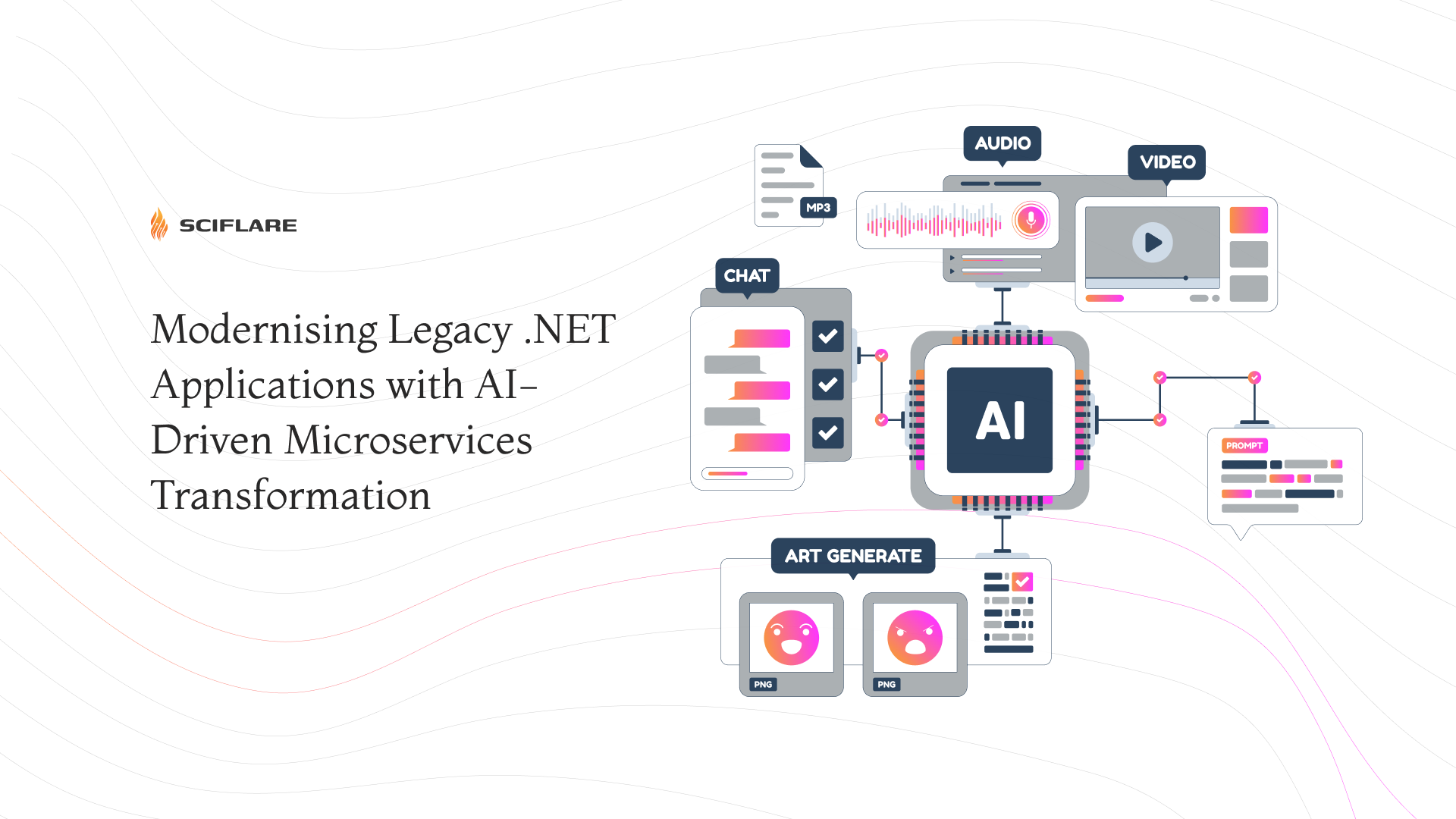
  • From Legacy .NET to AI-Ready: Microservices for Scalable Transformation 

    From Legacy .NET to AI-Ready: Microservices for Scalable Transformation 

    Introduction 

    Many enterprises still operate on legacy .NET frameworks and tightly coupled monolithic architectures. While these systems may continue to function, they often slow down innovation, increase maintenance overhead, and block scalability. Modern user expectations, growing data volumes, and AI-powered automation demand more flexible, modular, and intelligent systems. 

    This is where Sciflare steps in as a modernization partner—helping CTOs, CIOs, and Engineering Heads re-architect legacy .NET applications into AI-ready, microservices-based systems. This transformation unlocks speed, agility, and business insights that monolithic platforms cannot match. 

    Why Legacy .NET Applications Block AI Readiness 

    Enterprises running applications on legacy .NET frameworks (e.g., .NET Framework 4.x) face several barriers to modernization: 

    • Tightly coupled architecture makes updates and scaling risky and time-consuming. 
    • Limited support for modern integrations like REST APIs, cloud-native deployments, and AI engines. 
    • Long release cycles due to shared dependencies and lack of automation. 
    • Inefficient data pipelines that block real-time processing needed for AI. 

    These challenges not only impact developer productivity but also limit the enterprise’s ability to experiment with AI models, automation tools, or analytics engines that need microservice-level agility. 

    In many cases, legacy systems were not built with today’s dynamic and distributed digital environment in mind. They struggle to integrate with AI/ML workflows, real-time data streams, and cross-platform functionality. This becomes a major roadblock for product managers and IT decision-makers looking to roll out AI-enabled features such as intelligent search, NLP, fraud detection, or demand forecasting. 

    Additionally, legacy systems may rely on outdated security mechanisms, making them vulnerable in today’s threat landscape. They may also depend on unsupported libraries or frameworks, creating compliance risks and operational bottlenecks. 

    Microservices as the Backbone of Modern Transformation 

    Decoupling legacy .NET applications into microservices lays the groundwork for intelligent automation and future-ready scalability. 

    Scalability and Modularity Advantages 

    • Each microservice is independently deployable and scalable. 
    • System failures are isolated, reducing downtime risks. 
    • Easier integration with containers (Docker), orchestration platforms (Kubernetes), and CI/CD pipelines. 
    • Facilitates cloud-native modernization (AWS, Azure, GCP). 

    This modular structure also enables teams to isolate business domains—such as billing, authentication, or user management—and allocate ownership more clearly. This enhances security, performance tuning, and feature-specific innovation. 

    Faster Innovation and Continuous Delivery 

    • Independent teams can work on different services without dependency conflicts. 
    • Frequent deployments with minimal disruption. 
    • Simplifies A/B testing, feature flags, and rollback strategies. 
    • Enables DevOps and agile practices end-to-end. 

    With microservices, enterprises can experiment more confidently and release updates faster, making it easier to respond to market demands, customer feedback, or business pivots. 

    Moreover, the adoption of Infrastructure-as-Code (IaC) tools and GitOps methodologies becomes seamless in microservices environments, driving speed and standardization across deployments. 

    How AI Enhances Modernisation of Legacy Apps 

    AI is not just a post-modernization add-on; it accelerates and enhances the modernization journey: 

    • AI-assisted code analysis helps identify legacy components, redundant code, and modernization opportunities. 
    • Automated testing using ML models speeds up regression testing and bug detection. 
    • Predictive autoscaling adjusts cloud resources dynamically based on user load. 
    • AI-powered observability provides real-time anomaly detection in production. 

    In addition to this, AI tools can generate code migration suggestions, validate code quality at scale, and automate routine maintenance tasks. AI-driven DevOps pipelines can prioritize high-impact changes, monitor technical debt, and even simulate post-migration performance scenarios. These efficiencies reduce risks during modernization and improve outcomes. 

    Intelligent chatbots and AI service layers can also be integrated into modernized apps to enhance end-user experience, personalize workflows, and support real-time decision-making. 

    Business Outcomes of AI-Driven .NET Modernisation 

    Enterprises that modernize with Sciflare’s AI-centric microservices architecture can expect tangible business outcomes: 

    • 50% faster release cycles through modular development and automated testing. 
    • Up to 40% reduction in infrastructure costs via cloud-native and autoscaling systems. 
    • Enhanced reliability and uptime, even during peak traffic. 
    • Real-time insights through intelligent analytics layers. 
    • Increased development velocity, allowing faster experimentation and rollouts. 

    A modern, AI-ready stack also makes it easier to onboard new developers, adopt DevSecOps principles, and integrate third-party APIs or SaaS platforms that require real-time data exchange. 

    Organizations can also unlock new revenue streams by offering API-based services or enabling integrations with partners, suppliers, or customers. Modernization can thus turn IT infrastructure into a business enabler, not just a cost center. 

    Mini Case Study 

    A leading SaaS provider modernized its legacy .NET platform using an AI-driven microservices architecture. Event-driven concurrency enabled 500K+ requests per minute with sub-50 ms response time and zero downtime during high-traffic periods. This architecture improved release agility and enabled real-time analytics for decision-making. 

    Another Sciflare client, a financial services enterprise, leveraged AI-driven modernization to automate loan approvals. By decoupling their .NET monolith into microservices and integrating an AI decision engine, they reduced approval time by 80% and improved compliance tracking. 

    Preparing for the Future with AI-Ready IT Infrastructure 

    Sciflare’s phased approach ensures zero disruption and maximum ROI during modernization: 

    1. Assessment: Evaluate the existing legacy .NET architecture, data dependencies, and modernization scope. 
    1. Architecture Blueprinting: Design a domain-driven microservices architecture aligned with business workflows. 
    1. Automation Implementation: Integrate AI-assisted development, automated testing, and CI/CD pipelines. 
    1. Cloud-Native Deployment: Containerize microservices and deploy on scalable cloud infrastructure. 
    1. Operational Monitoring: Implement AI-powered observability and monitoring tools for ongoing performance and reliability. 
    1. Feedback Loop Integration: Enable systems to learn from user behavior and operational data to drive further optimization. 
    1. Governance & Security: Establish enterprise-wide controls for API security, identity management, and compliance. 

    Sciflare supports enterprises at each stage with expert consultants, engineers, and AI specialists to deliver successful outcomes. 

    Conclusion 

    Modernizing legacy .NET systems with AI-driven microservices isn’t just a technical upgrade—it’s a business enabler. It unlocks speed, agility, scalability, and insight for today’s digital enterprises. 

    By combining architectural best practices with automation and AI, enterprises can gain a competitive edge, reduce technical debt, and respond to market shifts with confidence. 

    Whether you’re a CTO planning digital transformation, or an IT leader seeking better performance from your legacy assets, Sciflare offers a proven roadmap for modernization. 

    Talk to our experts to plan your AI-ready modernization roadmap. 

    FAQs 

    1. What are the benefits of microservices for legacy .NET applications? 

    Microservices improve modularity, scalability, and fault isolation. They also facilitate faster deployment and easier integration with modern tools and platforms. 

    2. How can AI assist in software modernization? 

    AI helps with legacy code analysis, test automation, predictive scaling, and anomaly detection, enabling faster and smarter modernization. 

    3. What’s the safest path for migrating monolithic .NET apps? 

    Start with assessment, move to microservices design, automate testing and deployment, then gradually replace components with minimal disruption. 

    4. How long does AI-driven modernization typically take? 

    Timelines vary based on system complexity, but phased transformation with MVP delivery can begin showing results within 3–6 months. 

    5. Can we modernize without rewriting the entire application? 

    Yes. Using techniques like strangler pattern, containerization, and API gateways, legacy apps can be incrementally modernized with minimal rework and zero downtime. 

    6. How do I justify modernization to business leadership? 

    Highlight faster time-to-market, reduced operational cost, improved security, and the ability to deliver AI-powered features that drive competitive differentiation. 

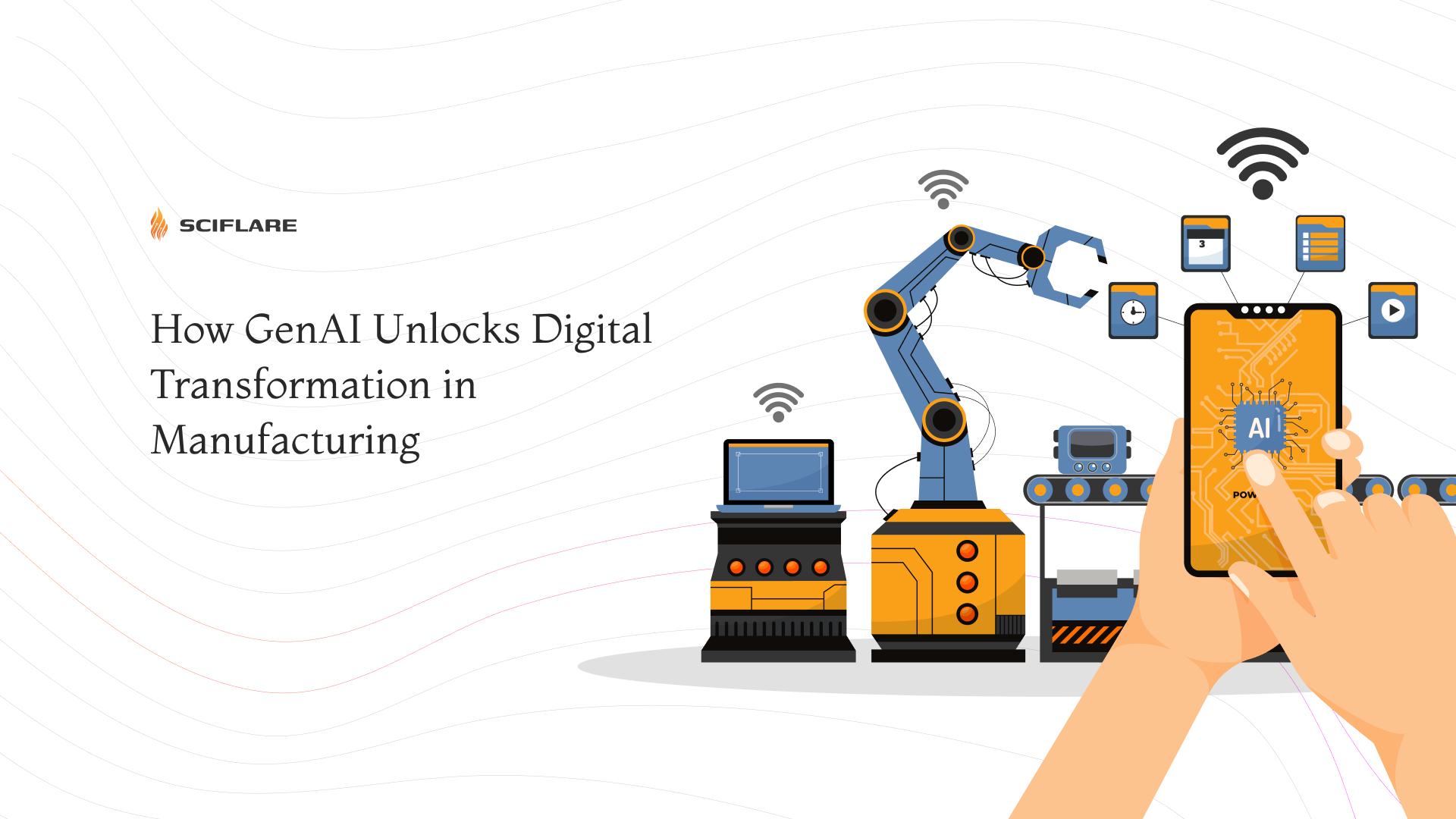
  • How GenAI Unlocks Digital Transformation in Manufacturing 

    How GenAI Unlocks Digital Transformation in Manufacturing 

    Introduction 

    The manufacturing industry is at a crossroads- on the one hand, the rise of Industry 4.0 presents manifold opportunities with intelligent, data-driven, and hyper-connected factories that operate on unprecedented precision and efficiency, but on the other hand, legacy MES and ERP systems fail to support operations in the midst of this transformation. This is where Generative AI transforms legacy systems into adaptive and learning intelligence systems that optimize in real-time, support continuous innovation, and enable manufacturers to achieve predictive maintenance, resilient infrastructures, and smarter decision-making capabilities. 

    This blog helps manufacturing leaders understand how Generative AI-led digital transformation helps them scale with unprecedented efficiency and speed, seamlessly transform legacy systems, and automate operations end-to-end for smarter and more dynamic supply chains. 

    The manufacturing industry is undergoing a seismic shift with the rise of Industry 4.0. Legacy MES and ERP systems, once the backbone of operations, now struggle to support the speed, scale, and intelligence demanded by modern factories. As production lines become smarter and supply chains more dynamic, the gap between traditional systems and AI-powered innovation is growing wider. 

    Generative AI (GenAI) is fast becoming the catalyst that enables manufacturers to modernize outdated systems, unlock predictive insights, and automate operations end-to-end. For CTOs, CIOs, and operations leaders, this transformation is no longer optional—it’s critical for competitiveness, resilience, and growth. 

    What is Generative AI? How Does It Benefit the Manufacturing Industry? 

    Generative AI is a subset of artificial intelligence that enables organizations to produce unique text, video, audio, and image content using machine learning capabilities. These models learn from human-created content and generate fresh content with endless possibilities. Popular examples of GenAI models include ChatGPT, Stable Diffusion, and DALL-E among others.  

    Generative AI capabilities help models adapt quickly and efficiently to each application. Their versatility for tasks like content generation, question-answering, and summarizing with minimal training data makes them valuable across various industries and people of each profession.  

    According to a report by Market.us, the global Generative AI in manufacturing market size is expected to be around USD 10,540.1 million by 2033, up from USD 316.2 million in 2023, growing at a CAGR of 42% from 2024 to 2033. This growth can be attributed to the seismic shift the manufacturing industry is going through in the Industry 4.0 era. Be it the need for accelerated product development cycles, endless design possibilities, quicker iterations, or end-to-end automation in manufacturing, GenAI can boost productivity and innovation with its ability to learn and adapt quickly, and enable manufacturers to deliver personalised products, streamline operations, and scale effortlessly.  

    Additionally, mission-critical operations in manufacturing suffer from years of accumulated technical debt, legacy architectures, and escalating time, costs, and other risks that accompany modernizing legacy systems. However, without modernizing legacy systems, the benefits of Industry 4.0 and the ability to remain competitive cannot be fully realized. This is where Generative AI can help the manufacturing industry bridge the gap between progress, innovations, data-driven decision-making, and legacy systems. 

    Generative AI Use Cases In Manufacturing  

    Generative AI is redefining how factories evolve with the rise of Industry 4.0. From automating documentation to predicting process bottlenecks and improving interoperability across systems, Gen AI has extensive use cases in manufacturing, redefining the DNA of its operations and equipping it for Industry 4.0 excellence. Discussed below are the various ways in which Gen AI can be used in manufacturing:  

    1. Data-Driven Decision Making  

    Generative AI helps manufacturers make data-driven decisions by leveraging its machine learning algorithms to analyze large datasets across operational insights, market trends, and customer preferences. These algorithms accurately analyze extensive datasets from multiple sources and identify insights for maximizing operational efficiency, product design innovation, manufacturing process optimization, and customer satisfaction rates. 

    1. Process Automation for Product Development  

    Generative AI automates and streamlines all key product development processes like design, simulation, prototyping, and testing. It accelerates product design by analyzing historical design data and performance parameters to generate multiple product concepts, reducing the design innovation from weeks to hours. Further, it enables developers to leverage AI-driven simulations to test virtual prototypes in real-world conditions and minimizes expensive physical iterations. By integrating with CAD and PLM systems, Gen AI automates repetitive design tasks, ensures compliance, and suggests optimizations to maximize the efficiency of the manufacturing process. 

    1. Creating Digital Twins 

    Gen AI helps manufacturers create digital twins, or virtual replicas of physical processes or assets seamlessly. This boosts constant product innovation by simplifying design iterations through virtual simulations. Learning from historical performance and evolving real-time data, Gen AI can automatically suggest performance improvements after simulating multiple production scenarios, optimizing crucial production parameters, and predicting system behavior. This empowers manufacturers to minimize losses by predicting equipment failure, reducing system downtime, and making crucial physical changes only after optimizing relevant production parameters. Additionally, manufacturers can integrate Gen AI with ERP and IoT systems to enable effective feedback loops to improve the entire product lifecycle.  

    1. Predicting System Failures 

    By using sensor data, Gen AI can identify potential system failure from accurately detected patterns and help manufacturers schedule their maintenance proactively, instead of waiting for the failure and subsequent losses. With its ability to analyze machine logs and operational patterns, Gen AI can identify early inefficiencies before they become roadblocks, ensure consistent production, and extend the equipment lifespan for better ROI and customer success.  

    1. Proactive Customer Support 

    Not only can Gen AI emulate human responses for product information 24*7, it can also offer context-aware responses to improve customer experiences with instant responses for all their queries. For manufacturing businesses, this amounts to a reduction in customer support costs as human service agents can be freed up for more complex tasks, eliminating all possibilities of delayed responses and frustrated customers.  

    1. Automating Quality Control 

    By using machine learning and computer vision, Gen AI can analyze production parameters and sensor data to identify flaws that humans can easily miss. Additionally, it can classify each defect and trace their root causes to suggest improvements in real-time. By automating inspection, proactively identifying defects, maintaining consistent quality standards, and continuously maintaining production data, Gen AI brings unprecedented accuracy to the quality control process to boost quality validation and minimize error rates.  

    1. Supply Chain Optimization 

    Be it automatically adjusting procurement schedules, minimizing disruptions by suggesting alternate suppliers, or optimizing supply chain strategies by analyzing market trends, weather reports, or inventory details, Gen AI can revolutionize operational efficiency with an adaptive, resilient, and responsive supply chain to boost demand forecasting and cut surplus costs for manufacturers.  

    The Digital Transformation Gap in Manufacturing 

    While the manufacturing industry stands at a crossroads with emerging technologies promising progress, its current status limits its ability to realize their true potential. This disparity results in the cascading effect of operational inefficiencies, outdated systems, and restricted agility on constant innovation. Limited by their present technical capabilities, manufacturers fail to meet evolving customer needs, respond effectively to a volatile market, and maintain cost controls in their supply chains. Let us understand how this digital transformation gap is affecting the manufacturing industry in detail: 

    1. Data Silos 

    Legacy MES and ERP systems do not communicate with each other. This creates data silos, resulting in disconnected operations, missing insights from crucial stages, and ill-informed decisions. Without a unified performance view, manufacturers miss key data trapped between disconnected departments and miss out on crucial insights from supply chains, operations, production, and maintenance. This compromises the manufacturing industry’s readiness for Industry 4.0, which necessitates unification, automation, and predictive analytics.  

    Generative AI can bridge this gap by consolidating data from disparate sources, generating accurate insights, and facilitating real-time communication across systems. In suggesting improvement measures and predicting outcomes based on consolidated data from all systems, Gen AI converts raw and scattered data into a unified powerhouse of intelligence for the manufacturing industry. 

    1. Operational Inefficiency and Reactive Responses 

    Manual workflows and outdated systems that do not communicate with each other increase error rates, slow production and response efficacy, and lead to resource wastage. This cascading effect of these inconsistencies can be seen in equipment downtime, delayed deliveries, escalating maintenance costs, and inadequate production. Compounding losses multiply as manufacturers take a reactive instead of a precautionary response.  

    Generative AI addresses this problem by facilitating data consolidation from multiple sources, automating end-to-end processes, adjusting production parameters, and predicting equipment failures before they result in irreversible losses.  

    1. Limited Scalability 

    Legacy systems and disconnected data prevent manufacturers from adjusting their production volumes to the demands of an ever-changing market. This makes it difficult for manufacturers to expand to new markets, launch new product lines, and streamline operational costs while maintaining lead times. 

    Gen AI addresses this problem by enabling data-driven scalability, optimizing resource allocation, and dynamically simulating production changes. Gen AI integrates with ERP and IoT systems, and digital twins to help manufacturers scale up efficiently and minimize downtime. 

    1. High Maintenance Costs  

    Legacy systems in manufacturing suffer from reactive maintenance and manual monitoring. Without predictive capabilities, these legacy systems often lead to unexpected downtime or prohibitively expensive repairs and maintenance.  

    Gen AI streamlines these costs by enabling predictive maintenance, analyzing real-time data, and historical records to detect failures in advance and schedule maintenance before the system faces consistent downtime. This improves the equipment lifespan, minimizes downtime, and leads to an efficient utilization of resources for growth and expansion. 

    Despite massive investments in automation, many manufacturers still rely on outdated MES and ERP systems that: 

    • Operate in silos, limiting data visibility 
    • Rely on manual data inputs, prone to human error 
    • Struggle with real-time responsiveness 
    • Incur high maintenance and upgrade costs 

    According to McKinsey, nearly 70% of digital transformation initiatives in manufacturing fail to achieve scale due to fragmented systems and lack of AI-readiness. 

    Legacy System Challenges in Industry 4.0 

    Integration issues with IoT and analytics tools 

    Legacy systems often lack the APIs or data architectures needed to connect with modern IoT sensors, edge devices, and analytics platforms. This leads to isolated data pools that hinder advanced decision-making. 

    Data fragmentation and limited visibility 

    With information stored across different modules or spreadsheets, teams face challenges in gaining real-time visibility into production KPIs, asset performance, or inventory health. 

    High maintenance costs and downtime risks 

    Older systems demand frequent manual interventions and are more prone to downtime. Every minute of unplanned downtime costs manufacturers thousands of dollars in lost productivity. 

    GenAI as a Catalyst for Smart Manufacturing 

    GenAI transforms traditional operations by combining advanced analytics, natural language interfaces, and self-learning algorithms that transform factories into intelligent and data-driven powerhouses of innovation. Discussed below are ways in which Gen AI enables smart manufacturing: 

    Predictive Maintenance and Real-Time Analytics 

    GenAI can analyze sensor data to detect anomalies, predict equipment failures, and schedule maintenance before breakdowns occur. This minimizes downtime and extends asset life. 

    Intelligent supply-chain optimization 

    Using GenAI, manufacturers can forecast demand, optimize inventory, and dynamically reroute shipments based on changing market conditions or disruptions. 

    Workforce augmentation with AI assistants 

    AI copilots can guide floor operators through complex tasks, answer real-time queries about production status, and generate reports from natural language prompts, improving worker productivity and reducing training time. 

    Quality control automation 

    GenAI enhances inspection processes by analyzing images, sensor data, and production variables to detect defects earlier in the process. This ensures better product consistency and reduces rework. 

    Dynamic production scheduling 

    AI models can dynamically adjust production schedules based on resource availability, order priorities, and unexpected disruptions. This real-time adaptability ensures maximum throughput and minimal idle time. 

    Roadmap to AI-Ready Manufacturing Enterprises 

    A structured approach to GenAI modernization can ensure minimal disruption and faster time-to-value: 

    1. Audit Existing Infrastructure 

     Assess current MES/ERP systems, identify integration points, and evaluate data maturity. 

    1. Modernize Legacy Systems 

     Re-platform core systems using microservices, cloud-native frameworks, and data lakes. 

    1. Automate with GenAI 

     Deploy AI agents for predictive maintenance, quality checks, and workflow orchestration. 

    1. Scale Across Plants 

     Use a centralized AI operations hub to replicate success across facilities. 

    1. Build a Data-First Culture 

     Empower teams with real-time dashboards, AI training, and actionable insights that drive better decisions. 

    Case Snapshot 

    A leading manufacturing enterprise modernized its legacy ERP platform using GenAI-driven predictive analytics. By connecting IoT data streams with an event-driven architecture, the company achieved 99.8% uptime, automated maintenance scheduling, and improved production efficiency by 32%. This modernization reduced downtime and enhanced scalability across multiple plants. 

    Conclusion 

    Modernizing legacy MES and ERP systems is no longer just about digital upgrades. It’s about enabling a new era of AI-ready, resilient manufacturing operations that are predictive, scalable, and smart. 

    With GenAI, manufacturers can unlock real-time insights, minimize downtime, and streamline operations from the shop floor to the supply chain. 

    Talk to our experts to design your AI-ready manufacturing transformation roadmap. 

    FAQs 

    1. How does GenAI improve operational efficiency in manufacturing? 

     GenAI provides predictive insights, automates repetitive workflows, and assists human workers with real-time guidance, reducing delays and errors. 

    2. Can legacy MES/ERP systems be integrated with AI without full replacement? 

     Yes. Through APIs, data lakes, and cloud-based overlays, GenAI can augment existing systems without complete replacement. 

    3. What are the first steps in modernizing manufacturing systems? 

     Begin with a digital maturity audit, identify process inefficiencies, and design a phased modernization roadmap with clear milestones. 

    4. How does GenAI support predictive maintenance and quality control? 

     GenAI models analyze historical and real-time machine data to forecast failures and detect quality issues, enabling proactive interventions. 

    5. What role does GenAI play in supply chain resilience? 

     GenAI enhances visibility, predicts delays, and suggests alternative sourcing or logistics paths during disruptions, making the supply chain more resilient. 

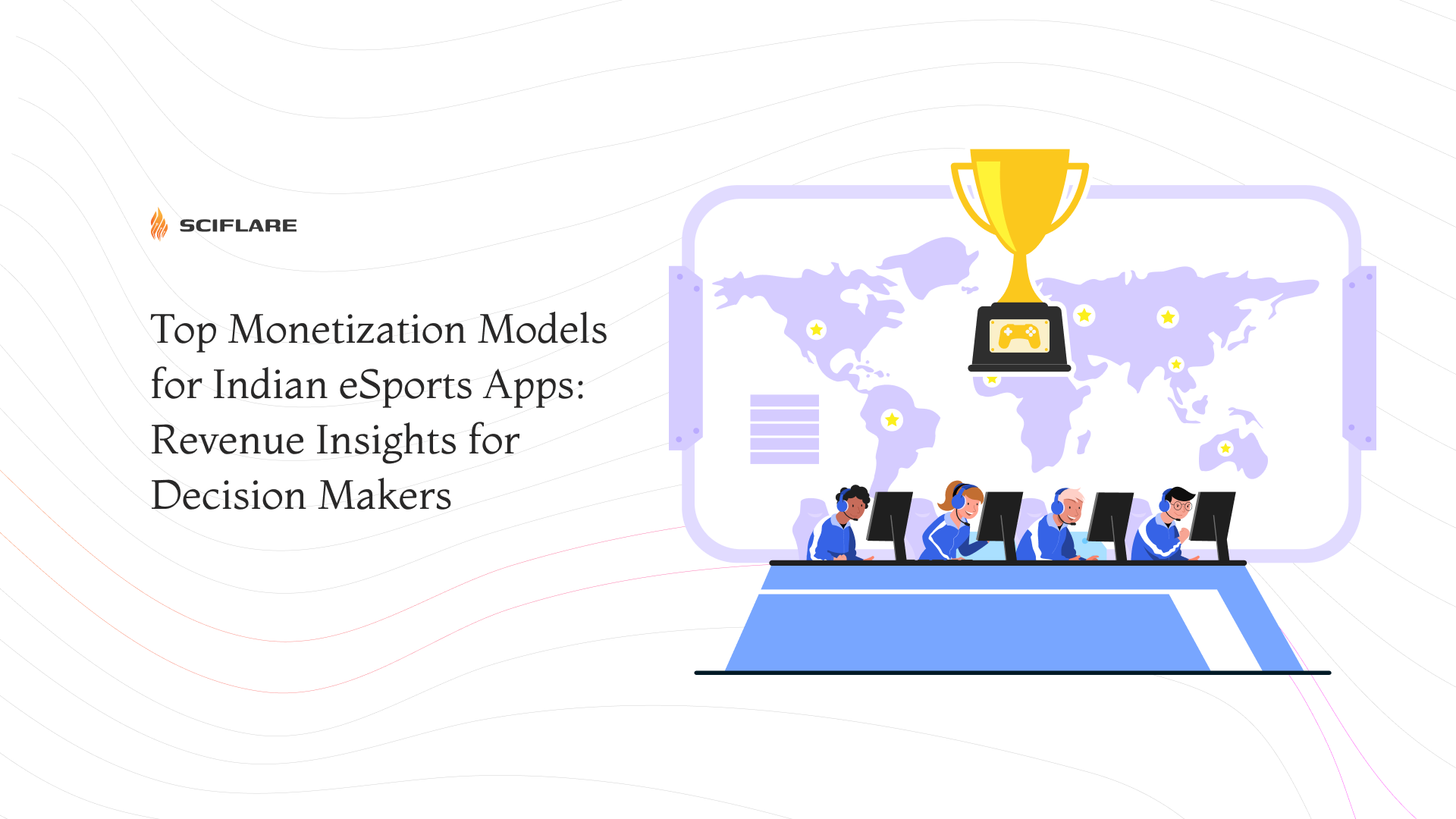
  • Top Esports App Monetization Models in 2025

    Top Esports App Monetization Models in 2025

    Quick Summary 

    • Esports monetization should balance market risks, affordability and entry barriers for a price-sensitive Indian market, and touch all points of fan interaction to deliver desired returns. 
    • Hybrid monetization or a mix of monetization models combining ads, sponsorships, ticket sales, and merchandising is the way forward for esports businesses to thrive in this competitive market. 
    • Hybrid monetization answers all traditional app monetization limitations and offers Indian consumers unmatched flexibility to engage with their favorite sports. 

    Introduction 

    Esports app monetization refers to the process of making revenue from the competitive gaming ecosystem. However, esports monetization is different from traditional gaming, considering its intricate and extensive ecosystem of event organizers, game developers, and teams creating value for viewers, players, and investors. With its rapid growth and constantly evolving ecosystem, Indian esports app monetization needs to be diverse to guarantee businesses sustained growth and profits immune from market shifts, regulatory updates, changes in consumer preferences, and growing competition threats.  

    This blog helps esports innovators, business strategists, and other key decision-makers understand the various monetization models to implement in their apps to offer sports fans a comprehensive ecosystem tailored to their preferences. 

    Understanding the Esports Market India: An Overview 

    According to a Statista report, the esports industry in India is expected to generate a revenue of $139.3 mn by 2025, which is expected to grow at a CAGR of 5.78% to reach a market volume of $174.4 mn by 2029. In addition to this steady growth, the Promotion and Regulation of Online Gaming Act (August 2025), which banned real-money fantasy games, recognizes esports as a legal and socially competitive gaming format, further fueling the esports industry growth in the rapidly evolving Indian gaming era.  

    As such, with regulatory approval, proven growth potential, and most Indian gaming businesses striving for survival, esports is positioned to carry forward the legacy of fantasy games without real money, cater to the vast market of passionate gamers in India, and shape the global dominance of India’s gaming industry.  

    Other key factors that contribute to esports success in India and play a decisive role in esports app monetization include: 

    • World’s largest youth population: According to the Government of India’s Press Release Bureau, India has the world’s largest youth population, with over 65% of its population below the age of 35. This population is tech-savvy, owns the major spending potential, constitutes the primary user base for smartphones, and engages in digital entertainment like no other. 
    • Established digital infrastructure: According to a report by Business Standard, India had approximately 1.2 billion smartphone users as of early 2025. This is a result of accessible internet infrastructure and affordable mobile data that enables users to access online services. 
    • Growing career opportunities: India’s youth values esports beyond entertainment, which offers a unique blend of tradition and opportunity to power the nation’s global dominance with steady employment opportunities.  
    • Investor approvals: With the Promotion and Regulation of Online Gaming Act recognizing esports as a competitive and social gaming format, the esports industry’s status is free from all ambiguity and stands de-risked for investors who believed in the popularity of games but worried about the regulatory impact in an unstructured market.  
    • Expanding ecosystem: The esports industry offers brands unprecedented visibility with opportunities for fruitful cross-promotions and fan engagement. 

    Key Challenges for App Monetization India 

    India’s passion for gaming is known worldwide. The real challenge is to offer sports fans an engaging experience and enough value in alignment with regulatory frameworks that they want to spend more on your app. As such, monetizing esports apps requires businesses to intricately balance user needs with revenue goals without compromising their gaming experience. Discussed below are the top monetization challenges that gaming businesses and app developers should prepare for: 

    1. Price Sensitivity 

    Indian gaming consumers are known to be price sensitive. This is evidently visible in the free-to-play model being the most dominant one for gaming businesses, who use it as a mechanism to lower their entry barrier among first-time gamers. Additionally, advertising accounts for a greater part of the revenue for Indian gaming apps as compared to in-app purchases with businesses standing the risk of plummeting engagement rates with as much as a 30% hike in participation fees.  

    1. Freemium Expectation 

    To maximize on the ROI in gaming, Indian gaming apps need to offer value-based pricing in return for premium features that seem indispensable. The main complexity game developers face in this context is that most online gamers expect freemium models with a good gaming experience. The transition to a premium layer should be compelling and offer a value-driven promise worthy of an investment. 

    1. Low ARPU Conversion 

    According to standard industry reports, India’s gaming industry records an Average Revenue Per User (ARPU) of $3, whereas established gaming markets like those in the US record an ARPU of $200 or more. This stark difference leaves a lot of room for implementing diverse monetization strategies and microtransactions that seamlessly blend into user behavior and blur the lines between play, payment, and technology.  

    1. CAC vs LTV  

    Nearly all businesses agree that the cost to acquire a customer is higher than the cost of retaining one. Applied to the gaming industry, this complexity multiplies with increasing competition to reach over 517 million online gamers in 2025, according to a report by Demand Sage. As such, gaming businesses only have technology to use as a differentiator and offer delightful gaming experiences that invite new users, retain existing ones, and create viable business value while doing so.  

    Proven Esports Monetization Models for Revenue Diversification 

    Discussed below are the diverse ways of monetizing esports apps in India according to established regulations, user demand, and ecosystem expansion: 

    1. In-Game Purchases 

    Ever noticed games like COD Mobile and BGMI? A very small percentage of their user base spends money on the game, but their model makes them do it at a high frequency. Battle passes, microtransactions, skins, time skips, and boosters play a significant role in establishing unique identities and exclusivity, and are recurring by nature, seamlessly blending into user behavior and context.  

    This is a popular monetization model for esports apps because it: 

    • Caters to sports fans’ demands for exclusive content around their favourite games. 
    • Leverages the accessibility of mobile technology to give users the opportunity to engage with their preferred game anytime, anywhere, enhancing the possibility and requirements for in-app purchases. 
    • Aligns with the cautious spending habit of Indian consumers by giving them the choice of microtransactions instead of high subscription fees. 
    • Extends the personalisation of Esports (via custom avatars and skins) with cultural relevance for the Indian user who sees Esports at the intersection of culture, identity, and opportunity. 
    • Offers a recurring monetization opportunity for esports providers, offering their users unmatched flexibility, choice, and opportunity to engage with seasonal drops and battle passes. 
    • Enables esports businesses to expand their offerings to users who want free-to-play games as well as those who want to engage more with in-game purchases. 

    Real World Use Case 

    Apps like Fortnite and Mobile Legends Bang Bang have effectively used in-game purchases as a monetization model to not only diversify their revenue, but also expand their user base, and maintain a stable revenue stream, along with a fair gaming environment for all users, and enhanced scope for users’ consistent engagement and retention  

    1. Brand Partnerships and Sponsorships  

    Gaming was once a downstream of pop culture. Today, it has largely evolved into a visibility powerhouse for all brands with a well-established ecosystem at the intersection of technology, people, community, and culture. As such, brand partnerships and sponsorships find a natural destination with esports apps as they continue to attract millions of young and tech-savvy users to their platforms. 

    Brand sponsorships form one of the most promising monetization strategies for esports apps because:  

    • They offer non-interruptive user engagement, where users can win a match and unlock credits for real-world discounts. This connects them to their favorite brands without compromising on their gaming experience.  
    • They enable access to a high-converting and full-funnel ecosystem of fans who gather to engage in their favorite games. Traditional and non-specific ads would appeal less to them than visibility of products and brands that align with their gaming habits.  
    • Esports have evolved from isolated grassroots tournaments to full-fledged global championships. As such, brand partnerships offer visibility that scales with the extensive ecosystem across multiple touchpoints as per user preferences. 
    • They play a pivotal role in shaping an esports app’s fan engagement quotient by offering co-created merchandise and content that creates better emotional resonance. 
    • Along with fueling community growth and user loyalty, they offer a reliable and long-term revenue opportunity comparatively immune from risks of volatile measures. 

    Real World Use Case 

    India’s “Bowl of Esports”, Battlegrounds Mobile India Masters Series (BGMS), has returned with its fourth season in partnership with Jio Hotstar, and title sponsors as One Plus and Android as Co-Title Partner. Other popular consumer brands such as Swiggy, Duolingo, Bisleri and Red Bull have also been roped in as sponsors. Beyond publicity, these brands get established among the Indian youth, upholding values they cherish, in an environment that resonates culturally with them.  

    1. Digital Content Streaming  

    Digital content and on-demand streaming services have transformed how esports providers engage with sports fans. Streaming platforms like Twitch and YouTube help Esports brands diversify their revenue with subscriptions and ad revenue, while reaching a wider user base at scale.  

    Discussed below are reasons why digital content streaming works as a viable revenue diversification strategy for esports apps:  

    • Platforms like YouTube Gaming have massive penetration among the Indian youth and offer natural entertainment quotients as profitable esports discovery channels. 
    • In a price-sensitive market like India, streaming services enable esports businesses to offer free-to-play formats and implement ad monetization that naturally sits well with users of streaming services. 
    • Streaming channels play a key role in amplifying fan loyalty through community polls, live chats, and interactive streams. 
    • Streaming channels stabilize esports revenue by diversifying it with brand collaborations and memberships revenue. 

    Real World Use Case 

    Tyler “Ninja” Belvins made headlines in 2023 by earning approximately $10 million through his YouTube and Twitch channels. 

    1. Merchandising  

    Merchandising has emerged as one of the top esports revenue models with direct fan engagement opportunities beyond the match day. It enables esports businesses to sell branded merchandise according to users’ favorite sports teams, enter brand collaborations with lifestyle, fitness, and sports companies, and earn through licensing agreements.  

    Merchandising is a promising esports monetization as well as revenue diversification strategy because: 

    • It offers a direct way to engage with fans and earn revenue by selling fan favorites like branded jerseys and collectibles. 
    • It fuels and caters to passionate fan loyalty to their favorite teams and players, enabling them to share their identities with jerseys, caps, and other fan collectibles. 
    • In India’s price-sensitive market, merchandising is neither intrusive nor does it create an entry barrier for cost-conscious fans. As opposed to expensive premium subscriptions, merchandising enables businesses to price fan favorite goods flexibly and engage them directly. 
    • Merchandising offers unprecedented visibility enhancement with its offline and online reach. Esports events and local tournaments can be the perfect destination for offline sales to fan communities, whereas e-commerce module implementation can help esports businesses reach audiences worldwide. 
    • Branded merchandise goes beyond a desire for fashion. It seamlessly blends into the culture the Indian youth cherishes deeply, sharing aspirations and victory journeys of their favorite athletes. This makes merchandising a tool for stronger community building and user retention. 
    1. Ticket Sales  

    Ticket sales is a direct way to guarantee user retention in esports by balancing affordability, engagement, community-building, and fan exclusivity. Indian esports fans are drawn towards live game events, stadiums, and gaming arenas, and ticket sales are a medium to give them the joy of traditional gaming in a brand-new format.  

    Additionally, ticket sales give sports fans a strong sense of community, engagement, and relevance via tiered pricing models to accommodate fans with different spending preferences. While general entry tickets cater to mass engagement, premium passes, paid virtual tickets for live-streamed events and behind-the-scenes content access attract hardcore fans willing to spend more on deeper fan engagement. Combined to match tickets, esports businesses can also unlock ancillary revenue with merchandise, food, and beverage partnerships. 

    Discussed below are reasons why ticket sales is a stable esports monetization strategy: 

    • They tap into the cultural willingness of Indian sports fans to spend on entertainment as they have for live matches, local tournaments, and gaming arenas. 
    • Ticket sales offer recurring and predictable revenue cycles with round-the-year tournaments, city-based leagues, and annual championships.  
    • With users open to digital payments and UPI dominating as the preferred payment mode, ticket sales offer a frictionless payment method with an extensive reach to billions of sports fans. 
    • As a revenue diversification strategy for esports apps, ticket sales offer a promising medium with brand partnerships in creating an immersive ecosystem for sports fans. 

    Real World Use Case 

    Tournaments like the League of Legends World Championship host thousands of sports fans in venues like Sang-am World Cup Stadium in Seoul, making ticket sales a primary revenue booster. 

    1. Advertising  

    Advertising constitutes a core business model for esports apps where they earn revenue through targeted and personalised ads during esports events and live streams. 

    Advertising is a beneficial esports monetization model because:  

    • It offers brands direct access to India’s primary consumer group in the 16-35 age group. This age group is tech-savvy and their digital native habits naturally fuel the growth of emerging brands. 
    • Esports operators can benefit from the high conversion of ads delivered to passionate sports fans during high engagement matches and live streams. 
    • Interactive ads and other multiple ad formats like banner ads, branded content, and mod-roll ads enhance the ROI and offer flexible monetization options. 
    • Ads eliminate the entry barrier for Indian users, most of whom do not pay for games. 
    • Ads offer a source of recurring revenue with expanding esports viewership across mobile, PC, and streaming platforms.  

    How Sciflare Can Help You Implement Mobile Esports Monetization Profitably 

    As evident from understanding the extensive esports ecosystem in this blog, implementing hybrid and diversified monetization models for esports is the only way to maximize revenue and boost customer LTV. This is because Esports does not exist in isolation, much like users’ engagement with esports, which happens against the backdrop of their social, cultural, and economic circumstances. Additionally, hybrid monetization models minimize regulatory risks and ensure smooth business operations consistently.  

    With fan engagement being a core component, survival strategy, and differentiator for Esports, hybrid esports monetization models help gaming businesses offer immersive gaming ecosystems that appeal to sports fans beyond basic functionality and resonate with their emotional and cultural habits. Discussed below are the ways in which Sciflare can help you win in the Esports market with regulation-approved Esports monetization models: 

    1. UPI Ready Scalable Systems 

    Having scaled Dream 11 from 0-5.5 million+ users, Sciflare specializes in gaming tech and scalable infrastructures that help gaming enterprises cater to peak demand. Our UPI-ready scalable infrastructure and payment systems help you reach India’s extensive user base and offer them frictionless transactions spanning in-game purchases, ticket sales, subscriptions, and more. Additionally, we can help you integrate analytics-driven modules to enhance fan engagement and convert every fan interaction with your app into a revenue-generating opportunity. This will enable you to personalise offers, track ads performance, and manage traffic spikes during peak loads effectively by combining sports innovation, payment gateway integration, and scalable infrastructure.  

    1. Custom Gamified Strategies  

    Gamified elements like leaderboards, daily challenges, streaks, and virtual rewards can help you diversify your monetization strategy and draw users towards premium subscriptions and in-game purchases more naturally. Without interrupting their gameplay experience, gamification can appeal to their intrinsic motivations and transform passive spectators into active participants through interactive quizzes, polls, and contests. This can increase their time spent on the app, convert fan engagement into a revenue tool, and boost fan loyalty amidst increasing competition. Additionally, you can track gamification analytics to identify which monetization strategy works best for you from the hybrid mix and optimize your investment on the same. 

    1. Cultural Resonance  

    We can help you build esports gaming ecosystems that resonate with India’s diverse culture and appeal to users of each region accordingly. From region-specific design to multi-language support, and hyper-local relevance, we have got you covered to build India’s next favorite Esports app- built in India, for India. The outcome of an esports app with high cultural resonance goes beyond profit, it blends into the fabric of our nation’s love for sports and aligns with the Government’s attempts to empower the Indian gaming ecosystem in all parts of the country. 

    1. AI-driven Personalization 

    This is the era of hyper-personalization, where every user expects a version of an app most relevant for them (think Spotify or Instagram). The machine learning algorithms at work in these apps enable unprecedented relevance and personalization. We can help you replicate their success in Esports apps by deploying advanced ML algorithms that track and analyse users’ gameplay patterns closely, encourage users towards their preferred purchases after identifying the right time for conversion, and improve the efficacy of apps, and improve the ROI of streaming services with curated highlights to engage users beyond match days.  

    Conclusion 

    Esports app monetization goes beyond just making them profitable through maximum transactions. It entails creating an ecosystem that echoes the passion for games and is rooted in India’s culture. As such, it is not possible to offer something with such widespread roots through a singular medium and channel. It requires esports businesses to focus on the various fan interaction points that make up the esports ecosystem and use fan engagement as a tool via hybrid monetization to not just succeed in esports, but grow, scale, and thrive with the industry’s exponential growth.  

    Get in touch with us to implement tailored hybrid esports monetization strategies and convert passive sports spectators into loyal fans for life! 

    FAQs 

    1. How to monetize esports apps? 

    Monetizing esports apps requires businesses to balance affordability, entry barriers, market risks, and fan engagement while leveraging every interaction touchpoint of fan engagement. As such, esports monetization should be hybrid to cater to these factors and enable businesses to leverage the widespread esports ecosystem to make the desired ROI and impacts.  

    1. Are esports legal in India? 

    Yes, the Promotion and Regulation of Online Gaming Act recognizes esports and de-risks the category for businesses, investors, game developers, and sports fans. 

  • GenAI in FinTech: Compliance, Fraud & CX Transformation

    GenAI in FinTech: Compliance, Fraud & CX Transformation

    Introduction 

    Digital transformation for FinTech firms is no longer limited to traditional automation. At a time when FinTech firms face multiple risks like fraud detection, regulatory scrutiny, compliance gaps, and customer churn, GenAI presents the next frontier of innovation for the industry. Not only can it enable digital transformation in its true sense for FinTech firms, it can solve real and pressing problems that risk the competitiveness, profits, and credibility of FinTech firms. From fraud detection, compliance, and personalised customer experiences, GenAI adoption has evolved from a tech upgrade to a survival strategy for FinTech firms after the RPA-enabled first wave of digital transformation. Read this blog to find out how. 

    The FinTech and BFSI sectors are at a crucial inflection point. With growing regulatory scrutiny, increasingly sophisticated fraud schemes, and digitally native customers demanding seamless experiences, traditional systems are showing their limitations. While RPA and rule-based automation provided the first wave of digital transformation, it is Generative AI (GenAI) that is enabling the next leap. 

    Why GenAI Matters in FinTech 

    According to a report by Grand View Research, the global Gen AI in fintech market is projected to reach USD 9.87 billion by 2030, growing at a CAGR of 36.1% from 2023 to 2030.  The abundance of data generated in this industry by each financial interaction offers rich insights into customer behavior, market trends, and financial patterns. Not only can GenAI in fintech convert this data into actionable insights, it can also successfully train on these large datasets that have not been utilized previously. The rising availability of this rich industry data is one of the primary reasons why Generative AI adoption is on the rise for FinTech firms. 

    Its ability to learn from experience, adapt to evolving circumstances and customer needs, and generate human-like responses is revolutionizing FinTech with better risk management, compliance checks, and customer satisfaction capabilities. Additionally, Generative AI can facilitate better stress testing and risk modeling by generating synthetic data to simulate diverse financial scenarios.  

    With regards to customer experience, Generative AI can closely analyze customer data to offer tailored financial recommendations and deliver hyper-personal relevance to boost user engagement and retention. 

    How FinTech is Adapting to Digital Transformation 

    Persistent Challenges in the BFSI Sector 

    While tech adoption in the BFSI sector has shown signs of growth, its complete potential is yet to be realized with future-proof digital transformation. Stalled growth in the BFSI sector can be seen in the form of data silos, escalating operational costs, customer churn, and the ultimate failure to scale. This affects the BFSI sector with the following problems:  

    • Resource-intensive Compliance: With compliance frameworks like GDPR, AML, KYC, and PCI-DSS constantly evolving, staying compliant is more difficult than ever. The race is not just against evolving regulatory measures and their uncertainty, but also legacy FinTech systems that complicate the process of staying compliant. Adding to this complexity, siloed data and limited automation make compliance a resource-intensive function for enterprises rather than an agile and seamless growth function that AI compliance automation can offer. 
    • Fraud Sophistication: The BFSI sector is grappling with AI-driven fraud sophistication threats like phishing, synthetic identity fraud (attackers combining fabricated or false data with real data to create duplicate identities), and customer behavior mimicking that conventional detection systems fail to identify, leading FinTech firms to incur large financial losses, regulatory penalties, and loss of customer trust. This signals the need to manage the intelligence of fraud systems with equally intelligent safety measures. 
    • Digital-First Customer Expectations: With nearly every aspect of life being digitized, customers expect the same efficiency from FinTech services. As such, digital-first enablement, including personalized services, 24*7 access, instant account setup, and omnichannel interactions, form the basic expectations of customers. Legacy FinTech systems fail to evolve with these evolving customer needs and stall desired growth for FinTech firms. 

    FinTech leaders are now exploring AI-driven strategies that go beyond dashboards and automation scripts to create dynamic, self-improving systems that eliminate the above problems from the core. 

    The Role of GenAI in Modern Banking & Finance 

    GenAI in Fintech and banking has redefined how financial institutions engage with customers, streamline operations, and eliminate complex challenges to unlock revenue. Going beyond traditional automation, Gen AI helps financial institutions to utilize and analyze vast datasets, simulate actual financial scenarios, and generate real-time insights for quicker and accurate decision-making. Discussed below are ways in which GenAI is helping financial institutions solve their long-standing and most pressing problems: 

    AI Compliance Automation and Regulatory Reporting 

    Traditional Pitfall: Most legacy compliance tools are rigid and have little to no adaptability to evolve with regulatory frameworks. Their rule-based frameworks and siloed data processing add to the complexity of growing at the pace of regulatory frameworks and identifying complex financial crimes. These tools often need manual intervention, leading to risks of delayed responses and human error.  

    How Gen AI solves this: 

    Regulatory compliance is one of the most documentation-heavy and error-prone domains in finance. GenAI simplifies this by: 

    • Parsing and interpreting complex regulatory texts. 
    • Automating the creation of audit-ready reports. 
    • Enabling dynamic risk modeling with real-time anomaly detection. 
    • Flagging non-compliance patterns proactively. 
    • Answering auditor questions with natural language explanations. 
    • Tracking updates from regulators (e.g., FATF guidelines, SEBI circulars) in real-time. 

    Benefits for enterprises: 

    • Transition from static systems to adaptive intelligence. 
    • Proactive adjustment to evolving policies and regulatory frameworks. 
    • Reduction in compliance costs with automated monitoring, auditing, and documentation. 
    • Eliminating regulatory penalties with faster and accurate compliance management systems. 
    • Safeguarding customer trust with enhanced fraud detection. 
    • Resilient, scalable, and future-ready compliance management. 

    Example: A regional NBFC used GenAI to automate its periodic compliance filings. This reduced human effort by 60%, while ensuring all regulatory nuances were captured precisely and updated in real-time. 

    Real-world Note: The Monetary Authority of Singapore (MAS) has already encouraged RegTech and AI-based tools to improve ongoing compliance monitoring in APAC. GenAI will only accelerate this shift globally. 

    Fraud Detection with AI 

    Traditional Pitfalls: Legacy fraud systems rely on rules and blacklists, which struggle with novel fraud vectors. Their major limitation lies in missing sophisticated fraud tactics like multi-layered laundering and synthetic identities, while generating high false positives, burdening compliance terms, and delaying genuine transactions. Additionally, unstructured data makes it difficult to get a unified understanding necessary for identifying fraud patterns and hidden correlations.  

    How Gen AI solves this: 

    • Continuously learning from transaction data to identify anomalies 
    • Generating synthetic fraud scenarios to train models 
    • Offering explainable AI insights for investigators 
    • Monitoring behavioral biometrics to detect fraud in real-time 
    • Powering AML (Anti-Money Laundering) alerts based on entity relationships 

    Modern Approach: GenAI tools can be paired with graph neural networks (GNNs) to detect coordinated fraud rings or mule accounts that bypass siloed rules. 

    Benefits for enterprises: 

    • Adaptive detection in real-time immunizes the organization from fraud attempts and financial losses. 
    • Automated detection accelerates response times and minimizes fraud exposure. 
    • Cost-efficient operations with automated fraud detection, minimizing manual intervention.  
    • Enhanced fraud detection minimizes customer churn and boosts customer loyalty. 
    • Automated detection generates detailed audit trails to simplify compliance and avoid hefty penalties.  

    Example: A digital payments startup integrated GenAI models to flag high-risk behaviors such as account takeovers and mule accounts. The system reduced false positives by 30% and improved detection accuracy significantly. 

    FinTech Customer Personalization at Scale 

    Traditional Pitfall: Traditional fintech customer service usually adopts a one-size-fits-all approach for all customers, leading to limited personalization, longer response times, and increasing frustration. Legacy chatbots offer scripted responses with limited relevance to evolving customer queries. With the growth in the customer base, human customer service resources are overwhelmed and fail to offer instant and accurate responses to digital-first customers.  

    GenAI enables BFSI firms to create intelligent, context-aware interactions: 

    • Real-time product recommendations based on behavioral insights. 
    • Hyper-personalized communication across email, chat, and voice. 
    • Adaptive onboarding flows based on customer persona. 
    • Auto-generated responses for customer support in natural tone. 

    Benefits for enterprises: 

    • Boost in customer engagement, retention, and loyalty with faster and personalised responses. 
    • Increased opportunities for cross-selling and upselling with context aware suggestions. 
    • Reduction in customer support costs with Gen AI handling a large volume of queries. 
    • Consistent customer personalisation at scale, enabling enterprises to deliver relevance to millions of users.  

    Example: A neobank deployed GenAI to power multilingual virtual agents that could understand and respond to user intents in real time. This boosted customer satisfaction scores by 25% within three months. 

    Benefits of GenAI in FinTech Transformation 

    The tangible benefits of GenAI adoption in BFSI include: 

    • Operational Efficiency: Reduced manual intervention in compliance and customer support 
    • Cost Optimization: Significant savings in fraud-related losses and audit overheads 
    • Speed: Faster regulatory reporting and quicker issue resolution 
    • Customer Trust: Personalized engagement builds loyalty and improves retention 
    • Market Agility: Financial firms can test and iterate products faster using AI-generated user insights 
    • Scalability: GenAI platforms scale across departments without needing line-by-line configuration 

    Preparing for AI-Ready FinTech Ecosystems 

    For FinTechs planning to adopt GenAI, here’s a practical roadmap: 

    1. Start with a Pilot: Identify one use case (e.g., suspicious transaction reporting) and test GenAI models. 
    1. Ensure Data Readiness: Clean, labeled data is essential for GenAI success. 
    1. Involve Compliance Teams Early: GenAI decisions must be explainable and auditable. 
    1. Build Responsible AI Governance: Address fairness, accountability, and transparency (FAT). 
    1. Integrate with Existing Infrastructure: Use APIs and microservices to plug into current systems. 
    1. Evaluate AI Ethics Continuously: Ensure models do not reinforce biases in lending or underwriting. 
    1. Invest in the Right Tech Stack
    1. LLM orchestration platforms (e.g., LangChain, Haystack) 
    1. Cloud-native architecture (AWS/GCP/Azure) 
    1. Versioned model registries and pipelines 
    1. Upskill Your Teams
    1. Prompt engineers, compliance specialists with AI literacy 
    1. Collaboration between product, legal, and data teams 

    Industry Snapshot: AI Readiness in BFSI 

    According to a recent Deloitte survey, 72% of BFSI leaders believe AI will be the most disruptive technology in the next three years. However, only 40% have mature AI strategies in place—highlighting a major opportunity gap for early adopters. 

    Mini Case Study: Provident Bank 

    Provident Bank sought to improve compliance monitoring and customer engagement. By using GenAI analytics, it streamlined regulatory reporting, strengthened fraud detection, and delivered personalized product recommendations — reducing compliance overhead while boosting customer trust. 

    Industry Scenario: Mid-Tier Digital Wallet Provider 

    A mid-sized digital wallet platform operating across Southeast Asia aimed to reduce churn and improve real-time support efficiency. By adopting GenAI-powered behavioral models, they were able to: 

    • Predict high-risk churn users using transaction and sentiment signals 
    • Trigger automated retention offers personalized to spending behavior 
    • Deploy multilingual GenAI agents for customer support queries 

    As a result, the provider achieved a 38% increase in campaign conversions and reduced support response times by 42%. 

    Challenges & Risks in Adopting GenAI in FinTech 

    While GenAI offers massive upside, BFSI firms must address several key challenges: 

    • Explainability and Auditability: Financial decisions must be transparent. Black-box GenAI models may not meet audit or regulatory scrutiny. 
    • Bias and Fairness: If models are trained on biased data, they can reinforce discrimination in lending or underwriting. 
    • Regulatory Uncertainty: Different geographies have evolving AI rules. India, for instance, may adopt its own version of the EU AI Act. 
    • Security & Privacy: Sensitive financial data must be protected during training and inference. 
    • Hallucinations: LLMs can occasionally generate false outputs, which is risky in regulated domains. 

    Mitigation Best Practices

    • Use human-in-the-loop (HITL) review for high-stakes decisions 
    • Maintain detailed audit logs of AI outputs 
    • Use fine-tuned models on domain-specific, high-quality data 
    • Monitor model drift and continuously retrain with feedback loops 

    Conclusion: GenAI Is No Longer Optional 

    In a landscape defined by constant change and rising expectations, GenAI offers a decisive edge for FinTech and BFSI enterprises. From meeting compliance mandates to mitigating fraud and building lasting customer relationships, GenAI transforms how financial services operate at the core. 

    According to McKinsey, GenAI could unlock $200B–$340B in annual value for the BFSI industry by 2030. The earlier you adopt, the greater your competitive moat. 

    Talk to our experts to explore AI-driven transformation for your FinTech enterprise. 

    FAQs 

    1. What is GenAI’s role in FinTech compliance? 

    GenAI automates the interpretation of regulations, helps generate audit reports, and ensures ongoing compliance by flagging risks in real-time. 

    2. How does AI improve fraud detection in financial services? 

    By learning from transaction patterns and generating synthetic fraud data, GenAI improves detection accuracy and reduces false positives. 

    3. Can GenAI personalize banking experiences? 

    Yes, GenAI powers hyper-personalized banking via AI chatbots, dynamic onboarding, and predictive product suggestions tailored to user behavior. 

    4. What steps should FinTechs take to adopt GenAI responsibly? 

    Start with a focused use case, ensure data quality, involve compliance teams, and set up ethical AI governance for responsible adoption. 

    5. What are the risks of using GenAI in BFSI? 

    Key risks include bias in AI decision-making, lack of explainability, regulatory ambiguity, and over-reliance on autonomous systems. Mitigating these requires transparent models, robust testing, and human oversight. 

  • How GenAI Offshore Delivery Models Drive Faster Enterprise Transformation 

    How GenAI Offshore Delivery Models Drive Faster Enterprise Transformation 

    Introduction 

    In today’s hyper-competitive digital landscape, enterprises face increasing pressure to modernize operations, automate workflows, and stay AI-ready. The race toward digital transformation is no longer optional it’s existential. 

    Yet many IT leaders struggle to balance cost, speed, and innovation when scaling transformation initiatives. Traditional offshore delivery models, while cost-effective, often fall short in driving true agility and AI integration. Enter: GenAI-powered offshore delivery models. 

    These next-gen models blend cost advantages with cognitive capabilities, helping enterprises leapfrog transformation bottlenecks. This blog explores how combining Generative AI with offshore delivery is reshaping the digital transformation playbook for CTOs and IT leaders. 

    The Evolution of Offshore Delivery in the AI Era 

    Offshore delivery has long been a go-to strategy for reducing operational costs and accessing global talent. But legacy models are largely task-driven, siloed, and manually intensive limiting their value in fast-paced AI transformation programs. 

    Traditional Offshore Delivery 

    • Project-based staffing with limited domain continuity 
    • Manual processes and documentation 
    • Low to moderate automation 
    • Reactive support with minimal insights 

    GenAI-Powered Offshore Delivery 

    • AI-augmented developers and delivery teams 
    • Automated documentation, QA, and test generation 
    • Proactive monitoring and predictive insights 
    • Event-driven architectures & autonomous agents 

    This shift redefines offshore teams from being mere execution units to strategic, AI-enabled transformation partners. With GenAI embedded in the delivery lifecycle, teams work smarter, faster, and with deeper business alignment. 

    GenAI also enhances knowledge retention across teams, eliminates onboarding delays, and fosters agile collaboration across distributed locations. As enterprises shift toward continuous transformation, such capabilities become crucial. 

    Why Enterprises Need GenAI for Digital Transformation 

    Cost and Efficiency Benefits 

    Generative AI dramatically reduces the manual load across software development, maintenance, and operations. Enterprises embracing GenAI in delivery models are seeing significant cost optimizations: 

    • Up to 40% reduction in project timelines by automating code generation, documentation, and testing 
    • Lower QA overhead due to self-healing test suites and auto-regression 
    • Reduced L1/L2 support costs via AI-powered chatbots and virtual agents 
    • Streamlined development cycles through AI-assisted debugging and refactoring 

    Additionally, GenAI-powered delivery unlocks scalability. Enterprises can scale delivery operations without linear cost increases. This means faster rollouts, lower dependency on manual labor, and reduced rework through intelligent code suggestions and architectural consistency. 

    Faster Time-to-Market with Automation 

    Speed is a key differentiator in today’s market. GenAI enhances delivery velocity by accelerating every phase of the SDLC: 

    • Requirement gathering via natural language understanding and prompt-to-story conversion 
    • Code scaffolding with AI copilots that adapt to enterprise patterns 
    • Continuous integration pipelines managed by AI agents with self-healing capabilities 
    • Faster feedback loops with auto-generated reports, test results, and optimization suggestions 

    This enables enterprises to launch MVPs in weeks, iterate rapidly, and scale without bottlenecks. Time saved in development directly translates to competitive edge in market response. 

    AI Readiness Becomes Table Stakes 

    AI is no longer experimental. Gartner predicts that by 2026, over 80% of enterprises will use GenAI APIs and models. Offshore partners must be AI-fluent — not just in building AI products, but in leveraging AI to deliver software smarter. 

    Being AI-ready also means being infrastructure-ready. Enterprises need partners who can support data governance, model lifecycle management, and cloud-native development simultaneously. 

    Challenges in Offshore Digital Transformation 

    Despite the promise of GenAI, scaling transformation through offshore teams presents real challenges: 

    1. Talent Readiness 

    Not all delivery centers have trained engineers in AI/ML workflows, MLOps, or prompt engineering. Upskilling and cross-training are essential. 

    Many traditional developers require mindset shifts to adopt prompt-based engineering, understand token optimization, or fine-tune large language models. Enterprise IT leaders must factor in capability-building timelines. 

    2. Infrastructure Bottlenecks 

    Running AI workloads demands GPU acceleration, scalable cloud-native architectures, and secure data environments. Offshore centers often lag in infra-readiness. 

    Moreover, network latency, data residency laws, and tool compatibility can slow down AI workloads in distributed environments. Offshore teams need access to shared ML environments, sandboxed testbeds, and rapid provisioning frameworks. 

    3. Governance and IP Concerns 

    Data security, model explainability, and IP ownership become critical in GenAI-enabled delivery. Enterprises need partners with robust compliance and governance frameworks. 

    As AI regulations evolve (e.g., EU AI Act), offshore delivery models must adapt to stricter documentation, audit trails, model transparency, and ethical use policies. 

    4. Communication & Collaboration 

    Time zone mismatches, cultural nuances, and lack of agile maturity can impact alignment. GenAI can assist with automated documentation, daily logs, and translation, but human alignment remains key. 

    Clear SLAs, shared OKRs, and continuous delivery cadences are necessary to mitigate delivery risks. 

    GenAI Offshore Models for AI Readiness 

    Sciflare’s GenAI offshore delivery model is designed for enterprises that want to move beyond pilots and POCs. It embeds intelligence across: 

    Agentic DevOps 

    AI agents manage build pipelines, track anomalies, and auto-remediate issues. This ensures continuous delivery with minimal human intervention. 

    Intelligent alerting, rollback prevention, and configuration-as-code models ensure maximum uptime and minimal operational overhead. 

    Prompt-Driven Engineering 

    GenAI accelerates coding, documentation, and API development. With custom-trained LLMs, teams can: 

    • Auto-generate CRUD APIs 
    • Translate user stories into test cases 
    • Create architecture diagrams from prompts 

    Enterprises can even maintain AI design systems and component libraries using reusable prompt templates — improving UI/UX consistency and reducing design drift. 

    Smart QA & Validation 

    AI-driven QA bots perform UI validation, regression testing, and load benchmarking. They learn from production data to continuously improve coverage. 

    Combined with synthetic data generation and continuous fuzzing, this model enhances pre-launch reliability. 

    AI PMO Assistants 

    Virtual PMOs powered by GenAI handle: 

    • Sprint planning and backlog grooming 
    • Time and effort estimation 
    • KPI tracking and executive summaries 

    These assistants ensure C-suite stakeholders get real-time, conversational updates on progress, risks, and ROI — a key enabler of trust in offshore delivery. 

    Future Outlook: Scaling with GenAI Offshore Delivery 

    Looking ahead, offshore delivery will be redefined by AI-first architectures. Enterprises will: 

    • Build hybrid teams where humans and AI collaborate continuously 
    • Extend GenAI use from software to strategy, design, and customer service 
    • Adopt AI marketplaces and internal toolkits across delivery teams 
    • Use LLM-based decision engines for resource allocation, compliance, and ops 

    For CTOs and CIOs, this shift means rethinking delivery from a tech-enabled to a tech-augmented model. 

    The winners will be enterprises who don’t just adopt GenAI tools but re-architect how they build, ship, and scale software globally. 

    Mini Case Study: 

    Challenge: A leading fantasy sports platform needed to scale to millions of users while ensuring sub-100ms response times during live matches. 

    Approach: Sciflare implemented an AI-accelerated, event-driven backend using GenAI for monitoring, autoscaling, and performance optimization. 

    Outcome: Achieved 99.99% uptime during peak events, handled 1M+ concurrent users with zero downtime, and improved dev velocity by 45%, reducing sprint cycles by two weeks. 

    Conclusion 

    Enterprise transformation is shifting from vision decks to execution sprints. With GenAI-powered offshore delivery, organizations no longer need to choose between cost and capability. You can achieve both — and at speed. 

    From accelerating software engineering to enabling AI-driven operations, offshore models infused with GenAI are future-proof, scalable, and outcome-focused. 

    At Sciflare, we partner with tech leaders across industries to build GenAI delivery engines tailored to their growth, compliance, and innovation goals. 

    Talk to our experts to explore AI-driven offshore models for your enterprise. 

    FAQs 

    1. What is a GenAI-powered offshore delivery model? 

    A GenAI-powered offshore delivery model integrates Generative AI into every stage of the software development lifecycle – from coding and testing to DevOps and project management – to boost productivity, reduce time-to-market, and scale AI adoption. It blends the cost benefits of offshore talent with the intelligence of AI agents and copilots. 

    2. How is GenAI offshore delivery different from traditional outsourcing? 

    Unlike traditional offshore models that rely heavily on manual processes, GenAI offshore delivery automates repetitive tasks, generates code, performs smart QA, and manages CI/CD through AI agents. This leads to faster, more efficient, and AI-ready development cycles that align with enterprise transformation goals. 

    3. Is GenAI offshore delivery suitable for non-AI projects? 

    Yes. Even for non-AI projects, GenAI can significantly improve efficiency in backend development, frontend design, testing, documentation, and deployment. Whether you’re building a fintech platform, healthcare app, or fantasy sports system, GenAI helps teams deliver faster and at higher quality.

  • Which Java Framework is Best for Backend Development? 

    Which Java Framework is Best for Backend Development? 

    Quick Summary 

    • Java backend frameworks simplify and accelerate developing secure, high-performing, and scalable applications by enabling developers to focus on business logic.  
    • Determining which Java framework is best for backend development necessitates a careful evaluation of project needs.  

    Introduction 

    Java is one of the most versatile and popularly used programming languages across a variety of project use cases. Nearly all startups and enterprises hire Java developers to leverage its platform independence, object-oriented programming, high-performance, open-source nature, and robust security. However, using the right Java framework determines project success as technology meets business and user needs. This blog will help you understand different Java frameworks for backend development, identify which Java framework is best for each use case, and hire specialized expertise tailored to your project needs.  

    What is Java Framework Architecture?  

    The Java framework architecture refers to a structured design or blueprint for different components within a framework to interact while building an application. The set of rules, pre-built modules, integration patterns, and reusable code offer developers a stable foundation for developing applications without having to rebuild every component from scratch each time.  

    While specific frameworks will vary, some core components and architectural patterns are crucial for Java applications to function seamlessly on every platform. These have been discussed below: 

    1. Java Development Kit (JDK) 

    This is the complete software development kit (including the Java Runtime Environment) and other tools required to build Java applications. 

    1. Java Virtual Machine (JVM) 

    This facilitates Java’s platform independence to help businesses “Write Once Run Anywhere”. The JVM is the runtime environment that executes the Java bytecode, takes care of memory management, and garbage collection. 

    1. Java Runtime Environment (JRE) 

    This includes the JVM, standard files, and class libraries necessary for running Java application. 

    Now, let us look at the different Java frameworks based on use cases, backend development nuances, and purposes.  

    What is the Best Java Framework for Backend? 

    Java backend frameworks help developers build, maintain, and scale server-side applications with ready-made components, enable them to focus on business logic, and provide a structured, robust, and stable foundation for building scalable backends faster and reliably. These frameworks simplify major backend tasks like error handling, server logic, database interactions, API creation, security measures implementation, and so on. Discussed below are some of the most popular backend frameworks, which will help you identify the right expertise to hire for your project needs: 

    1. Hire Spring Boot Developers  

    The Spring framework enables the development of scalable web applications by providing Spring MVC. However, these applications require time-consuming configurations, which can be challenging for new developers to get the application production-ready. The Spring Boot framework addresses this problem by enabling developers to directly focus on the logic without worrying about the setup and configuration. Its production-ready environment accelerates the development of standalone applications that “just run”. It is built on top of the Spring framework and includes all its comprehensive features.  

    The main benefits of hiring Spring Boot developers include:  

    • Elimination of manual configuration: Spring Boot offers automatic configuration of common beans depending on the libraries required for your project.  
    • Production-ready features: Spring Boot developers can use its production-ready features, such as, externalized configuration, which enables businesses to minimize operational risks, deploy faster, and scale seamlessly while adapting their apps across environments without major code changes. Features like health checks reduce the application’s downtime by enabling real-time monitoring for immediate detection of issues.  
    • Rapid application development: SaaS providers and enterprises looking to reduce their time-to-market with faster prototyping for scalable solutions benefit from hiring Spring Boot developers as they can leverage its auto-configuration, starter dependencies, and embedded servers to eliminate repetitive setup requirements.  

    Use cases for the Spring Boot Framework include: 

    • Microservices development with minimal configuration 
    • RESTful API development for high-performing integrations 
    • Enterprise application development for reliable support for large-scale systems 
    • Deploying cloud-native applications seamlessly 
    • Developing applications for e-commerce, banking, SaaS, and other high-growth industries where scalability, rapid deployment, and cloud-ready infrastructure readiness is essential.  
    1. Hire Hibernate Developers 

    If your business relies on complex data handling and scalability, Hibernate is the best framework for you. It offers Object Relational Mapping (ORM) to simplify interactions with relational databases, acting as a bridge between the databases and Java applications. As such, it eliminates the need for developers to write complex SQL queries and enables them to directly work with Java objects. It maps Java objects to database tables and Java data types to SQL data types, enabling developers to perform CRUD operations with Hibernate APIs or Hibernate Query Language.  

    The main benefits of using the Hibernate framework include: 

    • Ease of database portability as opposed to the lack of portability in JDBC code 
    • Minimizing boilerplate code, or repetitive code for each project, which compromises readability 
    • Simplified code with no complexity arising from mandatory exception handling necessary for JDBC code. 

    If you are wondering which Java framework is best, Hibernate may be your answer for the following use cases: 

    • Enterprise application development to manage complex relationships in large scale CRMs. 
    • Applications that are database-driven by mapping Java objects directly to database tables. 
    • Applications requiring large scale data imports leveraging the framework’s persistence context. 
    • Cross-platform application development with Hibernate’s database independence. 
    • E-commerce, banking, financial services, SaaS, and all other applications reliant on heavy transactional volume and seamless scalability.  
    1. Hire Struts Developers  

    The Apache Software Foundation developed the open-source web application framework, Struts. It facilitates backend development with its MVC architecture adherence, Controller implementation through action classes, and separation of concerns between the presentation logic and business logic. These features and capabilities simplify the development and maintenance of large-scale web applications.  

    The main benefits of using Struts include: 

    • Helpful features for backend development: Struts includes features like input validation, which minimizes errors and prevents system vulnerabilities by ensuring only secure and reliable data enters the system, and internalization, which helps enterprises cater to global users while maintaining a unified backend for applications that adapt to multiple languages and regions.  
    • Focus on core business logic with MVC adherence: The Struts MVC separates the business logic, presentation logic, and control flow, making it easier to maintain and scale applications. It helps developers focus on business logic by eliminating concerns for repetitive infrastructure code through managing tasks like response mapping, form handling, and request routing.  
    • Integration with J2EE: Struts integrates seamlessly with J2EE, combining the strengths of a structured MVC framework, J2EE services including JSP, JDBC, and servlets to build scalable and secure enterprise applications. Hire J2EE developers to grow and scale your enterprise applications.  

    Use cases for the Struts framework include: 

    • Large-scale enterprise web app development for ERP, HR, and CRM systems. 
    • Multi-language application development for global audiences. 
    • Legacy modernization of old enterprise systems for better maintainability. 
    • Utility and telecom service application with long service workflows, public sector systems requiring long-term maintenance, banking, and e-commerce apps to manage end-to-end workflows with ease.  
    1. Hire Vertx. Developers 

    Vertx offers a powerful choice for backend development with its reactive, event-driven, and non-blocking framework. Its microservices architecture enables modularity and is suitable for developing independent, scalable applications. Its event-driven and non-blocking architecture makes it a perfect choice for applications which require low latency and high concurrency, such as, real-time chat and gaming applications. As such, Vertx. Offers a strong foundation for building resilient, responsive, and reactive applications by facilitating efficient real-time data processing and minimal resource consumption.  

    The main benefits of using Vert.x include:  

    • Support for real-time applications: The event-driven model of Vert.x is perfect for developing real-time applications, enabling events and messages to flow between components without the limitation of blocking calls. Additionally, Vert.x supports low-latency event loops, which enables developers to update users in real-time by processing incoming data instantly. 
    • High concurrency: As opposed to traditional Java framework with a “one-thread-per-request” model, Vert.x offers a non-blocking I/O model with event loops, enabling a small number of threads to manage extensive concurrent requests. As such, Vert.x can continue processing requests without waiting for operations. 
    • Microservices architecture: Vert.x is polyglot, lightweight, and modular, facilitating breaking the application into smaller and independent services that use event buses or APIs for communication. This allows each Vert.x instance to run an isolated service with minimal overhead. 

    Use cases for the Vert.x framework (Vert.x can be used as a toolkit and framework) include: 

    • Developing real-time applications, such as messaging, chat, and gaming apps. 
    • Developing IoT systems by collecting data from multiple devices simultaneously. 
    • High concurrency APIs for ticket booking, ride-hailing, and payment platforms. 
    • Live sports scoreboards with instant data processing. 
    • E-commerce applications with distributed architectures.  

    Sciflare’s Expertise: How we used Java Vert.x for Dream 11 to Scale from 0-5.5 million users 

    Sciflare was the solution partner for Dream 11’s Manager Mode, a free-to-play fantasy cricket feature with which users can manage a single team for an entire series. Real-time engagement being crucial for this project with millions of concurrent users,  high concurrency with low latency was non-negotiable to reflect every player action on the leaderboard instantly. 

    We leveraged Vert.x to build an event-driven architecture for Manager Mode. Its concurrent and non-blocking model allowed us to efficiently process large volumes of user requests in real time. It gave us the flexibility and performance quality required for seamless gameplay. This led to the following desirable outcomes for our client, Dream 11: 

    • Support  500k+ RPM (Request per minute) concurrent users with response times under 50ms. 
    • A robust platform capable of scaling to a user base of 5.5 million. 
    • Zero downtime during critical match hours. 
    • A smooth, lag-free user experience during peak match hours. 

    Want to offer lag-free performance at scale like Dream 11?  

    Get in touch with us to hire Vert.x developers and scale effortlessly with systems that grow with your business! 

    Conclusion 

    Choosing which Java framework is best for backend development needs a careful evaluation of your business goals, user needs, and specific project requirements. This is necessary for aligning technology with your business needs to develop applications that engage and retain users at scale, offer them consistent experiences, and manage peak loads efficiently, offering a robust foundation to your offerings to users in a competitive environment. We have been enabling enterprises across the globe find the right expertise for their backend development for over a decade. Get in touch with us now to hire Java developers with top-tier technical expertise to build applications that grow with your business.  

    – 

    FAQs 

    1. Quarkus vs Spring Boot: which is better? 

    Quarkus is ideal for microservices and serverless deployments and facilitates fast setup and low memory footprint for containerized and cloud native environments. As such, it offers a promising solution for modern and cloud-optimized backends, whereas Spring Boot supports complex integrations for enterprises looking for stable performance, rich integrations, and long-term support. 

    1. What is Java framework used for? 

    Java frameworks offer developers reusable code, pre-built structures, and standard best practices to accelerate the development of secure, reliable, and scalable applications without having to build every component from scratch each time.  

  • Gamifying Enterprise Solutions: The Future of Fantasy Sports After the Gaming Bill 2025 

    Gamifying Enterprise Solutions: The Future of Fantasy Sports After the Gaming Bill 2025 

    Quick Summary 

    • Gamification refers to the implementation of gaming elements in non-gaming scenarios. 
    • Enterprises across industries can benefit from gamified elements and boost user engagement and retention.  
    • In the aftermath of the ban on real money gaming, gamifying enterprise solutions offers a powerful strategy to diversify revenue sources for fantasy gaming applications. 

    Introduction 

    The Regulation of Online Gaming Bill 2025 imposed a blanket ban on all real-money gaming applications. This was the primary revenue source for games, including fantasy sports. With the real money gaming incentive not available to users, gaming businesses need to pivot to alternative strategies for survival that are permitted by law. In this scenario, gamifying enterprise solutions emerges as a promising strategy with a proven potential to boost SaaS revenue and diversify revenue sources for gaming applications. Implementing game-like mechanics can help boost engagement and retention in applications across industries. This blog will tell you how.  

    What are Gamified Experiences in Business Apps?  

    Games are for more than just entertainment. Gamification refers to using game-like elements in non-game settings to drive greater engagement. Gamification transforms non-game activities into enjoyable experiences that appeal to users’ intrinsic motivations to engage more. This could prove beneficial in combating the effects of the Online Gaming Bill 2025. Game elements like leaderboards, points, and badges can help businesses across industries improve the efficacy of their programs. Let us explore how non-gaming apps can benefit from gamification: 

    1. Boost in user engagement and retention  

    Gamification encourages users to interact and spend more time on your application by appealing to their intrinsic motivations. It makes these interactions enjoyable by transforming mundane and routine tasks into interesting challenges that give users a tangible sense of progress and achievement with daily streaks, rewards, and bonus points. These elements, along with leaderboards and milestones, build excitement and anticipation for what is next, keeping users coming back for more. It proves to be one of the most innovative SaaS strategies as it gives SaaS businesses an engagement engine that helps them actively adopt and use the platform, eliminate user churn, and gain a competitive edge. 

    2. Simplified conversion journeys  

    Gamifying enterprise solutions simplifies users’ product adoption and conversion journeys by integrating game mechanics into functional tools. Reward systems, progress bars, leaderboards, and badges tap into users’ intrinsic motivations of aspiration, confidence, and a desire to make progress, enabling them to move toward paid upgrades, respond to upsells, and premium features on their own. This helps businesses convert user engagement into an engine for revenue growth, creating interaction touchpoints with game elements that help them understand the product’s value and use it to its fullest potential. For example, gamification elements like streaks, leaderboards, and badges help Duolingo convert its free users to premium customers who see the value of an ad-free experience and are willing to pay for it.  

    3. Educating users: The Future of SaaS Gamification 

    Imagine all users (with or without deep financial expertise or literacy) understanding where new-age financial products and services fit in their lives! Enter gamification in fintech! Fantasy sports gamifying principles can help new users understand your product value, engage with it to its core, and understand specific aspects of product or service better that matter to them. Gamification can help new users make sense of stock markets by breaking down complex financial concepts into simple challenges that educate users and give them confidence to use these products. This indirectly improves your usage and engagement metrics, which reflect on conversion and revenue.  

    4. User Loyalty  

    Fantasy app retention strategies after regulation must include measures to build healthy habits among users to revisit their apps regularly. Game mechanics such as loyalty points, loyalty programs, daily challenges, and non-monetary rewards like virtual coins and badges invite users to your platform frequently, offer them meaningful incentives for their engagement, and reinforce the strong connection they have with your brand. Gamification focuses on users’ motivation to boost loyalty inherently, ensuring users willingly spend more time on your app. For instance, a loyalty program may offer users to purchase in-game currency as per their choice and make their engagement with meaningful rewards. 

    5. Diverse Monetization Strategies: Alternative Business Models for Fantasy Sports 

    Gamification offers diversified revenue sources for gaming businesses by combining games with major marketing initiatives, social games, and other esports to attract investor approval and user engagement in the aftermath of the ban on real money gaming. From ads, subscription plans, to promo codes to redeem during purchases, businesses can explore monetization through gamification to win regulatory approval. For example, the Wheel of Fortune game offers users two daily attempts to win a promo code. Promo codes may be used for purchases, in-app game boosters, and attract user participation with incentives that matter to them.  

    Gamification in SaaS: The Future of Online Gaming in India 

    After the blanket ban on real money gaming by the Promotion and Regulation of Online Gaming Bill 2025, gaming businesses need to pivot to esports, casual, or skill-based games, which do not essentially incentivise users with money. Gamifying enterprise solutions is a pivot that enables them to leverage their gaming tech expertise to create more value for SaaS businesses. Let us look at a few examples across industries: 

    1. Health and Fitness Gamification  

    According to a report by Grand View Research, the global healthcare gamification market was estimated at USD 4.65 billion in 2024 and is projected to reach USD 15.95 billion by 2030. With chronic disease management cases at an upsurge, enhanced focus on pre-emptive care, fast-paced lifestyles of patients and caregivers, adherence is the biggest challenge for healthcare providers. In this context, gamification helps patients take individual charge of their health, take steps towards desired health outcomes, win rewards for adhering to preventive measures prescribed by healthcare professionals, and engage in more meaningful and effective pathways to recovery. Gamification converts traditionally boring (but essential) healthcare challenges into fun and interactive journey milestones that inspire patients to adhere, motivate them to stay healthy, and maintain consistency in their journeys.  

    1. Banking and Fintech  

    It is widely known that gamification in banking and fintech can increase customer engagement by 48%. As such, enterprise gamification strategies for banking can help financial services earn a place in users’ habits through elements like leaderboards and streaks for financial literacy, and reward regular user streaks with progress levels that give customers access to higher interest tiers in investment. As such, fantasy gaming businesses can offer their prior and proven user engagement expertise via gamification to one of the most in-demand services in society. With the young generation forming the highest customer base for banks, there are endless opportunities for partnerships for gamifying banking experiences, making data-driven decisions for user engagement, and gaining a competitive edge in the market.  

    1. Employee Onboarding across Industries 

    The impact of gaming regulations in India can be seen in the overnight non-existence of real money gaming apps. However, this is not the end of the story for them as their user engagement, retention, and proven user stickiness strategies are worth transferring to all other enterprises struggling with poor onboarding, misalignment, and compromises in productivity. The core expertise of fantasy gaming platforms (daily challenges, leaderboards, streaks) at scale can be repurposed for enterprise SaaS products, solve the pain point of complex onboarding that reflects on compromised productivity and time waste, and create value for enterprises through tailored subscription models for their employees. This proves to be one of the most promising post-ban revenue opportunities for fantasy apps.  

    1. Esports Community Engagement SaaS Models for Fantasy Sports Owners 

    With Esports set to grow exponentially in the era post the ban on real money games, fantasy sports businesses can offer comprehensive gaming ecosystems to users by including more Esports and going beyond just real money games. Engagement strategies for fantasy sports, including consistent user engagement at scale, consistent user participation in contests, and user loyalty towards a platform with streaks, points, leaderboards, and social community features, can help gaming businesses create more value for game enthusiasts without monetary stakes.  

    Conclusion: Online Gaming and SaaS In The Post RMG Ban 2025 

    The effects of the Online Gaming Bill 2025 offer a mixed outlook. On the one hand, fantasy gaming businesses have had to stop offering real money games, one of their primary revenue sources. On the other hand, they are left with the expertise of creating user stickiness, consistent engagement, elimination of churn, and positive user retention for millions of users over years of loyalty. This can be carried forward to SaaS models across industries to improve user engagement and retention, diversify revenue sources, and expand their platforms with services aligning with established regulations.  

    FAQs 

    1. What are fantasy sports gamifying principles

    Core fantasy sports gamification principles to appeal to users intrinsic motivations include: 

    • Competition with fellow players and tracking tangible progress on leaderboards. 
    • Real-time scoring systems that track every point users earn and create a measurable sense of progress. 
    • Daily streaks and rewards for consistently participating in them to encourage retention. 
    • Social community features to instil a sense of competition with fellow players.  
    1. What’s next for fantasy sports after the ban in India

    After the ban on real money gaming, fantasy sports businesses can still offer contests without monetary stakes, explore alternate monetization strategies through subscriptions and tailored ads. Additionally, fantasy sports businesses can offer a comprehensive gaming ecosystem combining Esports, casual, and skill-based games. Gamifying enterprise solutions is another pivot to explore to diversify revenue opportunities in 2025. 

    1. What is SaaS transformation for fantasy startups

    Beyond real money gaming, SaaS transformation helps fantasy startups leverage their prior expertise in engagement, community building, retention, and top-notch performance at scale via value-based subscriptions for industries like banking, finance, healthcare, and esports. 

    1. How fantasy sports apps survive the gaming bill

    Fantasy sports apps need to explore monetization strategies beyond real money gaming to survive the gaming bill. Esports, casual games, and skill-based games emerge as top options with a lucrative potential in India and abroad. Additionally, gamifying enterprise solutions also presents a lucrative opportunity to diversify revenue sources for fantasy gaming applications.