Author: sciflareadmin

  • Top 10 Skills Required To Develop Android Apps  

    Top 10 Skills Required To Develop Android Apps  

    Quick Summary 

    • Android is the most popular operating system in 2025 with a 71% global market share.  
    • Android development refers to the process of creating apps for devices which run on the Android OS.  
    • The necessary technical skills for Android developers range from Java and Kotlin proficiency, API integration, MVVM architecture and more. 

    Introduction 

    Android is the most popular operating system as of 2025, with over 3.3 billion users and a 71% global market share according to Demand Sage. As such, more businesses are looking to hire Android developers to reach an extensive user base, leverage its vast device ecosystem, and cost-effective development to establish their digital presence. As such, identifying the top skills to look for when hiring Android developers can help you find the right expert, build competitive apps users love, and scale seamlessly with solutions that grow with your business. This blog will help you understand the top 10 skills to look for in Android developers in 2025 to make informed hiring decisions.  

    What Are the Top Android Developer Skills in 2025? Technical Skills For Android Developer Hiring 

    Android developers create apps for devices that run on the Android OS. As such, Android skills entail programming language expertise, understanding of design principles, database design, integration principles, along with essential soft skills to work in a collaborative environment. Discussed below are essential technical skills required to develop Android apps:  

    1. Java vs Kotlin for Android 

    Expertise in both Java and Kotlin programming languages is necessary for developing Android applications. Java supports the majority of Android frameworks and libraries and was the primary language used for Android development for over a decade. As a result, many legacy Android apps are built with Java, and expertise in the Java Programming Language helps developers work with older codebases, ensure seamless integration with third-party libraries, and update apps efficiently.  

    On the other hand, the Kotlin Programming Language offers interoperability with Java, a concise syntax, and the capabilities for managing asynchronous tasks. This expertise helps Android developers build stable and high-performing Android apps with cleaner code and minimal bugs. New-age Android projects are mostly built in Kotlin as Android Studio completely supports it. As such, developers who understand both Java and Kotlin help enterprises achieve compatibility with legacy apps, existing code bases, and build future-ready Android apps with greater flexibility.  

    1. Database Technologies 

    Databases for mobile apps offer structured information for meeting app requirements. Database management systems help update, manage and edit this information efficiently. As such, SQLite is one the most popularly used database technologies used by developers for storing structured data locally. Likewise, NoSQL databases help developers work with flexible data models, and cloud databases such as Firebase help real-time data sharing and synchronization across devices. The knowledge of these database technologies is crucial for reliable information for apps, app security against potential threats, and updating the app seamlessly.  

    1. API Integration Skills 

    API integration is one of the most important skills to look for when hiring an Android developer. An API, or application programming interface is a set of protocols using which one software program communicates with the other. It helps transform large data volumes into frameworks that can be used for mobile devices and is used by mobile apps of nearly every industry. API integration skill in developers helps businesses offer reliable data to a wider user base for greater engagement. With API integration, enterprises can achieve rapid delivery by bundling partner assets and delivering them to specific mobile apps they are meant for and enhance user experience while expanding on the go. 

    1. Android Testing  

    Android testing is another crucial skill to consider when you hire Android developers. It ensures that your app is reliable, safe, and offers users seamless experiences that drive greater engagement and retention. Another core aim of testing is to ensure that your app is scalable and can handle concurrent demand as the number of users grows. Additionally, Android has an extensive device range to cater to, and businesses must ensure their apps perform consistently across all devices. Android testing skills help developers ensure this consistency by testing the app in all possible use cases and interaction scenarios to identify flaws and address them before launch for users to have seamless end-to-end journeys.  

    1. Interactivity 

    One of the most crucial Android app development skills is adding interactivity in applications to facilitate smooth interactions of users with the app. Android developers who know how to make the app interactive by the strategic implementation of gestures like drag and drop, zoom, pan, and keyboard use can help businesses improve user experiences extensively. Positive user experience is a direct result of hassle-free user journeys while using an application to achieve their goals. This contributes to greater revenue boosts by eliminating user churn at its core.  

    1. UI/UX Design  

    Expertise in UI/UX design is one of the most non-negotiable skills for Android developers. An app’s future today is determined by the first impression users have of it. As such, there is no scope for any difficulty or confusion for using the app. Users today expect highly intuitive, responsive, personalised apps that align seamlessly with their fast-paced and digital-first lifestyles. As such, Android developers should understand material design principles, simplify complex layout designs, use appropriate menus, and leverage animations for a more immersive user experience.  

    1. User Interface Navigation 

    When you hire Android developer, the knowledge of implementing user interface navigation is crucial. This helps users navigate across screens or content within the mobile app leveraging elements such as tab bars and toolbars. Other core elements for navigation include the Bottom Navigation View and the navigation drawer. Developers with navigation implementation expertise help you ensure that users can seamlessly switch between screens, access features as and when they need it, and improve their experience. Developers with navigation expertise under user intent well and often use Intents (explicit or implicit) for data sharing or transition between Activity, leverage ViewPager for swipeable tabs, and so on.  

    1. MVVM Architecture  

    Scalability determines the success or failure of enterprise mobile application development. MVVM architecture helps maintain and scale large-scale projects easily and proves to be one of the most crucial skills in Android developers. It serves as a strong foundation for applications that can grow with your business by enabling developers to collaborate seamlessly, achieve separation of concerns, and ensure seamless alignment of the business logic with the application.  

    1. Dependency Injection (DI) 

    DI is among the core skills required to develop Android apps. DI helps developers manage object dependencies with modular, reusable, and testable code. Dependency Injection is a must-have skill for large scale projects as it simplifies project maintenance with code reusability and code modularization. It also eliminates the need for developers to create class injections every time. Among the libraries commonly used for DI implementation by Android developers are Hilt, Coin, and Dagger, expertise in which helps businesses streamline development and improve development efficiency.  

    1. Android Security  

    Android security is among the non-negotiable skills required for developing an Android app.  Android developers should be able to use Android built-in security features to their complete potential to safeguard the application. Some essential steps for implementing security features include requesting permissions for protecting the privacy of user data and securely sharing data with robust authentication measures in place. This is pivotal to the reliability of the app, building user trust, and achieving a credible brand reputation.  

    What is the cost to Hire An Android App Developer?  

    At Sciflare Technologies, India’s leading IT staff augmentation company, we offer top-tier Android developers for hire as per your project needs. Our developers have all the necessary technical and soft skills (problem solving, good communication, empathy, collaboration) required for building stunning Android apps and working in a team environment. We offer on-demand Android developers starting at $15 per hour for junior developers, $20 for mid-level developers, and $15 for senior developers.  

    Conclusion 

    Android app development in 2025 requires businesses to evolve with dynamic user demand, offer hyper-personal relevance, and unprecedented ease of use to create value in their respective industries while consistently offering top-notch performances at scale. As such, businesses need to hire Android developers who have top-tier technical expertise, are up-to-date with all technological developments and nuances, can prioritize scalability and security from the ground up, and seamlessly integrate with your existing team and workflows to bring your vision to life. At Sciflare, our Android developers have been doing just this for more than a decade to augment enterprise ability to achieve more and scale with Android app development. Get in touch with us to hire Android developers with expertise tailored to your project needs. 

    FAQs 

    • What is the Android developer basic knowledge requirement? 

    Java and Kotlin proficiency are among the core fundamentals of Android app development. Java has been the standard programming language for Android for over a decade and Kotlin (offering interoperability with Java) offers a flexible and concise coding and development experience. Proficiency in these programming languages, strong UI/UX design understanding, and architecture expertise are some of the basic requirements for Android developers. 

    • Can I hire remote developers for web apps from Sciflare? 

    Yes, you can hire remote, on-demand developers for web apps from Sciflare on a project-by-project basis, maintain complete project control, and leverage their top-tier technical expertise to build stunning web apps.  
  • What Is The Java Developer Hiring Cost in 2025? A Comparison Between India, the USA, and Europe 

    What Is The Java Developer Hiring Cost in 2025? A Comparison Between India, the USA, and Europe 

    Quick Summary 

    • Java plays a crucial role in digital transformation with its platform-independence and scalability. 
    • Outsourcing Java developers helps businesses close the gap between specialised project needs and the necessary expertise. 
    • India offers top-tier Java developers at affordable costs as compared to the USA or Europe due to the wide availability of talent, developers with proven expertise, and favourable socio-economic conditions for innovation. 

    Introduction 

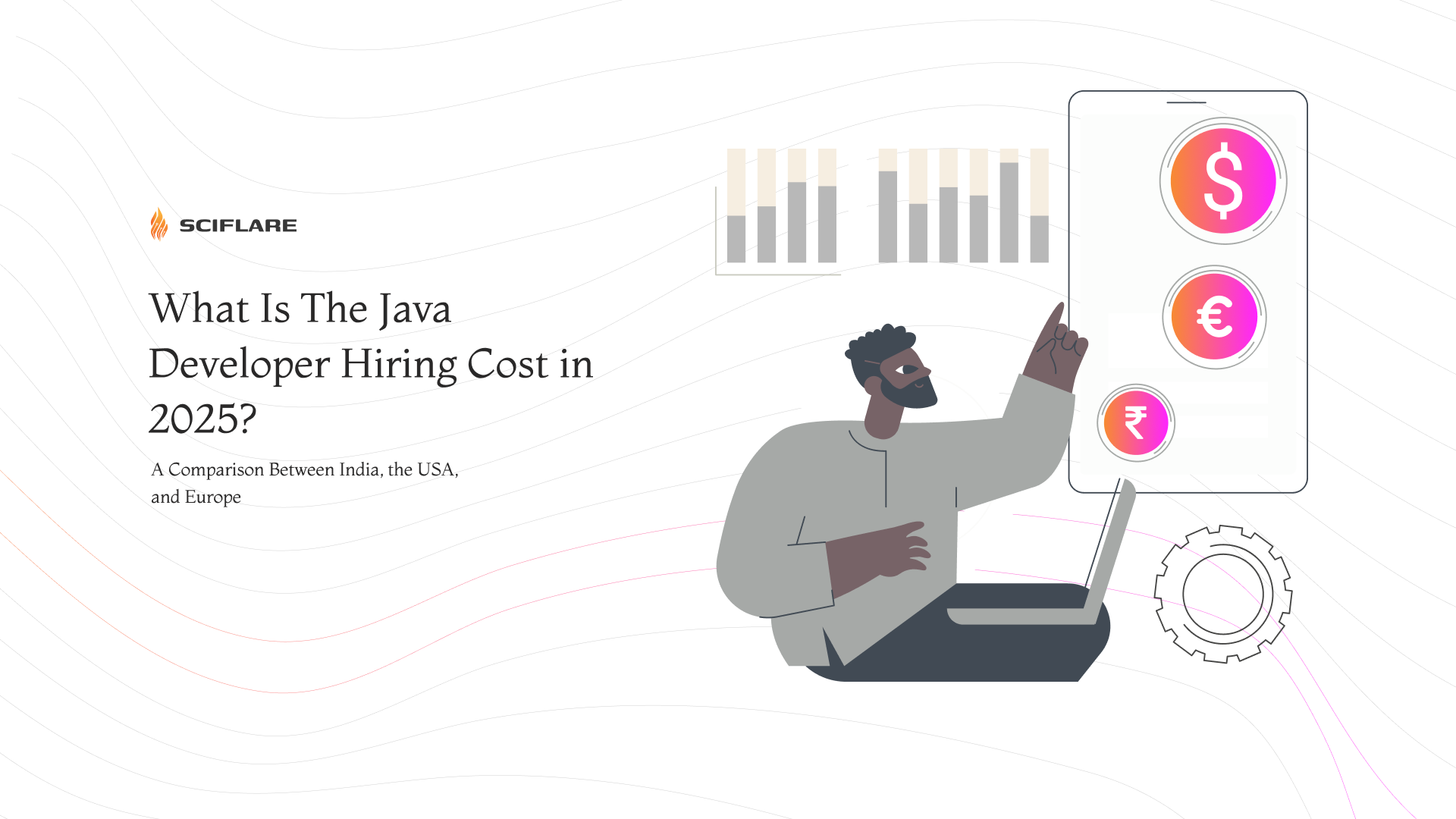
    The rapid pace of digital transformation necessitates top-tier technical expertise for businesses across industries. Java plays a crucial role in digital transformation with its flexibility, platform-independence, and scalability. However, there is always a gap between the right technical expertise suited to project needs and the local availability of the same. In this scenario, outsourcing Java developers proves beneficial. India, the USA, and Europe emerge as top outsourcing destinations, though the costs across each country vary significantly based on a combination of factors. This blog will offer a detailed cost comparison based on factors that influence the Java developer hiring cost in 2025 to help you make informed hiring decisions.  

    What Factors Determine The Cost To Hire A Java Developer?  

    The cost to hire Java developers varies depending on the unique needs of each project. Discussed below are factors that determine the cost of hiring a Java developer to help you make informed calculations for your next hire:  

    1. Specialized Skill Set  

    The specific skill set, and specialization of a Java developer determine the per-hour hiring costs for Java experts. While core or generalist Java developers may cost less, developers specializing in Java Spring Boot, Java EE, or OKHTTP may charge higher for their niche expertise, which is necessary for high-growth projects. For example, if you hire Java Spring Boot developers, you gain access to niche expertise for enterprise-grade solutions, production-ready code, accelerated microservices development, cloud deployment, and so on. Similarly, when you hire Hibernate experts, you gain expertise for automating SQL handling and improving database interactions in Java apps.  

    1. Developer Location  

    The geographical location of a developer plays a significant role in determining the Java developer hiring cost. India is considered to be the top outsourcing destination globally for its extensive talent pool, proven potential to solve complex problems, and comparatively lower hiring rates starting from $15 per hour. In countries like the USA, and even Western Europe, the Java developer costs can go up to $40-$150 per hour, depending on expertise levels, specialization, and project needs. The costs vary based on geographical location because of socio-economic conditions, costs of living, availability of specialized expertise, and market demand.  

    1. Developers’ Experience Level  

    The cost of hiring Java experts also depends on the level of experience of the developer. Naturally, the cost to hire junior developers will be less than that of hiring mid-level or senior Java developers. In India, top IT staff augmentation companies like Sciflare offer on-demand Java developers starting at $15 per hour for junior experts, $20 per hour for senior Java developers, and $25 per hour for senior developers. Your exact project requirements and complexity will determine the level of developer experience required. It goes without saying that European developers and developers in the USA will charge premium fees for greater experience levels when compared to Indian experienced developers.  

    1. Engagement Model  

    The Java developer hiring cost also depends on the engagement model you choose. The most prevalent hiring models include full-time hiring, on-demand hiring via outsourcing, or working with freelancers as per your needs. According to Indeed, the average salary of a Java developer in the USA is $6483. This amounts to an average per-hour salary of $58.70. In India, on-demand hiring models are billed according to skills used for the exact duration for which they are required. These costs start at $15 per hour and can go up to $25, depending on the developers’ experience level and specialization.   

    1. Project Complexity  

    The cost of hiring Java developers also depends on the complexity of the project and its customizations. Basic projects like developing small-scale APIs or simple web portals can be managed with lower costs, but for mid-level or moderately complex projects like developing a SaaS platform with multi-tenant support and multiple integrations will require specialized expertise and higher development costs. Complex projects, such as developing large-scale e-commerce platforms or real-time fintech solutions, require Java EE and cloud-native architecture expertise. Additionally, you may need to hire Okhttp developers for building a mission-critical, and high-frequency trading system. This is bound to increase per-hour hiring costs for developers with niche expertise determined by project complexity.  

    What is the Java Developer Cost India? Why Choose India?  

    In India, the cost of hiring Java developers starts at $15 per hour for junior Java developers and can go up to $25 per hour for senior developers. As the global destination for outsourcing or hiring developers on demand, hiring Java developers from India offers businesses the following benefits:  

    1. Extensive Talent Pool of Specialized Developers  

    As of 2024, there were approximately 1.5 million engineering graduates from India. Naturally, there is a widespread availability of Java developers, including those with specialized expertise. Whether you need to hire JEE developer for building enterprise-grade applications or whether you need to hire Java SE developer for building a strong foundation for your applications, you can access the required expertise easily without compromising on project needs. Additionally, the widespread availability of developers offers businesses competitive hiring rates as supply meets demand.  

    1. Proven Potential To Solve Complex Problems 

    The American investor, Codie Sanchez, recently acknowledged India’s potential as a business and startup hub, with one of the key ingredients of the same being the availability of engineers with complex problem-solving abilities. Highlighting India’s transition from the IT back-office hub of the past to a nation with innovative, home-grown startups, her acknowledgement puts India at the forefront of innovation. When you hire Java developers in India, you get access to expertise for legacy modernization, enterprise development, complex integrations, global user needs, and niche applications, ensuring your projects execute smoothly.  

    1. Transparent Pricing Model  

    Credible IT staff augmentation companies offer transparent, on-demand, and tailored pricing models to suit your evolving growth needs. As such, you can hire Java developers on a project-by-project basis and respond to evolving market demands with greater flexibility. As such, you choose between junior, mid-level, or senior developers based on your project needs and estimate total hiring costs easily. As such, hiring costs in India are comparatively less than countries like the USA and Europe due to various socio-economic factors.  

    1. Top Quality Outsourcing  

    Businesses that outsource Java development from India get access to top-tier development expertise, output quality, and end-to-end solution expertise, including post-launch support, App Store and Play Store submission, and compliance with regulatory standards. With extensive experience in catering to global clients, Java experts from India are seasoned to augment the capabilities of internal teams, follow Agile methodologies, and accelerate development to help businesses get to market faster.  

    1. Round-the-Clock Development  

    Businesses that hire remote Java developers from India benefit from round-the-clock development. This is because dedicated developers or teams from India adapt to the time zones of Western teams, plan for overlapping hours for smooth collaboration, and have updates ready for review in alignment with time zone priorities for each client. This ensures that development continues round-the-clock and accelerates time-to-market for a competitive advantage.  

    1. Compliance  

    By hiring Java developers from credible IT staff augmentation companies in India, businesses around the globe can ensure compliance with established regulations like the GDPR, HIPAA, and more. This gives them cost benefits, competitive advantages with top-tier talent, credibility, and data security from the ground up, ensuring there is no compromise in the application’s credibility.  

    What is the Java Developer Hiring Cost in India vs the USA vs Europe?  

    Having discussed the benefits of hiring Java developers from India, it is crucial to evaluate hiring options in the USA and Europe as part of this Java developers guide.  

    Java Developer Cost USA 

    The USA is considered to be one of the most expensive outsourcing destinations for Java development. The hourly rate for Java developers in the USA ranges from $50 to $250, depending on developers’ specialization, experience levels, and concentration in tech hubs like Seattle, San Francisco, and New York. Among the other benefits of hiring from the USA, businesses get access to top-tier and specialized expertise to meet their evolving project needs. Some service providers also offer free trials for limited periods to help businesses evaluate their on-demand developers and assess their problem-solving abilities. A major benefit of hiring from the USA is working with developers who understand the local market and compliance requirements. However, the expensive rates because of high living costs and the concentration of specialized expertise according to demand make the USA a less feasible option for cost-conscious businesses.  

    Cost of Hiring Developers in Europe  

    The cost of hiring Java developers in Europe can range from $30 to $90 per hour or higher, depending on project complexity, niche requirements, developers’ specialization, and experience. While businesses may find specialized expertise in Europe, it is important to consider that the talent base may not be as widespread as India, which can contribute to higher hiring costs and a steep gap between supply and demand. It must be said that compliance with local laws can be ensured with European developers, but most credible IT staff augmentation companies in India prioritize global compliance requirements and offer competitive benefits to businesses with top-tier expertise tailored to their project needs.  

    Conclusion  

    On-demand hiring, when compared to traditional hiring methods, offers multiple benefits like cost effectiveness, targeted hiring, quick closing of skill gaps, and supplementation of the exact expertise required for your project. As far as top outsourcing destinations are concerned, India, the USA, and Europe emerge as popular options. However, India leads with cost comparisons across the three nations, in combination with its top-tier technical expertise, developers with extensive experience and diverse exposure across industries, and the ability to adhere to compliance requirements to fuel success for global projects.  

    Get in touch with us to share your project details and we will help you close your crucial skill gaps with our on-demand hiring tailored to your needs with top Java developers from India.  

    FAQs 

    1. Which country is best for Java developers?  

    While India, the USA, and Europe emerge as top outsourcing destinations for Java developers, India is the best country for businesses looking for top-tier expertise, budget-friendly hiring options, flexible hiring options for short-term and long-term projects, and Java expertise tailored to project needs.  

    1. What is the Java hourly rate in Europe?  

    The cost of hiring Java developers in Europe can range from $30-$90 per hour depending on your project complexity, developers’ experience, and development timeline.  

  • What Is GPT-5? Understanding GPT-5 In SaaS Development 

    What Is GPT-5? Understanding GPT-5 In SaaS Development 

    Introduction:

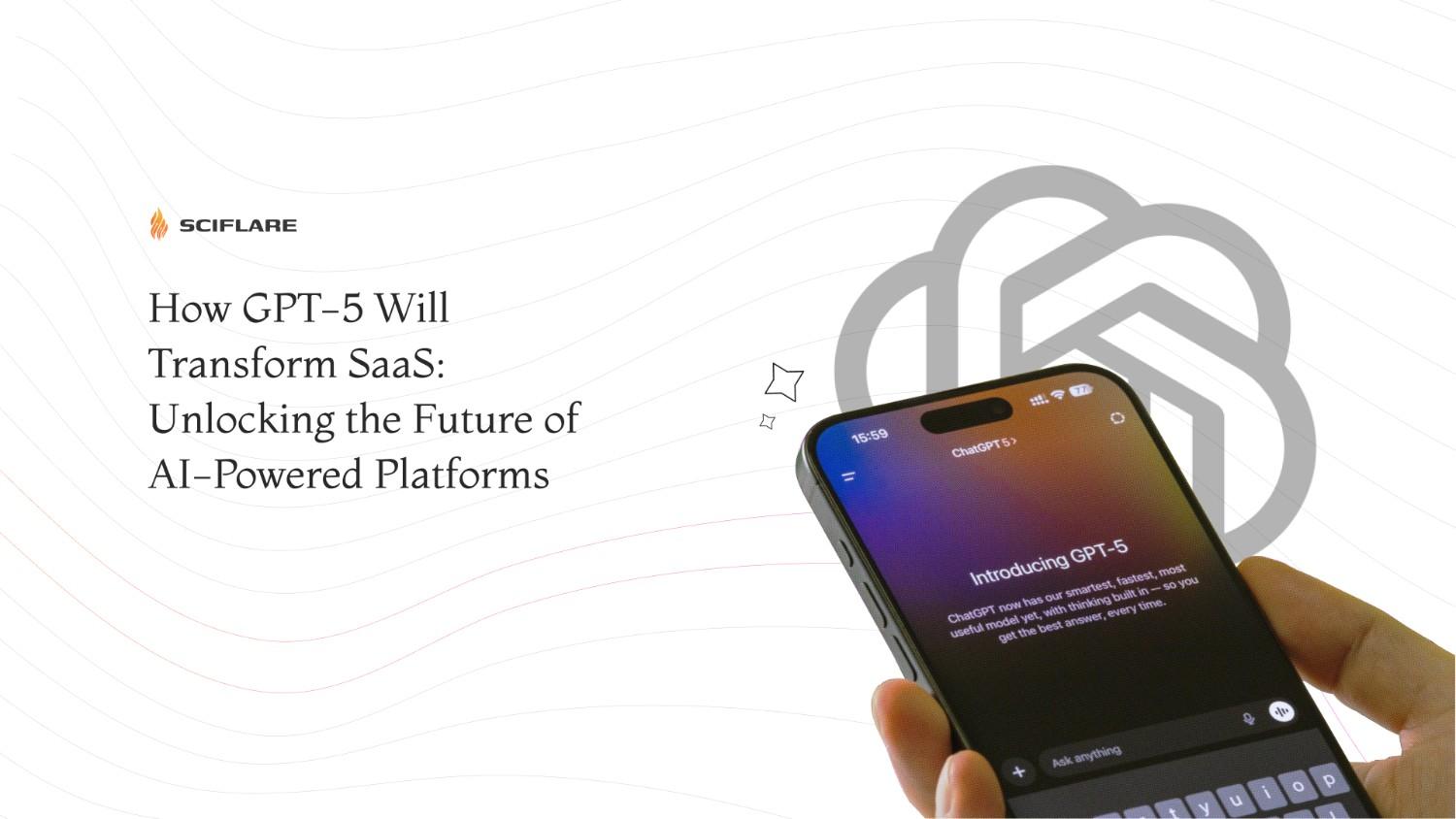
    OpenAI’s GPT-5 is one of the most-awaited AI chatbot releases in 2025. Claiming to be “smarter, faster’ and OpenAI’s “most useful model yet” and promising expert-level thinking and “PhD-level” capabilities in coding, writing, health, visual conception, and more. This comes at a time when all enterprises are looking for ways to maximize their returns from the development process and improve its efficiency to serve customers better. With OpenAI claiming GPT-5 to be their best coding model yet, it is worthwhile to explore GPT-5 in SaaS and understand how it will revolutionize the way we develop and deploy SaaS platforms.  

    How Is GPT-5 Different From Its Predecessors? 

    Sam Altman claims GPT-5 is “significantly better” than its predecessors. In a briefing ahead of the launch of GPT-5, Altman said: 

    “GPT-3 sort of felt to me like talking to a high school student…4 felt like you’re kind of talking to a college student. GPT-5 is the first time that it really feels like  talking to an expert in any topic, like a Ph.D. level expert.” 

    With that said, let us identify differences between GPT-5 and GPT-4o:  

    1. Structured Reasoning over Speed 

    GPT-5 is expected to enable efficient decision-making with an unprecedented handling of multi-step logic for GPT chatbots. GPT-5 can adapt dynamically and does not require separate models for each task.  

    1. Unification 

    GPT-5 unifies the capabilities of previous models like GPT-3, GPT-4, and the O-series and eliminates the need to choose or switch to specialized models with its unified, powerful system. Being a “deeper reasoning model”, GPT-5 features a router that quickly decides which model to use based on user intent, complexity, tool needs, and conversation type. OpenAI has trained the router on real signals continuously, including scenarios in which users switch between models.  

    1. Multimodal AI for SaaS  

    GPT-5 surpasses a broad range of multimodal benchmarks, including video-based, visual, scientific reasoning, and spatial. With regards to enhanced multimodal capabilities, OpenAI claims that ChatGPT can now “reason more accurately” with non-text inputs, such as diagrams, charts, or presentations, and enable better interpretations and decision-making capabilities.  

    1. Maximum Accuracy, Minimum Hallucinations 

    According to OpenAI, GPT-5 will hallucinate significantly less than their previous agents. The company has enabled web search on anonymized prompts that represent ChatGPT production traffic, claiming that GPT-5 has 45% less chances of generating responses with factual error when compared to GPT-4o, and its thinking responses are 80% less likely to contain factual errors than OpenAI o3.  

    How Will GPT-5 Transform AI-powered SaaS Platforms?  

    Discussed below are ways in which GPT-5 can transform how we build and deploy SaaS platforms:  

    1. Massive Context Window For AI Software Development 

    GPT-5 in SaaS can be a game-changer with its massive context window that enables managing larger projects with ease. It enables developers to feed hundreds of pages of documentation without losing context in a single session and get an understanding of the complete architecture instead of individual snippets. GPT-5 can retain earlier conversation histories and large databases to help developers focus on uninterrupted innovation and problem-solving. This is of particular benefit to enterprises as it can help them tackle large-scale problems in their entirety and in an integrated manner, eliminating the loopholes of isolated debugging or documentation analysis.  

    1. AI-driven Code Generation  

    GPT-5 promises to revolutionize coding with its ability to complete complex and multi-step requests and adapt to evolving context changes. According to OpenAI, it can complete end-to-end tasks more efficiently with the tools at its disposal and follow instructions more accurately. This helps developers significantly by accelerating the completion of production-ready code, offering them advanced and optimized algorithms, and adapting to their coding styles to provide cleaner and more efficient code. Its extensive range is designed to enable migrating to modern frameworks from legacy tools, and its built-in security practices keep the codebase secure from potential vulnerabilities.  

    1. Multi-Step Task Execution with Autonomous AI Agents 

    GPT-5 in SaaS promises massive improvements over previous models like GPT–3.5 and GPT-4 as it does not require step-by-step instructions to complete a task. With its agentic capabilities, it can take action and complete multi-step tasks without constant manual intervention, break down a task into specific goals and identify dependencies, and complete them in the desired sequence, facilitating effective and advanced problem-solving that considers architecture optimization, performance, cost, and scalability requirements.  

    1. Native Multimodal AI Capabilities  

    By integrating test, audio, image, and video inputs in a single powerful model, GPT-5 revolutionizes software development and enables developers to deliver applications that can understand, interpret, and generate data in formats aligning with user preferences. This has the potential to enhance development efficiency by facilitating smooth collaboration across all development teams. Whether developers send a voice note about a bug, or upload a UI design screenshot, GPT-5 in SaaS can fix the bug and get a corresponding Flutter or React component respectively.  

    1. AI-powered Workflow Automation 

    GPT-5 has the potential to contribute to next gen SaaS solutions with unprecedented automation capabilities. What earlier needed static and constant prompts is now enhanced by agents that can reason, break down a complex task, remember the context, and act without constant human intervention. This significantly benefits enterprises as it enables workflow unification across their project management platforms, CRMs, ticketing windows, and customer service data. In doing so, GPT-5 goes beyond reacting and offers enterprises advanced agentic capabilities to reason, decide, and execute plans better.  

    1. Hyper Personalization In SaaS  

    SaaS personalization via GPT-5 offers developers unmatched flexibility, efficiency, and accuracy as GPT-5 can remember and adapt to individual coding style and preferences, offer extended context, and tailor responses according to the user’s tone, preferences, and project history. Its multimodal compatibility enables development teams to work on Conversational AI interfaces and achieve context-relevant responses anticipating their needs with seamless integration with other tools.   

    Conclusion 

    GPT-5 can revolutionize SaaS development with the aforementioned capabilities. What matters is how the model lives up to its established expectations and eliminates the inefficiencies of prior models. With that said, it is crucial to recognise its importance for enterprises and incorporate it as part of their development strategy to maximize ROI, improve developer efficiency, and eliminate process loopholes. AI agents in SaaS platforms can help developers work in a revolutionary environment that augments human capability to deliver future-proof solutions.  

    FAQs 

    1. What are GPT-5 use cases for enterprise companies

    Discussed below are the top use cases of GPT-5 for enterprise companies:  

    • Workflow automation: GPT-5 empowers enterprises with AI agents in SaaS that can understand and assign roles for multi-step tasks, integrate with project management tools like Jira, and unify the development process to augment managerial capability. 
    • Customer service: AI agents for customer service can reduce customer support costs and maximize customer service efficacy by offering instant and personalised answers tailored to customer queries by detecting their sentiment and offering multimodal capability to understand and generate data in users’ preferred format.  
    • Faster iterations for MVPs: As part of the enterprise AI adoption strategy, GPT-5 can accelerate MVP development with AI-powered coding support, which helps even teams with minimal technical expertise to get their products to market. 
    1. What are the benefits of conversational interfaces in enterprise software?  

    Conversational interfaces in enterprise software empower users to engage with systems using natural language and boost their productivity by eliminating the need to go through complex systems. Additionally, the 24*7 availability offered by conversational chatbots enables enterprise users to get instant and relevant answers to their queries.  

  • Untitled post 196

    Quick Summary:

    Java remains highly relevant in 2025 due to its platform independence, security, and versatility, making it ideal for enterprise applications, cloud computing, and Android development.

    Hiring skilled Java developers requires assessing both technical expertise (like Spring Framework, Hibernate, and DevOps tools) and soft skills (communication, problem-solving, and adaptability

    Outsourcing Java developers offers flexibility, cost efficiency, and access to global talent, enabling businesses to scale resources quickly without long-term commitments

    Clearly defining project requirements and avoiding common mistakes (like prioritizing cost over quality) ensures successful hiring and project outcomes

    The cost of hiring Java developers varies by experience level and location, with outsourcing to countries like India providing affordable, high-quality talent

    Introduction

    As of 2025, 90% of the Fortune 500 companies use Java for their software programming needs and it remains the third most popular programming language on the TIOBE index Java’s flexibility, evolution with the times, cross-platform compatibility, and extensive ecosystem make it a popular choice among developers and businesses alike. Its relevance in 2025 can be seen with more and more entrepreneurs looking to hire Java developers to meet their evolving project needs. But how to assess the right expert for your business and onboard Java developers quickly and efficiently, navigating potential hiring pitfalls?

    Find out in our blog. If you are a business owner looking to hire Java developer to Write Once, Run Anywhere, build top-notch Android apps, or applications that function seamlessly across the web, desktop, and mobile, look no further! Our complete guide to hiring dedicated Java developers will help you find the right expert for your project and help you stand out in the market with top-tier resources.

    Benefits Of Java

    Java was developed by Sun Microsystems and post its release in 1995, it has been an integral tool for many software development environments for the variety of use cases it serves, contributing to its ongoing relevance. Some of the benefits of using Java are discussed below:

    Platform Independence- Write Once, Run Anywhere! (WORA)

    Java enables developers to write once, run anywhere, meaning that by writing code once, they can run it across any device, hardware configuration, or operating system. Any device with a Java Virtual Machine (JVM) can run Java apps compiled into bytecode. This minimizes development cost and time by eliminating specific modifications for each operating system, making Java’s portability a boon for enterprise apps, cloud computing, IoT devices, and Android development.

    Minimal Written Code Required

    With its extensive standard library known as Java API, Java simplifies a wide range of programming tasks, including networking and GUI development. As such, the amount of code developers need to write themselves is minimal.

    High Performance

    Java supports multi-threaded programming, meaning it can efficiently handle multiple tasks concurrently through multiple threads, making it perfect for applications which demand high concurrency levels, ensuring there are no compromises in user experience and interface.

    Coding Efficiency and Accuracy

    Java ensures code accuracy and robustness with its in-built capability to detect issues in the early stages of code execution, making the detection efficient and timely for a streamlined development process.

    Security

    The Java security manager and other extensive security APIs protect applications from potential threats, violations, security, and data breaches, making Java a non-negotiable tool for building robust and secure web apps.

    Java Cloud Computing

    Java supports microservices architecture, and its platform independence and portability make it easier to deploy and scale applications in cloud environments. Businesses can leverage Java (and its ability to integrate with containerization technologies) to develop and deploy solutions on popular cloud platforms like Google Cloud, AWS, and Microsoft Azure.

    Enterprise Dominance

    Java’s scalability and stability make it a widely used programming language in enterprise environments with its Enterprise Edition designed specifically with enterprise features.

    What Does a Full-Stack Java Developer Do?

    A full-stack Java developer writes code for the frontend, backend, and database layers of an application, facilitating end-to-end development. They are responsible for converting user and business requirements into fully functional applications, managing the user interface, server-side development, logic, database, and optimization. Discussed below are their main roles and responsibilities:

    Frontend Development

    Frontend developers create visually appealing, engaging, and responsive user interfaces, guaranteeing intuitive user experiences. Mentioned below are essential components of frontend development:

    User Interface Design: Full-stack Java developers are responsible for UI design and implementation to engage and retain users with consistent seamless experiences.

    Cross-Browser Functioning: Among the essential Java developer skills is to ensure that the web app can function optimally across all browsers and devices, continuing to give users consistent experiences.

    Client-Side Management: Full-stack developers create interactive web pages leveraging front-end frameworks like React in combination with JavaScript.

    Backend Development

    Full-stack developers ensure the alignment of the backend (application logic, servers, and databases) with the frontend (the part of a web or mobile app visible to users that they interact with), ensuring a robust foundation for the application and optimal user experiences. Mentioned below are essential components of backend development:

    Server-Side Logic: Full-stack developers build server-side applications and ensure that functions like request handling, data processing, and authentication are performed optimally on the server, guaranteeing that the client response delivery is smooth and glitch-free.

    Database Management: You can hire full-stack Java developers to optimize queries, design schemas, manage data storage and retrieval, and maintaining data integrity in SQL and NoSQL databases by leveraging frameworks like Spring Data and Hibernate.

    Java API Development: One of the essential technical skills required for Java developers is Java API development, which entails creating GraphQL and RESTful APIs for seamless communication between servers and clients.

    Architecture Design and Application Security

    Dedicated Java developers ensure that the application functions optimally and can adapt to scalability requirements with efficient architecture design and maintenance. These developers also protect the application from potential vulnerabilities and data breaches by implementing robust security measures like input validation, encryption, and authorization.

    Version Control and Team Collaboration

    Full-stack Java developers manage the source code and collaborate with teams using Git, the most widely used version control system.

    Debugging

    You can hire Java developers to identify and nullify performance in Java applications, including memory leaks, misaligned API responses, multithreading issues, and slow database queries, optimizing the entire application performance.

    Essential Technical Skills Required for Java Developers

    When you hire Java developers, it is important to understand the essential technical skills they should have to assess potential candidates for your next project efficiently. Mentioned below are essential skills for Java developers:

    1. Java Systems: Staying updated on latest Java revisions (Java 8 iteration onwards)
    2. Core Java Developer Skills: Design patterns, Abstract classes, Object-Oriented Programming (OOP), Serialisation.
    3. Web Technologies: JavaScript, HTML, CSS.
    4. Java Build Tools: Apache, Gradle, Nexus, and more.
    5. Java Enterprise Edition (EE): Java Server Pages, Servlets, Java Beans.
    6. Java Testing: Selenium, TestNG, JUnit.
    7. SOLID Principles: Single-responsibility, Open-closed, Liskov substitute, Interface division, Dependency inversion.
    8. Application Containers: Jetty and JBoss.
    9. Spring Framework: Spring Boot, Spring Security, Spring MVC.
    10. Hibernate Framework: For object-relational mapping and database management.
    11. Kotlin: Interoperability with Java, making two most widely used programming languages for mobile application development.
    12. DevOps: Kubernetes, Jenkins, Docker, Maven.

    Essential Soft Skills for Java Developers

    Discussed below are essential soft skills for Java developers which must be prioritized along with tech skills:

    1. Continuous Learning: Staying updated on the latest trends and technological updates and adapting to evolving project requirements.
    2. Effective Communication: Effective and transparent communication for successful team collaboration and development effort alignment.
    3. Problem Solving: Staying open to thinking outside the box and coming up with innovative ideas that make sense for each business problem.
    4. Empathy: Ability to stand in the shoes of all stakeholders, including users, team members, and clients to understand their perspectives.

    Best Practices For Hiring Java Developers

    Discussed below is the step-by-step process of hiring Java developers for your next project, ensuring an exact expertise match:

    Step 1: Define Project Requirements

    Define clearly what your project requirements are and what is your goal for hiring Java developers- be it enterprise development nuances, implementing security measures, database management, frontend or backend development, cloud migration, specific integrations, or legacy modernization. Defining project requirements will help you identify the skill gaps in your current team and search for the right expertise.

    Step 2: Establish Candidate Expectations

    Create a job description to hire remote Java developer that establishes the skill requirement for the role, project scope, complete project vision, and the impact the outsourced professional’s expertise will have on the business to find the right expertise beyond a list of generic skills.

    Step 3: Connect With Top Talent Globally

    Java development outsourcing gives you the opportunity to tap into the vast pool of Java development expertise across the globe, going beyond your physical location to improve your likelihood of finding the right fit for your niche project requirements. Connect with IT staff augmentation companies that provide Java experts for hire on a project-by-project basis, bringing diverse expertise onboard to cater to dynamic market requirements. You can also connect with professionals through job boards, recruitment agencies, and focused technical communities.

    Step 4: Skill Assessment and Interviews

    The best practices for hiring Java programmers include assessing their technical skills, theoretical knowledge, and problem-solving capabilities. With platforms like Codility or any other, you can assess all these dimensions of a candidate’s eligibility. Additionally, giving them live coding challenges can help understand their ability to apply theoretical knowledge to solve real-world problems. Pair programming sessions can help assess them for their teamwork, collaboration, and how they make the most of their strengths.

    While interviewing shortlisted candidates, structure your questions in such a way that they go beyond technical expertise, and assess the candidate’s cultural fit, teamwork attitude, and problem-solving capability. Include questions from code completion tasks, specific Java frameworks, nuanced Java concepts, architectural design, and their past experiences to determine if they are the right fit for your project.

    Step 5: Onboarding Java Developers

    You can onboard your selected Java developer from an IT staff augmentation company ↗ within 24-48 hours and kickstart development right away. The ideal outsourcing partner will ensure its dedicated Java developers set up remote project management tools for efficient and timely collaboration and work towards completing the project they were hired for to get you ahead of competition.

    Why Is Java Development Outsourcing Widely Preferred?

    The global software development market is expected to grow at a CAGR of 11.5% from 2023 to 2028, according to the Software Development Outsourcing Market Analysis Report ↗ by the Global Market Estimates. These figures bear testimony to the growing preference for outsourcing software development, the benefits of which are discussed below:

    Flexibility

    Outsourcing gives you the flexibility to hire Java developers or hire a dedicated development team on a project-by-project basis, enabling you to respond to evolving market and user demand easily, upsizing or downsizing their resources according to the need of the hour.

    Cost Efficiency

    If you hire Java programmer from an IT staff augmentation company, you only need to pay for the short-term contract during which the Java developer will directly report to you and complete your project. This eliminates the need to pay monthly salaries and invest in ongoing salaries of an in-house team member even when there is no project need. It is like hiring a freelance Java developer based on what and when you need with ensured result quality and credibility across industries. Additionally, you can save on operational costs and in-office expenses necessary for in-house teams.

    Time Efficient

    In-house hiring yields desired results over sustained periods of time as the team begins to accumulate institutional expertise with every project they work on. Additionally, with evolving project requirements and fast-paced demands, it is not possible to hire an in-house Java developer instantly in response to an on-spot requirement. This is where outsourcing dedicated Java developers helps with its quickness and efficiency in matching vetted professionals with the business, helping them cater to short-term project requirements with instant hiring and onboarding.

    Access To Global Top-Tier Talent

    Outsourcing Java developers gives you access to top-tier talent across the globe, enabling you to find the right expertise tailored to your project needs. Additionally, you can access top-tier talent at the most reasonable rates, as hourly prices vary across countries. One of the best countries to hire affordable and skilled Java developers is India, where the hourly cost starts for hiring Java developer starts at $15, democratizing access to top talent from a diverse pool of skilled professionals for businesses of all sizes.

    Competitive Edge

    Hiring Java developers on an outsourcing basis enables you to gain a competitive edge by responding to evolving user demands as they come and get ahead of the competition by ensuring you have access to the right expertise at the right time and development happens round-the-clock.

    What Is The Cost To Hire Java Developers?

    The cost comparison and overall difference between different hiring models, namely, outsourcing, in-house hiring, and freelance hiring, is given below against crucial metrics that impact business health:

    Common Mistakes To Avoid When Hiring Java Developers

    Discussed below are some common mistakes businesses make while hiring Java developers:

    1. Lack of clarity on project requirements.
    2. Prioritizing cost over quality.
    3. Lack of awareness of different hiring models.
    4. Not discussing pricing details.
    5. Not leveraging remote project management tools for efficient collaboration.
    6. Limiting hiring to one’s physical location.
    7. Prioritizing technical skills and overlooking soft skills.

    Conclusion

    If you are looking to hire Java developers in 2025, it is important to consider the different hiring models available to make informed decisions regarding which is most suitable for your business. Additionally, it is important to find the right expertise tailored to your project requirements to maximize your success potential and generate desired business results. This is possible only by following hiring best practices and navigating traditional challenges. We hope our guide could give you a clear idea of what skills you should look for in Java developers, what their roles and responsibilities are, and how you can hire the right dedicated Java developers to complete your next project. Stay tuned for more first-hand insights that we curate as a trusted outsourcing partner for over ten years now and get access to India’s top 1% Java developers by getting in touch today!

    FAQs

    1. What are the top Java development frameworks for enterprise Java application development?

    Hibernate ranks among the top ten enterprise Java development frameworks with its ability to connect with any database without any major code modification, minimal risk of data loss, efficient caching tools, and solving object relational incongruity issues promptly. You can hire Hibernate developer from Sciflare through our flexible engagement models and build your enterprise application for greater efficiency and productivity.

    2. Can I hire Spring Boot developers from Sciflare?

    Yes, you can hire Spring Boot developers from Sciflare, choosing from India’s top 1% of development professionals and gain a competitive edge by creating scalable microservices applications quickly and efficiently.

  • Which Are The Top 8 Mobile App Development Companies In Chennai? 

    Which Are The Top 8 Mobile App Development Companies In Chennai? 

    Introduction  

    Chennai is home to India’s richest startup ecosystem, developer skill base, and robust IT infrastructure, making it the country’s most popular IT hub for developing top-notch mobile applications. With businesses across industries preferring Chennai as their mobile app development resource base, it is crucial to identify the top service providers in this space and understand the factors that set them apart from others in the competitive mobile app industry. This blog will list the top 8 mobile app development companies in Chennai, along with their service and specific expertise areas, to help you make an informed choice.  

    Top 8 Mobile App Development Companies In Chennai  

    Described below is a comprehensive list of the top mobile app development companies in Chennai:  

    1. Sciflare Technologies Private Limited  

    Sciflare Technologies is a mobile app development company in Chennai, catering to industry leaders worldwide. Specialising in helping high-growth startups and enterprises scale and maintain top performance from one to millions of users, Sciflare brings a decade-long experience in making the journey from zero to millions seamless, balancing peak loads efficiently, improving developer productivity, and generating desired revenue. 

     What sets Sciflare apart is our role and contribution as solution partners for clients, taking complete ownership of end-to-end mobile app development, and aligning technology with business needs to unlock complete revenue potential. Our experts are seasoned in the use of cutting-edge technologies, such as AI, ML, AI Agents, LLMs, RAG Pipelines, Cloud Architecture, Blockchain, and more, to deliver future-proof mobile apps that engage, retain users, and support scalability requirements from the ground up.  

    Specialization: AI mobile app development, Custom Fantasy Sports App Development 

    Achievements: India’s Number One Fantasy Sports App Development Company, Sciflare’s CEO, Mr. Shiva Kumaran S, was recently awarded as the Entrepreneur of the Year: Innovation in Technology at GBC 2025. 

    Industries served: Fantasy Sports, Gaming, Finance, Banking, Logistics, Healthcare, E-Commerce, Food Delivery, Transportation.  

    Services Offered

    • Resource Augmentation: Hire dedicated developers on a project basis with expertise tailored to your project needs.  
    • Mobile App Development: Build Android or iOS apps and reach your target users on their respective platforms with precision and tailored retention strategies.  
    • Custom and White-label App Development: Build mobile and web apps tailored to business needs or white-label solutions that you can rebrand as your own for low cost mobile app development
    • API Development and Integration: Custom sports data from credible sources to eliminate aggregating data from scratch for fantasy football and cricket apps.  
    • Cloud Services: Cloud infrastructure, application development, and management services to manage concurrent users at scale.  
    • AI and ML Services: AI-powered development to improve development speed, efficiency, and maximize ROI at scale.  

    Clients: Dream 11, American Dream 11, Hofincons, Boomer 11, HDFC Lite. 

    Founded in: 2010 

    Team Size: 50+  

    Location: OMR, Karapakkam, Chennai (behind Standard Chartered) 

    1. Contus Tech  

    Contus Tech stands out as a mobile app development company in Chennai with its    full-stack development, product design and development expertise, and AI software development for a global clientele, including Fortune 500 companies. With a strong focus on improving the efficacy of digital transformation operations for all enterprises, Contus Tech delivers solutions that improve performance during peak loads, reduce system downtime and average response time, and enhance overall developer productivity. Additionally, Contus Tech has a global presence with clients in 12+ countries and offers agile development, a customer-centric approach, and over 16 years of development expertise.  

    Services offered:  

    • Product Development 
    • Digital Engineering  
    • Artificial Intelligence 
    • Cloud and DevOps 
    • Dedicated Developers 

    Clients: ICICI Bank, Coca Cola, Hyundai, JCB, CISCO 

    Team Size: 400+  

    Location: Willow Square, Guindy, Tamil Nadu 

    1. Ideas2IT Technologies  

    Ideas2IT Technologies is one of the leading mobile app development companies in Chennai with a strong focus on AI/ML app modernization and scalable architecture, and full-stack product development. With the company’s strong focus on transforming into an AI-native software firm, Ideas2IT is prioritizing co-ownership, building AI fluency, and weaving AI into their SDLC. Witnessing a 40% increase in every developer’s output, Ideas2IT is on a mission to make AI-powered software engineering a reality with its comprehensive suite of services.  

    Industries: Healthcare, Pharma and Life Sciences, Financial Services. 

    Services offered:  

    • AI-powered Software Development  
    • Application Modernization  
    • Cloud Services 
    • Data Services 
    • BI & Analytics Services  

    Clients: Microsoft, IKEA, Facebook, Bloomberg 

    Team Size: 501-1000 

    Location: Legacy Drive, Plano, TX 75024 

    1. Hakuna Matata Tech 

    As one of the leading mobile development companies in Chennai, Hakuna Matata Tech focuses on AI-driven digital engineering to accelerate transformation for enterprises. Promising a significant reduction in development costs, accelerated development, and reduced time to market, the company brings 18+ years of experience to the development of future-proof and scalable digital solutions. Their digital accelerators and capabilities to support enterprises in their digital transformation efforts stand out for their accuracy, predictability, and efficacy in enhancing user experiences.  

    Industries: Solutions offered across different industry verticals. 

    Services offered

    • Accelerated Software Development 
    • Product Engineering 
    • App Modernization 
    • Gen AI 

    Clients: LiftO, Saint Gobain, Maersk Training, Max Healthcare 

    Founded in: 2006 

    Team size: 51-200 

    Location: Rattha Tek Meadows, Rajiv Gandhi Salai, Chennai. 

    1. Pyramidion Solutions 

    Pyramidion Solutions stands out as an app development company in Chennai, providing full-stack digital transformation support and expertise. With their design-led and tech-driven approach, Pyramidion Solutions helps businesses create value with mobile apps and custom software solutions. Excelling in navigating the intricacies of digital transformation, the company prioritizes long-term commitment with post-deployment support, flexibility, and complete accountability.  

    Services offered:  

    • Progressive Web App Development 
    • Mobile App Development 
    • Product Engineering 
    • Application Modernization 
    • Data Engineering 
    • Blockchain Development 

    Clients: Kohler, Bacardi, The University of Adelaide, Nexus 

    Founded in: 2014 

    Team Size: 120+ 

    Location: Thousand Lights West, Chennai 

    1. Approlabs Private Limited 

    Approlabs is an app development company in Chennai with strong QA, testing, UI/UX, and end-to-end development capabilities. With their focus on data-driven growth with custom AI solutions, Approlabs prioritizes a robust product foundation for all startups and enterprises. The company leverages Agile development workflows and an innovation-first approach to deliver solutions to all startups and enterprises.  

    Services offered:  

    • UI/UX Design 
    • Product Development 
    • Product Maintenance 
    • Quality Assurance  

    Clients: Wauly, Gaayak, Unify, The Retail Curator  

    Founded in: 2020 

    Team Size: 11-50 

    Location: Sarathy Nagar, Velachery, Chennai  

    1. Calibraint 

    Calibraint specializes in developing mobile app platforms, web apps, and custom software products. With their complete focus on custom and blockchain development, Calibraint helps clients build high-performing solutions with end-to-end development expertise, industry-specific understanding, and a customer-centric focus on the unique needs of each business. Calibraint’s technology specialists are committed to delivering best-in-class solutions with their expertise and extensive industry experience.  

    Industries: Fintech, Healthcare, E Commerce, Real estate, Music, Ed Tech 

    Services offered

    • Blockchain Development 
    • Web App Development 
    • Mobile App Development 
    • Product Development 
    • UI/UX Design 
    • Quality Assurance 
    • White-Label Solution Development  

    Clients: Mercury Cash, Liquidity, OVIS, ImproveO 

    Founded in: 2015 

    Team size: 130+ 

    Location: TICEL Biopark, Tharamani, Chennai  

    1. Dot Com Infoway 

    Dot Com Infoway specializes in using AI in mobile app development and offers complete support to clients from idea to execution to fuel business success. Their core AI services unlock complete business potential using cutting-edge technologies, automate business processes, and businesses scale seamlessly. Their development expertise has helped businesses achieve end-to-end transformation with future-proof solutions tailored to their needs.  

    Industries: Advertisement, E-Commerce, Finance, Education, Healthcare, Logistics 

    Services offered:  

    • Mobile App Development 
    • Digital Marketing 
    • Mobile App marketing 
    • Web Design and Development 
    • Business Consulting 
    • AI Services 
    • GIS Services 

    Clients: Qitup, IRIS Instant, Yoga Download, Kwikpic 

    Team size: 51-200 

    Location: Nungambakkam, Chennai  

    Why is Sciflare Technologies The Best Mobile App Development Company In Chennai? 

    Described below are reasons why the industry’s biggest names choose Sciflare as their solutions partner for IT services for over ten years:  

    • Full-stack Development Expertise: We offer comprehensive mobile app development services under one roof, with a top-tier in-house team dedicated to client requirements.  
    • Custom Mobile App Development: Sciflare is among the leading custom mobile app development companies in Chennai and specializes in delivering solutions tailored to the last detail each business requires.  
    • Flexible Engagement Models: Our engagement models to hire remote developers are tailored to the growth needs of each organization, enabling our clients to access the required specialization with utmost flexibility.  
    • Top-Tier Developers: Our experts are among the leading mobile app developers in Chennai and specialize in aligning technology with unique business needs. 
    • Emerging Technology Expertise: As an AI mobile app development company, we unlock the complete potential of AI and its comprehensive capabilities for enterprises. Additionally, our experts are seasoned in the use of other emerging technologies like AR/VR and Blockchain, poised to help you remain at the forefront of innovation.  
    • Repeat Clients: Our clients are among industry leaders like Dream 11, HDFC Lite, and Hofincons. Nearly 75% of our clients over the past ten years continue to trust us for their growth as one of the best mobile development companies in Chennai, having failed to get desired clarity from other service providers.  
    • Native Development Expertise: Be it mobile app development for Android or mobile app development for iOS, our experts specialize in the usage of platform-specific technologies to deliver digital experiences expected by users on each platform. 
    • Hybrid Development Expertise: As a hybrid mobile app development company, we help businesses use a single codebase and deliver stunning digital experience combining the elements of web and mobile apps.  
    • On-time Delivery: Our proven track record of on-timely delivery helps businesses get to market faster and make the most of available market opportunities.  

    Conclusion 

    We hope this list gave you a fair idea of the services offered by the top mobile app development companies in Chennai. To make an informed investment, consider evaluating the portfolio of each of the companies and understand what the experience of their clients has been. What matters most is the company’s ability to understand your vision and translate it exactly into scalable digital solutions. We have been doing just that for the past ten years and have enabled countless industry leaders to engage and retain users consistently with our apps. Get in touch with us and build mobile apps that stand out from the crowd.  

    FAQs 

    1. What are the latest mobile app development trends in 2025 

    Among the top mobile app development trends in 2025 are: 

    • AI-powered personalisation 
    • AR/VR Integration for more immersive and accessible experiences 
    • AIOps for improving the sped and efficacy of IT operations and maximize the development ROI. 
    • Real-time features with multimedia support as 5G accessibility increases.  
    • All-in-one solutions or super apps to offer a comprehensive range of services in a single app. 
    • Low-code app development for greater development accessibility. 
    • Enhancing data security and privacy to maintain credibility.  
    1. Does Sciflare provide mobile app developers for hire?  

    Yes, you can hire dedicated developers from Sciflare on a project basis and upsize or downsize your development resources flexibly. This enables you to respond to market demands and never miss on an opportunity to reach the market because of the lack of specialized resources.  

  • The Complete Android Application Development Guide 2025: From Idea To Launch  

    The Complete Android Application Development Guide 2025: From Idea To Launch  

    Quick Summary 

    • Android is the most popular operating system globally with over three billion users and a 71% market share.  
    • Android app development is the process of creating applications that run on a wide range of Android devices. 
    • An experienced Android app development company can help you unlock the complete benefits of the Android OS and retain users in a competitive market, aligning technology with business needs.  

    Introduction 

    Android is the most popular operating system as of 2025, with 3.5 billion users worldwide and a 71% global market share. This indicates that Android app development gives all businesses the primary touchpoint to reach a vast majority of smartphone users, establish their digital presence, and generate desired revenue by solving user problems. However, in 2025, developing successful Android apps requires alignment of technology with business and user needs, delivering hyper-personal user experiences, and standing out from market alternatives. This blog will offer a complete Android app development guide to help you build Android apps that engage and retain users consistently. 

    What Is The Android Market Share 2025? 

    According to a report by the Business of Apps, Android has over 3.5 billion active users in 2025, spanning across 190 countries. The same report mentions that over three quarters of all smartphones in the world run on Android, bearing testimony to Android’s global dominance, vast device ecosystem, and established user preference. It must be mentioned that Android dominance is strongly seen in countries like India, while iOS dominance is seen in countries like the US. As such, businesses should closely understand their user base, undertake a regional comparison between Android and iOS, and identify factors that determine the popularity of one operating system over the other at a particular geographical location. This will help them develop apps that address user needs and create relevance at every step of user interaction.  

    Android App Development Overview: What It Means In 2025? 

    In 2025, Android app development is a lot more than building apps for Android devices. It entails understanding user needs, leveraging the latest technologies to offer seamless user experiences, offering cross-platform compatibility to align with users’ digital-first lifestyles, and creating more accessible and immersive user experiences for extending the app to a larger audience. Some emerging trends in mobile apps include: 

    • AI-Powered Development: AI development tools are known to accelerate development, eliminate the inefficiency of traditional processes, and help businesses optimize their resources for constant innovation. 
    • Android AI Integration: AI integration in Android apps is revolutionizing user experiences, personalising apps to deliver a version of it most relevant for each user, offering data-driven insights from user behaviour, and helping businesses tailor their conversion strategies.  
    • Kotlin Multiplatform for Android: Kotlin Multiplatform is developed by JetBrains and officially supported by Google for sharing Kotlin code across Android and iOS platforms. This is gaining increasing momentum with businesses looking to share business logic from their existing Kotlin codebases across platforms.  
    • 5G Connectivity: With widespread internet availability and 5G connectivity, users now expect minimal latency, faster downloads, and seamless multimedia accessing experiences.  
    • AR/VR Integration: As digital-first experiences become the norm for almost every industry, users expect them to be more lifelike for greater immersiveness and accessibility, particularly in industries like e-commerce and real estate.  
    • Native and Hybrid App Development: Any Android app development guide is incomplete without understanding Native and Hybrid apps. Native Android development refers to creating Android apps specifically for the Android platform, while hybrid apps use a single codebase across platforms and can combine elements of native and web apps. 

    According to a report by The Hindu, the “Google Play and Android ecosystem generated 4 lakh crores in revenue for app publishers and the wider economy in India in 2024”, bearing testimony to the endless possibilities offered by Android app development.  

    Is Android App Development Profitable? Reasons To Build An Android App In 2025 

    Discussed below are factors that contribute to the high profitability of Android apps in 2025:  

    1. Large User Base  

    Android has a user base of over 3.5 billion active users worldwide. Businesses developing Android apps can reach this extensive user base, cater to their unique requirements, and generate desired revenue leveraging the already established popularity and acceptance of the Android OS.  

    1. Large Device Ecosystem  

    The mobile app market research shows that nearly three quarters of all smartphones run on Android. Compared to iOS, which caters to only Apple devices, Android caters to a broader device range from top manufacturers like Samsung, OnePlus, Xiaomi, Oppo, and more. This opens up a wider user base for businesses and enables them to reach users in all income groups according to their device preferences. A large device ecosystem gives businesses endless opportunities for app installs, premium subscriptions tailored to user needs, and alignment with users’ digital-first lifestyles.  

    1. Open-Source Nature  

    Android’s open-source nature eliminates the need for businesses to pay any licensing costs for developing or distributing apps. This improves profit margins by lowering development costs and offers extensive distribution channels for a good reach.  

    1. Customized App Retention Strategies  

    Android offers extensive customization capabilities to developers and gives them great control over hardware integrations, user interface, themes, widgets, design, and more. This empowers businesses to tailor their apps to the needs of specific users and create a distinct presence in their niches, standing out in the competitive market, and retaining users with strategies tailored to their needs.  

    1. Compatibility with Advanced Tech  

    The future of Android development is here, with technologies like AI, ML, IoT, AR/VR integration, and more. Android is compatible with these technologies to offer top-notch user experiences, gain investor approvals, and help businesses stand out in the competitive market.  

    1. Faster Time to Market  

    Time to market is one of the biggest concerns for businesses seeking an Android app development guide. Android has a shorter time to market compared to iOS, given Play Store’s quick approval, advanced development tools like JetPack Compose, Kotlin Multiplatform, and more. This enables businesses to make the most of market opportunities and improve bottom lines.  

    1. Multiple Android App Monetization Opportunities 

    Businesses can explore multiple monetization opportunities for Android apps, including subscriptions, in-app purchases, ads, and more, tailored to user preferences.  These strategies are supported by the Google Play Store and help businesses diversify their revenue sources.   

    What Is The Android App Development Process? 

    Discussed below is the step-by-step process for developing a successful Android app in 2025: 

    Step 1: Initial Conceptualization 

    Among the various stages of app development, this is the foremost. This is when your solution partner will help you transform your raw idea into an actionable product roadmap, identify the core visual elements, and functionality. The core priority of this stage is to research the market extensively for similar solutions, identify competitor gaps, and define what will set your app apart. This stage also needs you to identify key development milestones for tracking progress in alignment with the vision for your app. 

    Step 2: Tech stack Identification 

    This is when the Android application development company will help you identify the right tech stack for developing top-notch applications based on your user preferences, project goals, and scalability requirements. For this, it is important for you to have a clear idea of your project requirements and current infrastructure assessment.  

    Top Android app development frameworks include Kotlin and Android JetPack for native development, Kotlin Multiplatform, FlutterReact Native, and Xamarin for cross-platform development, and Apache Cordova and Ionic for hybrid development.  

    Android SDK is the native integrated development environment for Android applications and offers developers powerful features like null safety and asynchronous programming.  

    Step 3: Android UI/UX Design 

    Businesses should comply with Android app design principles to offer users seamless navigation and intuitive user experiences. These include guides for each Android device and their screen sizes, choosing a robust architecture that aligns the frontend and backend, and following all security best practices to keep user data safe. The end goal of these guidelines and top priority of this stage is to understand user journeys and offer users hassle-free experiences as they interact with the app.  

    Step 4: Testing and Quality Assurance  

    This stage is pivotal to the performance of your Android app once it reaches users in the real-world environment. Thorough testing helps identify potential issues in your application and nullify them before launch, ensuring seamless user experiences. Popular Android app testing tools include JUnit (for writing unit tests to determine the foundational accuracy of individual components in Android applications), Firebase Test Lab (for testing Android apps on several virtual and real devices), Lambda Test, Robotium, and Selendroid for test automation across Android UI use cases.  

    The ultimate aim of Quality Assurance is to address all potential performance issues before launch and eliminate all hassles from user experience across the wide range of Android devices, screen sizes, and hardware capabilities.  

    Step 5: Google Play Store Submission 

    Now that your Android app is ready for launch, it is time to cater to the Play Store submission guidelines with the help of the company providing end-to-end Android app development services. These include compliance with local laws, refraining from deceptive content, adhering to Google Play Developer Program policies, maintaining top-notch app quality, accurately listing store information, and clearly stating the target audience for the app, its monetization strategy, and data usage permissions for the review process.  

    Step 6: Android App Maintenance 

    Android app development services should help you improve your app with time by closely monitoring usage metrics, aligning the app with the latest advancements in technology, ensuring it offers top-notch performance at scale with growing demand, and meeting evolving user expectations as they arise.  

    How Much Will It Cost To Build An Android App In 2025?  

    The cost of developing an Android app can range from $10k-$300k, depending on unique business needs, tech stack, customization, features, and development timeline. The cost of developing an enterprise Android application can range from $30k-$600k, depending on the current infrastructure, tech stack, and other factors mentioned above.  

    What Are The Pillars Of Android Development?  

    Discussed below are the four core pillars of Android app development:  

    1. Activity  

    This is the core of an Android app and refers to its single screen and UI, thus forming one of the most visible components to end users. In an e-commerce app like Amazon, an activity would include different screens for checkout, product listing, and so on. The key role of activity is to respond to user inputs and manage UI components, requiring developers to manage each activity’s lifecycle comprehensively.  

    1. Services  

    Services are not visible to the end-user as activities but play a crucial role in enabling the optimal functioning of any application. Services do not need user input and can keep performing tasks in the background to achieve data syncing, file downloads, or playing music in apps like Spotify (even when the user switches to another app).  

    1. Broadcast Receivers  

    Android apps need complete awareness of system-wide events, which become available to them via broadcast receivers. These enable the Android app to listen to system events like incoming SMS, changs in network connectivity or battery levels. For functionalities like the alarm clock, a broadcast receiver helps the app listen for the alarm at the specified time and helps it sound it according to user preference.  

    1. Content Providers 

    Content providers in Android apps help in sharing and accessing data between apps. With a standardized API and specified permissions, content providers help other apps access and write to the data, such as other apps modifying Google Calendar events to add reminders.  

    These four pillars work together in complete alignment to help your Android app function optimally, respond to user needs, and offer complete backend and frontend alignment.  

    Top Takeway For Android App Development 2025 

    In 2025, users want a lot more than a digital medium to accomplish their goals. They expect their apps to fit seamlessly in their digital lifestyles, perform consistently across devices, and offer low latency with growing demand, while serving a high degree of hyper-personalisation. This has become possible with advanced cloud technologies, AI, ML, AR/VR, and so on, enabling businesses to cater to individual user preferences at scale. Get in touch with us to build Android apps that engage and retain users and stand out in the competitive market.  

    FAQs 

    1. What are the benefits of building Android apps with Kotlin?  

    Kotlin is the native programming language for Android and simplifies development with its concise syntax and readability. Its interoperability with Java, extension functions, elimination of NullPointerExceptions, and data classes enhance developer productivity and accelerate development cycles.  

    1. What is the Android app making cost in India

    The Android app making cost in India can range from $10-$300k, depending on the specific business needs, customization, tech stack, and development timeline.  

    1. Can Sciflare assist me with Android app launch

    Yes, we offer complete guidance for a seamless Android app launch, helping you adhere to all Play Store guidelines, and offer seamless experiences to users across all Android devices. Our comprehensive development expertise prepares you for a seamless launch process, ensuring all issues are resolved before launch and all compliance measures are in place.  

  • DevOps vs SRE vs Platform Engineering: Which Expertise Do You Need? 

    DevOps vs SRE vs Platform Engineering: Which Expertise Do You Need? 

     Quick Summary 

    • DevOps unifies development and operations teams into a single function responsible for frequent iterations, accelerated development, and consistent quality releases.  
    • Site Reliability Engineers focus on maintaining the system reliability and offer a systematic approach to product and service delivery. 
    • Platform Engineering helps create an internal platform for developers to build and deploy quality applications at scale.  

    Introduction 

    In the age of rapid digital transformation, the need for reliable IT operations, accelerated development, and a robust foundation for scaling applications is a must-have for enterprises. This is where DevOps, SRE, and Platform Engineering come into the picture. DevOps eliminates silos from development and operations teams’ functioning for better speed, SREs help promote reliability in organizations, and Platform Engineering helps scale applications efficiently from the ground up. Understanding DevOps vs SRE vs Platform Engineering will help you identify the right expertise for your enterprise and ensure long-term scalability, agility, and adaptiveness in the long run with enhanced capabilities for digital excellence. Let’s find out how in this blog. 

    Understanding DevOps: What Are DevOps Benefits For Businesses? 

    DevOps is not just a list of tools and practices to follow for improved development efficiency. It is a culture that improves development output, efficiency, and speed by eliminating silos between development and operations teams, streamlining the software development lifecycle, and facilitating improved collaboration. This is a strategic necessity for modern-day enterprises to respond to evolving market demands with greater agility. Discussed below are DevOps benefits for businesses:  

    1. Improved Collaboration 

    DevOps unifies development and operations teams, enabling enhanced collaboration across the software development lifecycle with prompt issue identification and resolution, elimination of manual work and errors from the same. With silos eliminated between both teams, the unified DevOps function serves as the core foundation for automated repetitive tasks, continuous integration and continuous delivery, and faster time to market.  

    1. Agility 

    Obtaining agile transformation for your enterprise is one of the core motives behind understanding DevOps vs SRE vs Platform Engineering. With consistent quality releases, faster bug resolution, and faster iterations, a DevOps culture helps enterprises accelerate development and respond to evolving market conditions with greater flexibility. The unified collaborative approach helps enterprises align development with market demand, take customer feedback with regular feedback loops, and resolve issues before they affect the entire software development lifecycle.  

    1. Risk-free Scalability 

    A DevOps culture enables resilient digital operations for enterprises by promoting consistent quality releases, eliminating manual errors, automating development, testing, and deployment, and implementing practices such as Infrastructure as Code (IAC), which improves production environments, testing, and development at better frequencies. These practices, along with feedback loops and continuous monitoring, help enterprises resolve issues quickly to achieve seamless user experiences at scale.  

    1. Reduced Time To Market 

    Enterprises that hire DevOps engineers witness higher innovation velocity and greater flexibility while responding to market demands. This is a result of improved collaboration between development and operations teams, automation of manual tasks, and improved testing and delivery speed, which accelerates development and reduces time to market, giving enterprises a competitive edge. According to a report by the Business Research Company, the DevOps market value is estimated to be around $15.06 billion in 2025 and grow at a CAGR of 26.1% from 2025 to 2034, bearing testimony to the growing demand for DevOps among enterprises.  

    1.  Enterprise Security 

    DevOps overview is incomplete without mentioning the enhanced security it facilitates for enterprise applications. DevOps engineers help enterprises prioritize security from the outset in fast-paced development, testing, and delivery frequencies. Practices like automated compliance, role-based access, and configuration management keep your systems secure from malicious risks and ensure smooth functioning consistently.  

    What is SRE? Understanding SRE Overview 

    SRE or Site Reliability Engineering refers to the practice of automating IT infrastructure tasks like application monitoring and system management using software tools for reliability during frequent development team updates. It helps enterprises improve the delivery and stability of the production environment. SRE promotes operational resilience by offering a systematic approach to product and service delivery. With SRE, enterprises can scale their services seamlessly as they grow and achieve greater efficiency in repeatability and predictability.  

    The main focus of SRE is to ensure the stability of processes, methods, and tools used by the enterprise in the development lifecycle. SRE experts help enterprises minimize failure rates and enable reliable performance for end users at scale. They establish the foundation for optimal development processes and tools to help enterprises build and deploy new products and features with greater flexibility and sustainability.  

    What Are The Main SRE Responsibilities? 

    Described below are the roles and responsibilities of a site reliability engineer: 

    • Maintaining software reliability in production environments using automation tools.  
    • Identifying potential issues and software and writing code to resolve them. 
    • IT infrastructure management, change management, and emergency incident response among the core operations responsibilities.  
    • Collaborating closely with the development team to develop new features and ensure production systems are scalable.  
    • Promptly address escalation issues and creating an SRE process for the software team. 
    • Enabling the customer support team with comprehensive documented procedures to help them address complaints. 
    • Conducting post-incident reviews as part of process improvement to enhance the software development cycle.  
    • Documenting all software issues and their respective solutions in a shared knowledge base for future use.  

    What Are SRE Best Practices? 

    Discussed below are key principles and best practices of SRE:  

    • Accepting errors to be a part of the process of developing software and striving to monitor the performance of the software in alignment with service-level objectives (SLOs), service-level agreements (SLAs), and service-level indicators (SLIs). 
    • Maintaining system reliability with small and frequent changes. 
    • Leveraging automation tools in a consistent and repeatable manner to minimize risks because of changes, enhancing the speed and efficiency of implementing changes, and implementing feedback loops to monitor system performance.  
    • Embedding reliability principles across the delivery pipeline with adequate processes and policies.  
    • Prioritizing system resilience from the outset of software development with adequate architectural decisions.  
    • Using the right metrics for analyzing service delivery and reliability, such as SLOs, SLIs, and SLAs.  

    What Is The Difference Between DevOps and SRE? 

    Discussed below are the core differences between DevOps and SRE:  

    1. Primary Focus 

    DevOps teams focus on improving the development speed, efficiency, and quality over consistent releases, while SRE experts focus on ensuring the system is reliable and scalable.  

    1. New Feature Implementation 

    DevOps teams implement new features according to product requirements, while SREs ensure that the implementation of new features is reliable and leads to minimal or no failures in production. 

    1. Process Flow  

    DevOps teams understand the development environment and leverage their perspective to incorporate changes from development to production. SREs analyse production to minimise failure rates irrespective of changes from the development team. 

    1. Core Objectives 

    DevOps eliminates silos between development and operations teams for streamlined software delivery and overall enhancement of the software development lifecycle. SRE experts maintain service uptime leveraging automation, incident response, and constant monitoring. 

    1. Team Structure  

    A DevOps team consists of dedicated professionals for system administration, quality analysis, release management, software development, cloud architecture management, and leading teams. SRE teams consist of engineers who have development and operations skills.  

    What Is Platform Engineering? 

    In software development, platform engineering refers to creating and managing a shared platform for development teams that enables them to build, deploy, and manage applications. It helps enterprises achieve agility at scale by standardizing processes and paving the way for frequent, consistent, and quality releases. 

    Platform engineering provides infrastructure, standardized tools, and workflows for accelerated, consistent, and reliable software delivery. As a response to the ever-evolving complexity of software development environments, platform engineering eliminates the limitations of traditional system administrators and offers a self-service model for reducing reliance on operations teams and improving reliability and scalability across the organization. According to Gartner, “by 2026, 80% of large software engineering organizations will establish platform engineering teams as internal providers of reusable services, components, and tools for application delivery. Platform engineering will ultimately solve the central problem of cooperation between software developers and operators.”  

    What Are Platform Engineering Benefits In 2025? 

    Platform engineering revolutionizes software development by offering an automated self-service platform that maximizes operational efficiency, developer productivity, and enterprise security. Discussed below are the benefits of platform engineering in 2025: 

    1. Improved Enterprise Security 

    When comparing DevOps vs SRE vs Platform Engineering, Platform Engineering enhances enterprise security by embedding security into design, rather than as an afterthought. This aligns with and supports DevSecOps principles, which prioritise security from the outset of the software development lifecycle. This eliminates potential threats and builds a culture of proactive monitoring and alertness.  

    1. Enhanced Developer Productivity 

    Platform Engineering helps development teams focus on building and implementing new features instead of worrying about infrastructure management. It offers a central platform for building and deploying applications, and automates development tasks that were previously performed manually, improving developer productivity and efficiency to bring new products to markets faster.  

    1. Simplified Compliance 

    Compliance is crucial for industries like gaming, healthcare, and finance. Without complying with ever-evolving regulations, enterprises in these industries cannot function seamlessly and offer transparency in their services. Platform Engineering simplifies compliance by incorporating compliance requirements into workflows and templates, integrating auditing tools that track the entire system’s actions. This simplifies the process of tracing dependencies, generating reports, and aligning processes with regulatory requirements.  

    1. Cost Savings  

    Platform Engineering enables enterprises to save costs on infrastructure management by consolidating resource management. It promotes efficient utilization of resources and prevents development teams from spending on additional or superfluous infrastructure.  Additionally, it eliminates manual development tasks and enables enterprises to deploy their technical resources more usefully.  

    1. Scalability 

    Platform Engineering helps enterprises scale effectively and seamlessly respond to growing demands. It helps organizations manage increasing workloads and concurrent users, without extending the development time or reconfiguring settings. It enables the product to adapt to growing demand and scale effectively. This creates the space for implementing new technologies, complying with regulations, and adjusting storage to accommodate new requirements.  

    DevOps vs Platform Engineering: A Comparison 

    The core difference between DevOps and Platform Engineering is that DevOps focuses on enabling consistent and quality software releases, while Platform Engineering helps enterprises create centralized, self-service Internal Developer Platforms (IDPs) that help developers build and deploy scalable applications. Discussed below are the main differences between the two: 

    1. Main Focus  

    While understanding SRE vs DevOps vs Platform Engineering, SRE focuses on the reliability and scalability of the tools and processes used for developing enterprise applications. DevOps aligns development and operations teams to automate workflows, enhance software development and delivery efficacy, and improve the software development lifecycle. Platform Engineering helps enterprises create self-service internal platforms for developing, deploying, and scaling quality applications.  

    1. Roles and Responsibilities  

    The main roles in DevOps include DevOps engineers who align development and operations teams, implement and manage CI/CD pipelines, and leverage automation tools to enhance the entire software development lifecycle for frequent iterations and quality releases. Platform engineers function in a dedicated team that creates tools for developers to enable them to build and scale applications more effectively.  

    1. Scalability 

    In DevOps vs SRE vs Platform Engineering, Platform Engineering offers the necessary support and resources required by DevOps to scale effectively. With the standardized processes, tools, and services created by Platform Engineering, DevOps teams can eliminate ad-hoc work, with everything to do on their own. Curated internal platforms help development teams across an enterprise, enabling development teams to quickly build and ship their build and deploy their applications while the platform teams manage the platform components.  

    1. End Goal 

    CI/CD experts, automated tools, and continuous monitoring by DevOps teams enable faster iterations with good quality software releases. Platform Engineering teams eliminate all hassles from infrastructure management and operations, enabling developers to function more efficiently and build scalable applications. 

    DevOps vs SRE vs Platform Engineering: A Cost Comparison  

    Conclusion 

    While SRE vs DevOps vs Platform Engineering have different goals and purposes, all three contribute to improving software development efficacy for enterprises. While DevOps eliminates silos between development and operations teams, and directs seamless collaboration for quality releases, SRE maintains system reliability by applying software engineering principles to infrastructure management and operations. Platform Engineering, on the other hand, empowers developers to build and deploy scalable applications by offering internal self-service platforms for the same. As such, DevOps practices are implemented on the infrastructure Platform Engineering and Site Reliability Engineers develop, while Platform Engineering serves as a robust foundation for both, facilitating scale across teams. Get in touch with us to hire dedicated developers for any capability and maximize the return you get from your software development processes. 

    FAQs 

    1. What are DevOps principles? 

    The core principles of DevOps include: 

    • Collaboration: Development and operations teams work in a unified manner to improve the software development lifecycle and work towards consistent, quality releases.  
    • Automation: Automation of development, testing, and deployment tasks to eliminate manual errors, whereas CI/CD pipelines help streamline and accelerate the software development and delivery process. 
    • Continuous Learning: Enterprises should focus on closely monitoring system performance with meaningful metrics and identify areas for improvement. 
    • Collective Responsibility: DevOps promotes shared ownership of the end-to-end software development lifecycle.  
    • DevOps Culture: Beyond a list of tools and checklist, DevOps is a culture embraced by enterprises that wish to thrive at scale. 
    1. Where to find DevOps engineers? 

    You can find top-tier DevOps engineers with distinctive technical expertise, extensive industry experience, and vast exposure at IT staff augmentation companies like Sciflare, from where you can hire them on a project basis.  

  • How Much Does It Cost To Hire React Native Developers in 2025?

    How Much Does It Cost To Hire React Native Developers in 2025?

    Quick Summary

    React Native development is widely preferred because of its ability to build cross-platform apps using a single codebase.

    The cost of hiring React Native developers depends on a combination of factors like developer location, experience, and tech stack.

    Outsourcing React Native developers is a strategic advantage over in-house or traditional hiring, enabling businesses to close their crucial skill gaps with precise expertise.

    Introduction

    React Native app development has gained increasing momentum as more and more businesses strive to streamline development costs without compromising on their digital expansion plans. This is because React Native enables developers to write code once and deploy it on Android and iOS platforms, eliminating long development cycles, costly native development, and prolonged releases. As such, outsourcing React Native developers has become an effective strategy among businesses looking to scale. In this context, the foremost question that emerges is about the cost to hire React Native developers to make an informed investment.

    This blog will help you understand the hiring cost for React native developers, factors that influence it, and why outsourcing is considered the best option today. But first, let’s understand React Native and how it works.

    What is React Native?

    React native is an open-source JavaScript framework that helps developers build Android and iOS applications using a single codebase. It differs from native development by eliminating the need to develop and maintain separate codebases for either platform. React Native’s JavaScript code combines with native elements to build iOS and Android applications.

    It offers reusable components to developers, along with its declarative approach and React library for UI development. The near native experience users get is a result of native components translating to native UI elements. The communication between the JavaScript code and native components happens with the help of React Native’s asynchronous bridge, which facilitates seamless communication and execution between the two without blocking each other. As such, businesses are constantly on the lookout for React Native app development services to leverage its potential to reach users via a single codebase.

    Some of the most popular apps using React Native include Instagram, Facebook, and Uber Eats among others, bearing testimony to React Native’s potential to streamline cross-platform development, facilitate top-notch performance at scale, and consistent user experience across devices.

    Why Should Businesses Hire React Native Developers?

    With React Native facilitating seamless cross-platform app development, businesses are on the lookout for top-tier React Native talent to meet their evolving project needs. In this dynamic scenario, outsourcing or hiring React native developers on-demand is a strategic move for all businesses because if its benefits:

    Top Tier Development Expertise

    React Native developers from IT outsourcing companies have top-tier development expertise and extensive industry exposure for delivering flawless React Native applications. This guarantees top development quality with a complete understanding and application of the React Native framework, aligning with your business and user needs. As such, the React Native development cost is streamlined by supplementing the exact skill gap in your team and avoiding misalignment with the project vision.

    Ready to Deploy Developers

    Traditional hiring models often prolong the time between realising a skill gap in your team and finding the right expertise for it. However, if you hire React Native developers on a project basis, you can get ready-to-deploy experts who have been constantly trained by the company that employs them. This ensures that they can kickstart development instantly and reduce your time to market.

    Expertise Tailored To Project Needs

    By tapping into the global pool of React Native developers made accessible via an It staff augmentation company, you can get expertise tailored to your project needs, close crucial skill gaps, and get the maximum return on investment in your hiring and development expenditure. Additionally, the developer profiles are pre-vetted by IT staff augmentation companies that employ them, ensuring complete credibility and due diligence. As such, you can hire dedicated developers as per your project needs and gain a competitive edge in the dynamic market.

    Dedicated Developers

    When you hire dedicated React Native developers, they focus on the particular project they were hired for and bring laser-sharp focus for completing it. As such, they do no not work on multiple projects simultaneously like internal teams. This makes the dedicated developer hiring model very flexible and apt for projects requiring specific expertise and immediate attention.

    Flexible Engagement

    A React Native developer contract with a credible IT outsourcing company is flexible and tailored to your growth needs. These contracts enable you to supplement your crucial skill gaps and upsize or downsize your development resources on a project basis, ensuring you respond to evolving market demands with ease.

    Cost Effectiveness

    Compared to in-house hiring, which necessitates monthly salaries, ongoing training, and employee benefits expenses, outsourcing React Native developers helps businesses to avoid these costs and pay on an hourly basis only for the duration of their project. This ensures businesses get top-tier expertise at reasonable rates and can reach users on multiple platforms seamlessly. The React Native outsource cost is comparatively less than hiring in-house and this helps businesses of all sizes access the required expertise without any barriers.

    Accelerated Development

    When you hire React Native developers from an IT staff augmentation company, you onboard experts with a proven potential to get your project up to speed and deliver on time. With their top-tier technical expertise, industry exposure, and prior knowledge of pitfalls to avoid, React Native developers help internal teams accelerate development and cater to projects that are not of immediate importance but add competitive value in the long run.

    What Are The Factors Influencing The Cost Of Hiring A React Native Developer?

    The cost of hiring React Native developers depends on a combination of factors discussed below:

    Tech Stack

    The first and foremost factor determining the cost to hire React Native developers is the tech stack required for your project. Based on the tech tack, you can identify the level of skills and experience required. For MVP development and other simpler apps, a tech stack combining React Native, JavaScript, and UI tools is required. This comes at a lower cost. However, for advanced projects, state management, backend integration, API integration, CI/CD pipelines, or even native module development, expertise in advanced tools like TypeScript, Redux, Firebase, and AWS is required. This automatically increases the developer hiring rate based on their specializations.

    Developer Experience

    The React Native developer cost is determined by the level of developer experience necessary for your project. Based on your exact project requirements, you can hire junior, mid-level, or senior developers. This naturally leads to varied hiring costs for each as along with the developers’ years of experience, you are also evaluating their industry exposure and expertise in niche areas.

    Specialization Requirements

    The React Native developer hiring cost also depends on niche specialization requirements for each business. For projects which require popular tech stack expertise, have minimal customization requirements, and large developer talent pools, the hiring cost is naturally low. However, for industry-specific custom development, implementation of particular features like real-time data integration, blockchain integration, or compliance requirements, niche expertise is required, which is rare. This naturally increases the hiring costs.

    Project Duration

    Longer project duration translates to higher per hour hiring costs. As such, the cost to hire React Native developers will be low for short-term projects. However, it must be mentioned that some IT staff augmentation companies offer discount rates for long-term projects, ensuring you get comprehensive expertise at reasonable costs. Additionally, prolonged development must not stem from misalignment on project vision, lack of communication, technical expertise, or gap between the skills required and people onboard. This leads to higher development costs and impedes progress.

    Team Size

    It goes without saying that the cost to hire a single developer will be less than that of hiring a dedicated development team. If you hire a React Native team, you get a dedicated team of specialized experts who function as an extension of your internal team. As such, this will increase the hiring cost if your project requires the presence of an entire team as compared to a single developer dedicated to a single niche.

    Developer Location

    The cost to hire React Native developers depends greatly on the developers’ geographical location. This is because the geographical location determines the cost of living, socio-economic work conditions, availability of specific skill sets, and the demand to hire developers. As such, regions such as North America or Western Europe have higher hiring costs that can go up to $55-$80 per hour, whereas the offshore React native developer cost in India is as less as $15 per hour for junior developers and up to $30 per hour for senior developers. This is one of the primary reasons why India has become the most preferred outsourcing destination globally, along with its extensive talent pool of specialized developers.

    React Native Developer Rate Comparison Region Wise

    As already established, the hourly rate for React Native developers in India is less than that in Western Nations. Given below is a region-wise cost comparison for hiring React native developers:

    What Is The React Native Developer Hourly Rate in 2025?

    At Sciflare Technologies, a globally trusted IT staff augmentation company, the cost to hire React native developers starts at $15 per hour for junior developers and goes up $25 per hour for senior developers. With our pre-vetted developer profiles and experts with a proven potential to cater to industry-specific needs, you can supplement the necessary skills for required to bring your ideas to life and stay ahead of the competition without compromising on quality or burning development resources. Get in touch with us to discuss your hiring needs and stay at the forefront of innovation with our top 1% React native developers.

    FAQs

    1. How much does React Native development cost?

    React Native app development can cost from $15k-$300k, depending on your exact project requirements, complexity, project duration, and tech stack. The cost of hiring a React Native developer starts at $15 per hour for junior developers. Based on your requirements, you can upsize or downsize your development resources.

    2. Can I maintain project control with remote React Native developers?

    Yes, with a credible IT staff augmentation company like Sciflare, you can maintain complete project control with remote React Native developers. Our developers report to you directly for the duration of the contract, function as an extension of your internal team, and keep you updated throughout the project leveraging advanced project management tools.

    3. What is the React Native developer hourly rate India?

    In India, the hourly rate for React Native developers starts at $15 and can go up to $25 per hour for senior developers.

  • How To Implement AI in Fantasy Premier League App Development in 2025? 

    How To Implement AI in Fantasy Premier League App Development in 2025? 

    Introduction:

    The English Premier League is the nation’s most popular competition and the third most popular competition worldwide, according to a report by the Sportspro. As such, it is a major visibility and engagement booster for fantasy sports businesses striving to cater to global football fans. However, the ever-growing user needs, stiff competition with endless FPL solutions, and the need to build long-term user loyalty have made AI fantasy football app solutions a no-brainer for businesses in 2025. AI helps users make better decisions while picking teams, equips them with real-time data, and helps them become better team managers. 

    This blog will help you with a step-by-step guide to build an AI-powered fantasy Premier League app in 2025.  

    How To Build A Fantasy Premier League App With AI? 

    Discussed below is the step-by-step guide to implement AI in fantasy Premier League app development to maximize engagement and revenue potential this 2025 season: 

    Step 1: Market Research and Initial Concept  

    An AI-powered fantasy football strategy begins by thoroughly understanding the existing market alternatives, user needs, and pain points that prevent them from enjoying the core fantasy gaming experience. The top priority at this stage is to get clarity on the use cases for which you want to implement AI for improving users’ ability for smarter picks, team selections, and enhance their gameplay experience. It is useful to see existing fantasy football apps, such as Yahoo or ESPN, and evaluate where they are good or lacking. Your initial conceptualization for your fantasy premier league app will help you identify core features, functionality, and the USP for your business.  

    Step 2: Choosing The Tech Stack For The Fantasy Premier League App 

    The pre-requisites for a high-performing FPL app include real-time data for improved insights and reduced cognitive load, cross-platform or device compatibility for consistent user experiences, robust backends for a strong system foundation, and efficient data handling considering the high volume of dynamic match data for the league. At this stage, it is important to choose a tech stack that comprehensively supports these requirements and offers users top performance during peak load periods, including all components like frontend, backend, databases, APIs, and hosting.  

    Step 3: Data Processing  

    This is a pivotal aspect of fantasy premier league app development as the availability of accurate data determines its performance and user experience. At this stage, the priority is to identify reliable fantasy premier APIs that offer comprehensive and up-to-date match data to eliminate the need to aggregate it from scratch, gathering trends by combining historical and current data, managing missing values, using feature scaling for standardization and accuracy, preventing the ML model to use information external to the training dataset, eliminating duplicate data, and updating the model with the latest modifications. These nuances help businesses offer accurate performance and scale seamlessly with growing demand.  

    Step 4: AI Model Development  

    Whether you are looking for AI football score prediction or injury risk classification, choosing the right model type for each goal is necessary. Neural Networks, Linear Regression, and Random Forest are among the popular model types catering to specific purposes. At this stage, evaluating the model using specific metrics for classification and regression, and avoiding overfitting with cross evaluation is essential for optimal performance. Finally, businesses must ensure model settings optimization, testing the model for real-world performance with unseen data, and tracking its performance regularly for continuous improvements.  

    Step 5: UI/UX Design  

    Successful FPL AI team selection depends greatly on your app’s UI/UX design. The design should enable users to fulfill their goals of using the app and eliminate all hassles that impede their access for smooth progress. Mobile-first and intuitive designs are a given, but what helps your AI FPL stand out is how it enables users to pick smarter, build better teams, and enhances their capability to compete. Helpful elements include the addition of a simulator for “what-if” scenarios, a well-organized dashboard for AI-powered insights, and tailored user journeys simplifying the journey of transforming passive spectators into active team managers.  

    Step 6: Output Management  

    A credible fantasy football app builder will help you convert your output into a format required for the frontend. For this, some pre-requisites are necessary, such as implementing trigger alerts for player form or injury updates, and running predictions periodically to evaluate accuracy.  

    Step 7: Testing and Quality Assurance  

    Comprehensively testing an AI-driven fantasy app is crucial to identify performance compromises before launch. It is considered best to test a fantasy premier league app against all possible scenarios to identify flaws, unit test the endpoints of all AI models for foundational accuracy, and leverage beta tests with a small group of real users to see how the app performs in the real world.  

    Step 8: Launch and Post Deployment Maintenance  

    With comprehensive tests conducted and tailored monetization strategies in place, your AI fantasy football app is ready for launch. With the necessary licenses for each app marketplace and country-specific regulations, you can launch your app on the Play Store and App Store in alignment with their policies. Post its launch, the app is monitored closely against key metrics for improving its future performance and aligning with the latest technological updates.  

    What Is The Time and Cost To Build AI Fantasy Football App? 

    The kind of app you develop determines the cost and time required to build it. A white-label FPL platform or a ready-made solution is an off-the-shelf solution that you can rebrand as per your needs. These solutions are ready to go to market within 7-14 days (provided the necessary licenses are in place) and cost approximately $5k-$15k per sport.  

    Custom fantasy premier league app development costs start at $15k and go up $100k, depending on your exact requirements, tech stack, customization, complexity, feature set, and time to market.  

  • How To Develop a Fantasy Premier League Football App? 

    How To Develop a Fantasy Premier League Football App? 

    Quick Summary 

    • The Premier League is an excellent visibility booster for fantasy sports businesses and offers enhanced user engagement with its popularity.  
    • Developing a profitable fantasy Premier League app needs businesses to align technology with user and organizational needs, balancing the step-by-step development process with precision, technical expertise, and development guidance. 
    • An experienced fantasy football app development company can help businesses develop applications that engage and retain users and loyal customers. 

    Introduction 

    Football is more than a sport. It is an emotion for the billions of global fans who await popular leagues to come together and enjoy its captivating competition from arenas or drawing rooms. The Premier League is a movement and one such occasion that unites football fans nationally and abroad. However, today, with fantasy sports solutions, fans no longer need to be in arenas or keep their strategies outside of the game any longer. fantasy Premier League football solutions help them play a virtual game mirroring the captivation of the real one, enabling businesses to make profits by catering to a global user base.  

    But how do you build a fantasy Premier League app that helps your business generate desired revenue and creates the right amount of user stickiness? Let’s find out in this blog.  

    Why Build A Fantasy Premier Football App? 

    According to a report by Data Intelo, the global fantasy football market is expected to grow to USD 47.8 billion by 2032. This exponential rise is attributed to the robust digital infrastructure, exponential user demand, and service accessibility to a global user base. Building a fantasy premier football app enables businesses to enter this lucrative market, along with the following benefits: 

    1. Global Popularity of Football 

    Football is a globally popular sport, second only to cricket in some countries. North America leads the fantasy football market with over 80% of its fantasy sports users engaging in football. Additionally, the proliferation of globally popular leagues like the Premier League, the LaLiga, and Serie A, and popular tournaments like the UEFA Championship, the FIFA World Cup, and the COPA America offer users endless opportunities to engage with fantasy football via paid contests tailored to each league and tournament.  

    1. Unprecedented Visibility  

    Fantasy Premier League apps bring unprecedented visibility to businesses by catering to a devoted user base. With broadcasting companies reporting an exponential rise in TV viewership during the Premier League and its proven capacity to fuel user engagement, all businesses have an excellent opportunity to reach a global user base and grow at scale.  

    1. Targeted Monetization Opportunities  

    Fantasy Premier League app development concentrates marketing efforts to the right target audience, gathers real-time data insights, and helps each business implement monetization strategies designed to convert. Be it paid contests, in-app purchases, or in-app advertising, these applications help businesses immerse football fans in an ecosystem uniquely designed for them. 

    1. Future Potential and Constant Innovation 

    Fantasy sports app development is poised to grow exponentially in the near future, with the industry’s growth fuelled by advanced technologies such as AI, ML, Blockchain, increasing user interest, growing sports culture across nations, established digital infrastructure, and proven potential to generate additional revenue for businesses. Entrepreneurs will have the opportunity for constant innovation by catering to niche user needs, personalization requirements, and diverse gaming format preferences for each sport.  

    Top Features to Include in a Fantasy Football League App  

    Features of a fantasy Premier League app are more than checklist items. They should be designed to simplify user journeys, maximize engagement, and help first-time users convert into loyal customers. As such, depending on your specific requirements, features can be broadly divided into three categories:  

    Common/Advanced/Admin Panel Features  

    Top Mistakes to Avoid in Premier League Fantasy Football In 2025 

    Given the popularity and massive user engagement fantasy football apps get during the Premier League, some performance benchmarks can never be compromised. To achieve top-notch performance at scale, fantasy Premier League apps should avoid the following mistakes:  

    1. Premier League Fantasy Performance During Peak Loads  

    The popularity of the Premier League invites millions of concurrent users to a fantasy football platform, all of whom access the app at the same time using different devices. As such, the fantasy Premier League app should offer consistent performances during peak load periods. This can be achieved through cloud solutions with scalability at their core, appropriate data platforms, auto scaling, load balancing, and distributed workloads. 

    1. Latency In the Fantasy Premier App 

    There is no scope for latency and slow response time in a fantasy Premier League application. This makes it necessary to implement real-time updates for live scores, leaderboard updates, and player statistics, ensuring data is processed accurately. Additionally, businesses should enable users to join contests in real time and ensure data consistency while collecting fees and distributing rewards.  

    1. Fantasy Premier League API Integration 

    Ignoring the availability of reliable data can compromise the performance of a fantasy football application. To avoid this, you can leverage a fantasy Premier League API to get custom match data from player statistics, historical performance, live commentaries, and so on, eliminating the need to aggregate it from scratch. 

    1. Instant Payments for Fantasy Football Winners  

    Payment processing is a pivotal and defining aspect of the fantasy football user experience. Any inconsistency, error, or delay in processing payments to winners of contests is bound to compromise user trust, loyalty, and platform credibility.  

    How To Build a Fantasy Premier League App? 

    Discussed below is the step-by-step process to develop a fantasy Premier League application that will help you launch solutions users love and generate desired revenue: 

    Step 1: Market Research and Initial Conceptualization  

    While building a fantasy app for the England Premier League, it is necessary to conduct thorough market research to understand existing offers, competitors’ USP, and user response to these solutions. This will help you identify areas of value creation for users, the USP for your app, the features and functionality it will offer to stand out from existing alternatives, and monetization strategies tailored to maximize conversion. The initial concept for your product will set its vision and guide development to align technology with business needs. 

    Step 2: UI/UX Design Of The English Premier League App 

    This stage combines UI/UX design and backend development. The ideal fantasy sports app development company will understand your design preferences, specific component requirements, style and colour requirements, and deliver a UI/UX design that maximizes conversions. Additionally, if you prefer the design of an existing app, such as fantasy football ESPN, our experts will help you implement the same. Backend development progresses parallelly to deliver a robust foundation for your app. 

    Step 3: Fantasy Premier League App Development  

    At this stage, you can specify your specific technical requirements, including the choice of the programming language and database, to the fantasy football app development company. Developers of an experienced development company will be platform and tech versatile, enabling you to develop and deploy your apps seamlessly across platforms. Once you give technical confirmation, the development team will add tailored models and functionality to your app, including custom coupon implementation, e-commerce functionality, or a predictor module to enhance your app’s competitive edge.  

    Step 4: Admin Panel Development  

    The best app for Premier League will help entrepreneurs manage core fantasy sports business operations seamlessly with a top-notch admin panel. This will give them easy access to all necessary details and data points, including user registration, KYC, state restriction, and end-to-end user activity tracking in one place to remain in greater control of their operations and earn with ease.  

    Step 5: Sprint Demo 

    At this stage of the fantasy Premier League app development, a live demo of each model, including the API, is presented every two weeks. This gives businesses the opportunity to review progress, share their feedback for further improvement, and ensure the development aligns with business goals. The complete source code (in case of a custom app) is also delivered at this stage, in alignment with clients’ preferences for server hosting.  

    Step 6: Testing and Quality Analysis  

    This is a crucial stage determining the success of a fantasy sports application. You can hire fantasy sports developers with an extensive understanding of gaming scenarios to conduct comprehensive testing and validate code accuracy. With their prior knowledge of test case scenarios, these experts bring laser-sharp precision to testing and quality analysis as they identify and nullify performance flaws in your app. With in-depth manual tests, each aspect of your fantasy football app is thoroughly tested, for accuracy, including lineup optimization, point calculation, leaderboard updates, and so on.  

    Step 7: App Store and Play Store Release  

    Experts from the fantasy football app development company will help you launch your app to your target users on each platform. With guidance for navigating the formalities of the Google Play Store and Apple App Store, you can gear up for a timely and seamless launch, just in time for the season.  

    Best Fantasy Premier League Apps to Learn From 

    Discussed below are some of the most popular fantasy Premier League apps that users love globally. An idea of what makes them so popular and profitable will help businesses understand what users expect today from fantasy sports apps: 

    1. The Official Premier League App  

    Including all essential features of a fantasy football app, the official Premier League app enables users to create teams, optimize lineups, access in-depth player profiles, and over 33 years of statistical data covering the globally loved competition’s key highlights for users to make informed decisions.  

    1. ESPN Fantasy Sports  

    Fantasy football ESPN offers a comprehensive gaming experience to users across the globe with its custom leagues, extensive drafting tools, user-friendly interfaces, and choice of sports.  

    1. Fantasy Football Manager 

    From customizable leagues to comprehensive drafting options, this app includes every feature directed to engage and retain football fans worldwide.  

    What Is the Cost to Develop a Fantasy Sports App? 

    The cost of a fantasy football app is determined by its type and development time. As such, white-label fantasy sports apps or ready-made apps have a time-to-market of 7-14 days (if all licenses are in place), and cost approximately $5k-$15k per sport. These solutions can be rebranded according to the needs of each business and help them test the market with a minimal investment.  

    A custom fantasy football app, on the other hand, is tailor-made according to the unique needs of each business. Everything from tech stack, features, functionality, and design is developed from scratch, ensuring the app is unique for your business. Custom solutions are ready to go to market in about 3-6 months, and cost approximately $15k-$100k, depending on your exact requirements.  

    Conclusion 

    Developing a profitable and globally loved fantasy Premier League application is possible with an experienced fantasy sports app development company. Sciflare has been enabling businesses to develop, launch, and scale profitable fantasy sports applications for over a decade. Our clients include industry leaders like Dream 11, Boomer 11, American Dream 11, and so on, who trust us to launch their solutions, expand their user base, ensure top-notch performance, and the alignment of cutting-edge technologies to meet business needs. Get in touch with us now and build a fantasy Premier League app users love! 

    FAQs 

    1. Can Sciflare help me build live Premier League games? 

    Yes, we specialize in developing live and real-time gaming applications for each sport and contests of your choice. We have the expertise and proven potential to deliver live games with accurate and up-to-date match data to captivate users worldwide.  

    1. How to develop a fantasy Premier League app for Android? 

    While the app development process will include the same steps as outlined in the blog above, Android development will necessitate testing across all Android devices and alignment with specific Play Store policies, ensuring optimization for all screen sizes and compliance for a smooth launch. Read our in-depth guide for the same. 

    1. How to build a fantasy Premier League app for iOS? 

    IOS development needs compliance with stringent App Store policies, Apple UI/UX design guidelines, and performance benchmarks detailed in this blog.